Ultra-Low Electric Nursing Bed Designed Around Safer Elderly Care
For elderly residents with limited mobility or an increased risk of falling from bed, minimum sleeping height can be just as important as the number of electric functions. This 5-function electric nursing bed is designed around an ultra-low platform that can descend to approximately 100 mm from the floor and rise vertically to approximately 500 mm when a higher working position is required.
The result is a bed that serves two very different needs during the care cycle. It can remain extremely low when reducing fall height is the priority, then rise to a more practical level when caregivers need to perform daily nursing tasks. Combined with electric backrest, knee-rest, Trendelenburg and reverse Trendelenburg positioning, it provides a versatile solution for elderly care and long-term care environments.
100–500 mm Vertical Hi-Low Adjustment
Approximately 100 mm Ultra-Low Sleeping Position
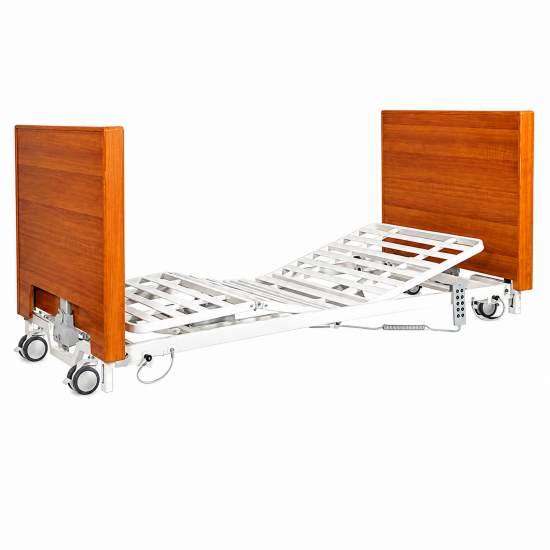
The standout feature of this Nursing Bed is its exceptionally low minimum platform position. The sleeping surface can be lowered to approximately 100 mm above floor level.
For residents who may attempt to leave the bed independently or who are considered at greater risk of accidental bedside falls, reducing the distance between the mattress platform and the floor can help reduce the potential consequences of a fall. This makes the ultra-low position particularly relevant to elderly care, dementia care and long-term residential care environments.
Low at Rest, Higher During Care
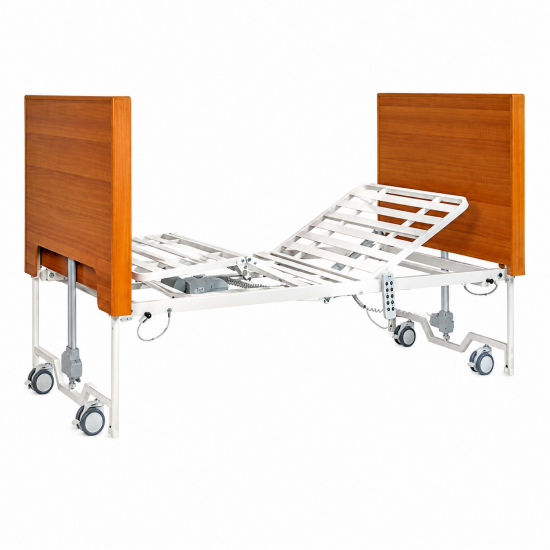
An ultra-low bed should not remain low during every nursing activity. When caregivers require better access to the resident, the complete platform can be raised to approximately 500 mm. This allows one bed to provide a low resting position and a substantially higher care position without requiring manual height adjustment.
Vertical Lifting Instead of Large Horizontal Travel
The hi-low mechanism is designed to move the bed platform vertically during height adjustment. Rather than creating substantial forward or backward travel as the bed rises, the platform follows a near-straight vertical lifting path.
This vertical movement helps minimize horizontal displacement during height adjustment, an important consideration where beds are positioned close to walls, bedside furniture or other equipment.
Five Electric Functions for Positioning and Daily Care
Backrest Adjustment: 0°–75° ±5°
The electrically adjustable back section can be raised from a flat position to approximately 75 degrees. It supports a variety of everyday positions for eating, reading, communication and assisted sitting while allowing the user to return gradually to a flatter resting position.
Controlled Upper-Body Positioning
Powered adjustment allows the back section to be repositioned without requiring caregivers to manually lift the mattress platform, making repeated position changes more convenient during long-term care.
Knee Rest Adjustment: 0°–40° ±5°
The knee section can be electrically elevated to approximately 40 degrees. Used independently or together with backrest elevation, this function expands the range of supported resting positions available to residents.
Trendelenburg Position: 0°–12° ±2°
The complete sleeping platform can be electrically tilted to provide approximately 0–12 degrees of Trendelenburg positioning, adding another level of whole-platform adjustment to the bed.
Reverse Trendelenburg Position: 0°–12° ±2°
Reverse Trendelenburg adjustment tilts the platform in the opposite direction. Together, the forward and reverse tilt functions provide care facilities with greater flexibility when selecting appropriate resident positions according to their care procedures.
Foldable Frame Makes Storage More Practical
A Nursing Bed That Does Not Always Need Full Floor Space
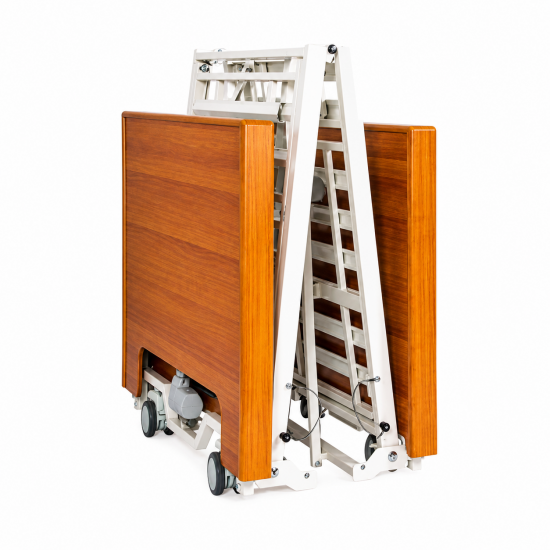
One of the most distinctive structural features of this model is its foldable frame. When the bed is not being used, the structure can be folded into a significantly more compact configuration instead of occupying the floor area of a fully assembled care bed.
Useful for Distributors, Rental Fleets and Facility Storage
This feature has value beyond the end user. Medical equipment distributors, nursing bed rental companies and care facilities may need to store multiple beds between projects or deployments. A foldable structure can improve warehouse space utilization and make internal storage and handling more convenient.
For international buyers comparing different Nursing Bed configurations, the folding mechanism therefore represents both a functional feature and a practical logistics consideration.
Residential Appearance for Long-Term Care Environments
Wood-Finish Head and Foot Panels
The large wood-finish head and foot panels give the bed a warmer appearance than conventional hospital-style beds dominated by clinical ABS components. This visual design helps the product integrate more naturally into environments where residents may live for months or years rather than receive only short-term medical treatment.
Suitable for Home-Like Care Spaces
The combination of an ultra-low structure and residential-style exterior makes the bed particularly suitable for nursing homes, assisted living facilities, elderly care centers and other environments seeking to balance functional nursing equipment with a less institutional atmosphere.
Built for Mobility and Long-Term Facility Use
Four Double-Sided Casters with Individual Brakes
The bed is equipped with four double-sided casters, each incorporating an independent braking mechanism. The caster configuration allows the bed to be repositioned when necessary and secured after reaching the required location.
Epoxy-Coated Steel Structure
The main structure uses epoxy-coated steel to provide a durable supporting framework for repeated adjustment and long-term care applications. The platform structure is also manufactured from epoxy-coated steel components.
Four Electric Actuators
Four actuators provide powered movement for the bed's adjustable functions. A wired handset gives caregivers or users centralized access to the electric positioning controls.
Where Does a 10 cm Ultra-Low Bed Provide the Most Value?
Elderly Residents with Elevated Fall Risk
The approximately 100 mm minimum platform position makes this model especially relevant where reducing bedside fall height forms part of a resident's care strategy.
Long-Term Care Facilities
Facilities caring for residents over extended periods can use the wide height range to switch between a very low resting position and a higher position for routine nursing activities.
Dementia and Memory Care Environments
Where residents may attempt unassisted bed exit, an ultra-low sleeping platform can form part of a broader fall-risk management approach determined by the care provider.
Care Equipment Rental and Distribution
The folding structure gives distributors and rental operators an additional advantage when multiple beds must be stored between orders, projects or rental cycles.
Why Buyers Should Look Beyond the Number of Functions
Many electric nursing beds offer backrest, leg and height adjustment. The important difference is how those functions are implemented and whether they address the actual challenges of the intended care environment.
On this model, the approximately 100 mm minimum height addresses low-level positioning, the 500 mm upper position provides greater access during care, the vertical lifting mechanism minimizes unnecessary horizontal movement, and the folding frame reduces the space required when the bed is stored.
This combination makes the product more than a conventional 5-function electric bed. It is designed as an ultra-low, space-conscious care solution for facilities where resident safety, caregiver access and equipment management all influence purchasing decisions.
A Specialized Ultra-Low Solution for Elderly Care Projects
With a 100–500 mm vertical lifting range, 0–75° backrest adjustment, 0–40° knee positioning, Trendelenburg and reverse Trendelenburg adjustment, this model provides the essential powered functions expected from an advanced elderly care bed while maintaining an exceptionally low minimum platform height.
For nursing homes, elderly care facilities, medical equipment distributors and project buyers looking for an ultra-low electric care solution, the foldable frame and vertical lifting design provide meaningful differentiation from conventional electric nursing beds.
For bulk orders, OEM requirements, configuration options or project quotations, please contact us with your purchasing requirements.