
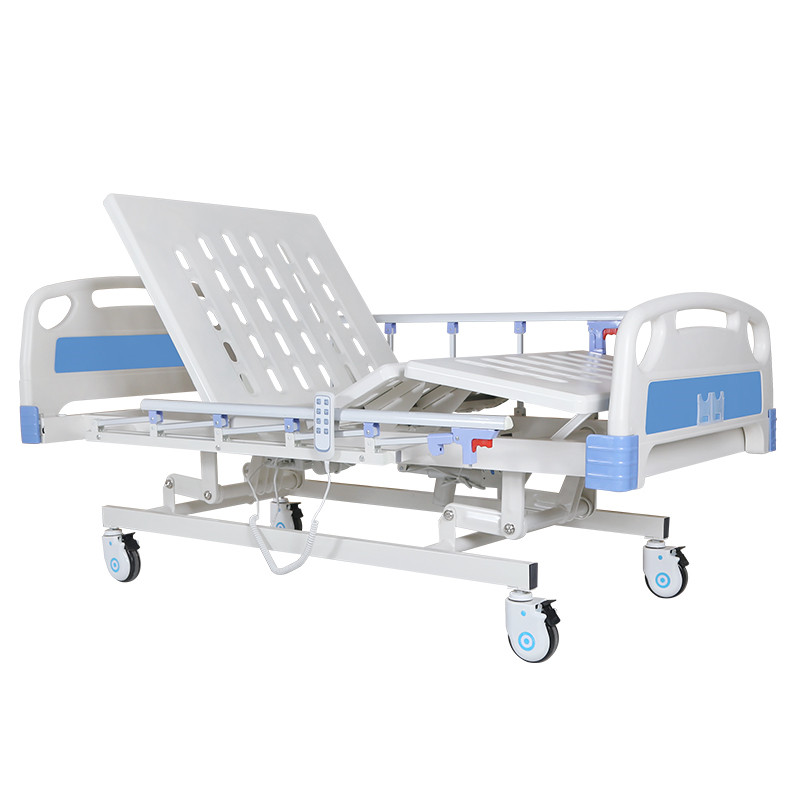
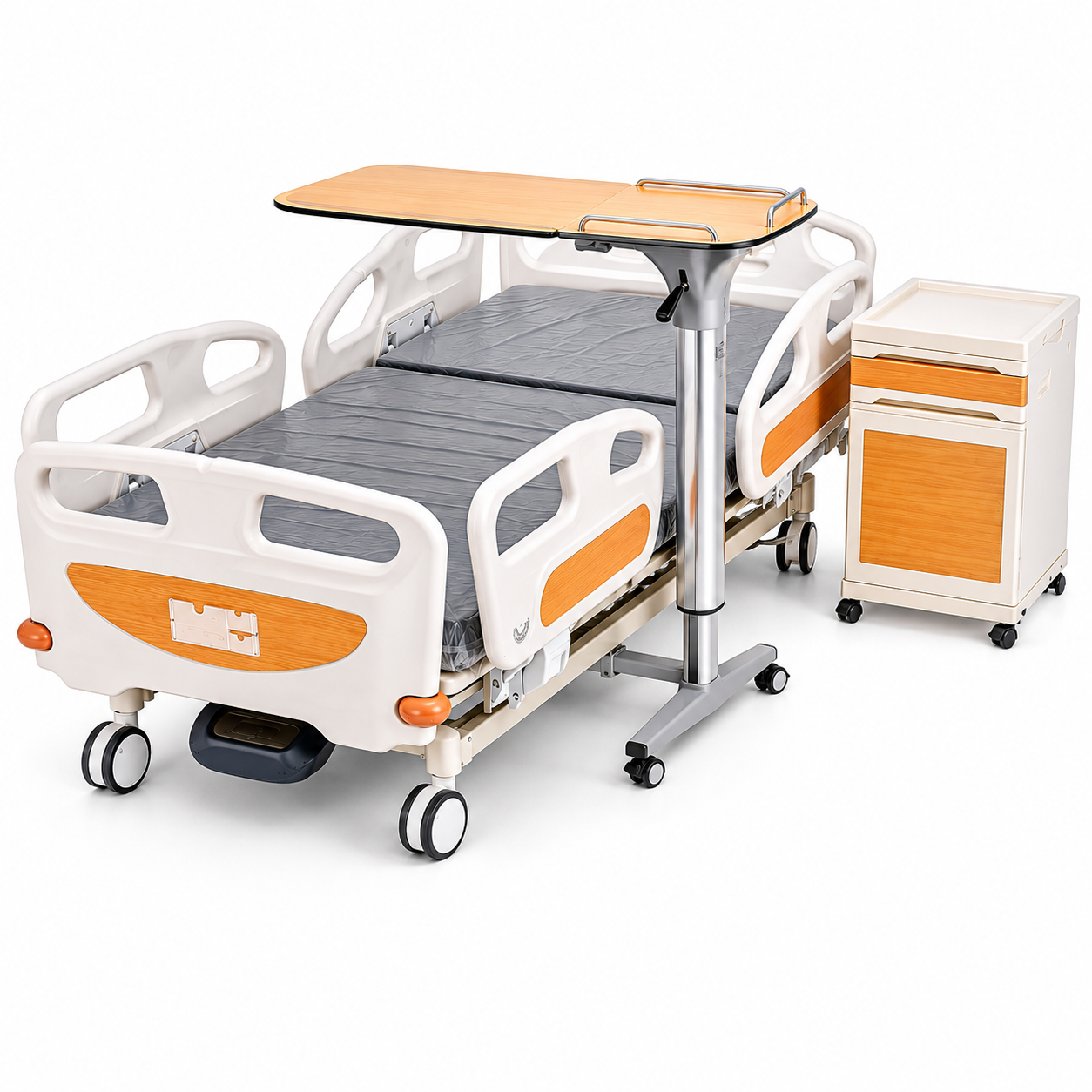

Two hospital beds can look almost identical in a catalogue while using very different steel structures underneath the mattress platform. This is why hospital bed frame thickness deserves more attention than it usually receives during product comparison. Wall thickness affects the amount of steel inside a rectangular or square tube, but it should never be evaluated as an isolated number. Tube size, crossmember layout, weld quality, actuator brackets, pivot points, mattress-platform construction and caster mounting all contribute to the final structure. A heavier tube does not automatically create a better bed, and a thicker specification in one location does not compensate for a weak connection somewhere else. Buyers comparing hospital bed frame thickness and steel-frame construction should therefore look at how the complete load path is designed rather than asking only, “Is the tube 1.0 mm or 1.2 mm?” These two specifications are often confused. A rectangular tube described as 80 × 40 mm tells the buyer the approximate outside dimensions of the section. The wall thickness tells the buyer how thick the steel is around the hollow inside of that tube. Changing any one of them can change the structural behavior of the component. A large rectangular section can use relatively thin walls. A smaller section can use thicker walls. This is why buyers should avoid judging the frame only from photographs. A wide tube often looks strong, but appearance alone does not reveal the amount of steel inside it. Two tubes can both measure 80 × 40 mm externally while using different wall thicknesses. From several meters away, the frames may look almost identical. Structurally, however, they are not necessarily equivalent. The term “frame” can refer to several different parts of the bed. These components do not necessarily need the same tube dimensions or wall thickness. The two long sides of the bed form an important part of the main chassis. They support the mattress platform and connect other structural components together. When buyers compare frame specifications, these members are one of the first places to inspect. A hospital bed is not simply two long steel tubes connected at the head and foot. Crossmembers join the left and right sides and help distribute load across the width of the bed. Imagine two beds using similar main-frame tubing. One uses well-positioned crossmembers near major load and movement points. The other uses fewer supports with longer unsupported spans. The two products may feel very different even if the main side tubes have the same nominal wall thickness. A specification such as “1.2 mm frame” is incomplete unless the buyer knows which component it describes. Different structural zones can use different sections according to the design. The mattress platform sits above the main frame and directly supports the mattress. Depending on bed design, it may use: Its thickness should not automatically be described as the same as the main frame. A steel mattress platform might use sheet around 1.0 mm on a confirmed design, while the main structural frame uses another specification. Those numbers describe different materials performing different jobs. Doing so makes technical comparison less accurate. A useful datasheet should identify the component being measured. When a hospital bed is flat, the mattress platform distributes load differently from when the backrest is raised. Depending on model, the backrest may reach approximately 70–75°. As it rises, the upper-body load is transferred through: A sample bed should also be inspected with the backrest in an elevated position. Observe whether the upper platform remains stable and aligned. Moving sections rotate around hinge or pivot points. These areas can experience repeated loading every time the bed is adjusted. Tube thickness matters, but so do: This is one of the most important principles when evaluating bed construction. The frame should always be judged as a network of connected components. Depending on model, the leg section may adjust approximately 30–45°. The thigh and lower-leg structures move around their own pivot geometry. Repeated articulation places load through smaller moving components as well as the main platform. Look at: On a height-adjustable hospital bed, the upper frame is not simply supported at one fixed level. The complete mattress platform may move vertically through a lifting structure. They carry the upper bed assembly between the lower chassis and mattress platform. When evaluating this type of bed, buyers should inspect more than the upper rectangular frame. A height-adjustable bed may feel very rigid in its lowest position. When raised, the lifting structure becomes more extended. This can make frame movement easier to observe. During sample evaluation, inspect: The frame should remain appropriately stable throughout its intended working range. An electric hospital bed uses linear actuators to create movement. The actuator itself may be strong, but the force still enters the steel bed through relatively small mounting brackets. Inspect: Installing a more powerful actuator does not make a weak mounting point stronger. The electrical and mechanical systems have to be matched. A manual crank hospital bed does not use electric actuators for its basic functions, but the crank mechanism still transfers force into the steel frame. Check where the mechanical screw or linkage connects to: One manual three-crank hospital-bed configuration can use a main frame around 80 × 40 × 1.2 mm. This is an example for that particular design, not a universal specification for every hospital bed. Other models can use different tube sizes and structural layouts. This is especially important when a manufacturer's range includes: The structures may not be identical. If the external tube dimensions and length remain the same, increasing wall thickness increases the amount of steel in the tube. That generally increases the component's weight. The complete bed also contains: A heavier finished bed does not automatically mean its main-frame walls are thicker. Use actual drawings or confirmed structural specifications where available. A thicker frame can contribute to structural capacity, but frame thickness alone does not determine safe working load. Depending on model, robust hospital-bed designs may have a safe working load around 260 kg or according to the exact model rating. The confirmed figure should always come from the selected product specification. Because the final bed depends on: A strong main tube does not help if another critical connection is inadequately designed. The entire hospital bed ultimately transfers its load to the floor through its casters. This makes the caster mounting areas part of the structural load path. Depending on design, casters may connect through: The mounting method should match the bed design. Again, the complete load path matters more than one attractive specification. Selected hospital beds use a central brake system with mechanical linkage between multiple casters. The lower chassis needs to accommodate that mechanism while still maintaining appropriate structural rigidity. Each caster is operated separately and may require less linked hardware across the chassis. Brake type and frame thickness remain separate specifications, but both affect lower-bed architecture. Buyers sometimes confuse a thick rail post with a strong mattress-support structure. Side rails serve a different function from the main chassis. Their mounting still matters, but they should not be used as evidence of main-frame strength. ABS or other head/foot panels can cover the end structure of the bed. A polished exterior may make it difficult to see how the steel frame is actually constructed. If the design allows easy removal of the headboard or footboard, this can provide a clearer view of: Hospital-bed frames are commonly coated after fabrication. The coating protects and finishes the external surface but hides the raw steel underneath. Surface appearance and structural thickness therefore need separate evaluation. They are completely different measurements. The most straightforward method depends on the stage of production. Before the tube is fully welded into the frame, a cut end can provide a direct view of the wall. This is much clearer than trying to estimate thickness from the outside surface. Where the raw tube end is exposed and measurement is appropriate, wall thickness can be checked directly. The measurement should be taken carefully and compared with the approved product specification. Once the tube has been welded, capped and coated, the wall may no longer be visible. This is why technical approval before production is valuable. Verification should use appropriate manufacturing records, accessible raw material or approved inspection methods. A useful technical specification should identify: That language sounds positive but gives buyers very little technical information. Thicker than what? Buyers need actual model-specific information rather than comparative marketing language with no baseline. The tube carries load through welded joints. If the weld does not adequately connect the structural members, the benefit of a thicker tube can be reduced. Important areas can include: Weld quality depends on correct joint design and execution, not simply on making the bead look large. On finished products, some joints may be smoothed before powder coating. Buyers evaluating production quality can gain more information by looking at fabrication-stage parts where possible. An adjustable hospital bed moves repeatedly throughout its service life. That repeated movement creates cyclical loading around: Structural design should account for both static load and repeated movement. Operate the bed through its functions and observe the frame. A straight end view can help reveal: Final product behavior should be evaluated under appropriate approved conditions with the intended mattress and complete bed configuration. A thick foam mattress can visually cover small gaps or platform differences. For structural inspection, it can be useful to examine the bare platform as well as the finished bed. The bare structure shows mechanical design. The finished bed shows how that structure performs as the product the customer will actually use. When a hospital or distributor purchases many beds, a small difference in one unit becomes a fleet-level difference. Consistency matters. If an approved model uses a particular main-frame specification, production should follow that approved configuration. The sample and mass-production units should use the same approved structural specification unless a change has been formally agreed. A very strong sample has little value if later units use different structural components. Do not start with paint, headboards or side rails. Confirm the outside dimensions of the main structural members. Use model-specific technical information. Look at their number, location and connection to the main frame. Backrest, leg and lifting mechanisms deserve particular attention. The load path ends at the floor. Structural quality should remain evident while functions move. A hospital bed using a well-designed frame can outperform a poorly designed product that simply advertises a larger thickness number. Ask whether the structural material is concentrated where the bed actually carries and transfers load. A manual two-crank bed, manual three-crank bed, electric three-function bed and electric five-function bed do not necessarily place identical demands on the chassis. The bed needs lower and upper chassis sections connected through moving lifting components. Fewer moving structural elements can reduce mechanical complexity. This does not mean the product is automatically weaker or stronger—it simply uses a different design. Higher-function beds may include additional movement systems and control components. Each added function needs appropriate structural support. Technical data should be tied to the actual bed model. Useful structural information can include: It is better to provide fewer confirmed specifications than a long table copied across several models. Useful images include: A close-up of one weld is difficult to understand if the buyer cannot see where it is located on the bed. Combine overview and detail images. Steel wall thickness matters, but hospital-bed quality also depends on: Without an appropriate chassis, even good motors and attractive panels cannot create a well-integrated hospital bed. Buyers can review additional hospital bed steel-frame and product configurations to compare manual, electric and higher-function patient-bed designs. Hebei Heyuan Medical Equipment has approximately 20 years of experience manufacturing hospital beds, nursing beds and related medical furniture. Our hospital-bed range includes manual two-crank beds, manual three-crank beds, electric three-function beds, electric five-function beds and other patient-care configurations. Structural specifications differ by model, so frame dimensions, wall thickness, adjustment functions and load rating should be confirmed for the exact product being evaluated. The best way to understand hospital bed frame thickness is to stop treating it as one isolated specification. Wall thickness affects the steel tube, but the tube is only one part of the bed. Crossmembers distribute load. Welds connect the structure. Pivot brackets carry repeated movement. Actuator or crank mounts transfer adjustment forces. Caster sockets finally transfer the complete bed load to the floor. A good hospital bed brings all of these components together as one structural system. For this reason, buyers should compare the complete frame rather than simply choosing the product with the largest wall-thickness number on a datasheet. If you are comparing hospital-bed structures for a hospital project or distributor product range, please contact our team with the required bed functions, quantity and target configuration. We can help compare suitable models and confirmed structural specifications.Why Can Two Similar Hospital Beds Feel Completely Different Once You Check the Steel Frame?
Start by Separating Tube Size From Wall Thickness
For example, these are different specifications:
A Bigger Tube Is Not Automatically a Thicker Tube
Wall Thickness Changes the Tube Without Changing Its External Size
Where Is the Main Frame on a Hospital Bed?
A hospital bed can include:
The Main Longitudinal Members Carry a Large Part of the Structural Load
Crossmembers Prevent the Bed From Acting Like Two Independent Rails
They can also support:
Crossmember Layout Can Matter as Much as Tube Thickness
This Is Why One Number Cannot Describe the Entire Frame
Ask:
The Mattress Platform Is a Different Structure From the Main Chassis
Platform Sheet Thickness and Tube Wall Thickness Are Different Measurements
Do Not Combine Them Into One “Steel Thickness” Number
Backrest Sections Need Their Own Structural Support
The Backrest Frame Should Not Be Evaluated Only When Flat
The Pivot Area Concentrates Mechanical Load
A Thick Tube With a Weak Pivot Bracket Is Still a Weak System
Leg Adjustment Creates Another Moving Load Path
Inspect the Knee-Break Area
Height-Adjustable Beds Put More Demands on the Chassis
The Lifting Arms Become Major Structural Components
Important areas include:
Maximum Height Can Reveal Structural Movement
Test the Bed at Different Heights
Electric Beds Add Actuator Mounting Loads
This Makes Actuator Brackets Critical
Motor Strength Cannot Compensate for Poor Bracket Design
Manual Beds Have Similar Structural Questions
Crank Mounting Points Should Be Inspected
A Confirmed Manual Three-Crank Example
Do Not Copy One Model's Frame Specification Into Another Product Page
Why Does Wall Thickness Affect Product Weight?
But Bed Weight Cannot Prove Wall Thickness
Weight Is a Result, Not a Substitute for Technical Data
Safe Working Load Is Also a Separate Specification
Why Can't Load Capacity Be Calculated From Tube Thickness Alone?
The Weakest Connection Can Limit the Complete Structure
Caster Mounting Is Often Overlooked
Inspect the Four Corners of the Lower Chassis
A Strong Upper Frame With Weak Caster Sockets Is Not a Strong Bed
Central Braking Adds More Components Around the Lower Frame
Individual-Brake Beds Can Have a Simpler Lower Layout
Side Rails Are Not the Main Bed Frame
Headboards Can Hide the Steel Behind Them
Inspect the Bed With Panels Removed Where Appropriate
Powder Coating Does Not Tell You the Steel Thickness
A Smooth Finish Can Exist on Different Wall Thicknesses
Coating Thickness Should Not Be Confused With Tube Wall Thickness
How Can Buyers Verify Wall Thickness?
Before fabrication, buyers can review:
Open Tube Ends Can Make Thickness Easier to See
A Caliper Can Be Useful on an Accessible Cut End
Finished Beds Are Harder to Verify Visually
Do Not Drill or Damage a Finished Bed Just to Check Thickness
Frame Thickness Should Be Written Clearly in Product Documents
Avoid Vague Statements Such as “Heavy-Duty Thick Steel”
“Thicker Steel” Is Also Incomplete Without a Reference
Frame Thickness and Welding Need to Be Considered Together
Inspect Weld Placement
More Visible Weld Is Not Automatically Better
Grinding Can Hide the Original Weld Appearance
Frame Thickness Can Affect Repeated Adjustment Performance
Movement Can Reveal Flex That Is Invisible When the Bed Is Flat
Useful positions include:
Watch the Frame From the Foot End
Do Not Test Only an Empty Frame
The Mattress Can Hide Platform Movement
Both Views Are Important
Why Does Frame Thickness Matter for Bulk Orders?
The Specification Should Remain the Same Across the Batch
Sample Approval Is Not Enough If Production Changes Later
Product Consistency Is More Important Than an Impressive Prototype
How Should a Buyer Compare Two Hospital Beds?
First, identify the main frame
Second, record the tube section
Third, confirm wall thickness
Fourth, inspect the crossmembers
Fifth, inspect moving brackets
Sixth, inspect caster mounts
Seventh, operate the complete bed
Do Not Rank Beds by Wall Thickness Alone
The Better Question Is Where the Steel Has Been Used
Different Bed Categories Can Need Different Structures
Electric Height Adjustment Adds Structural Complexity
A Fixed-Height Manual Bed Can Use a Simpler Architecture
ICU-Style Beds Can Add More Mechanisms
This Is Why One Universal Frame Specification Is Not Ideal
What Should Distributors Show in Their Product Pages?
Do Not Fill the Page With Unverified Numbers
Real Structural Photos Can Be More Convincing Than Marketing Text
Use Detail Photos With Context
Frame Thickness Should Support the Product, Not Become the Entire Product Story
A Strong Frame Is the Foundation for Those Functions
Compare More Hospital Bed Structures
Hospital Beds From Heyuan Medical
The Number Matters, but the Structure Around It Matters More