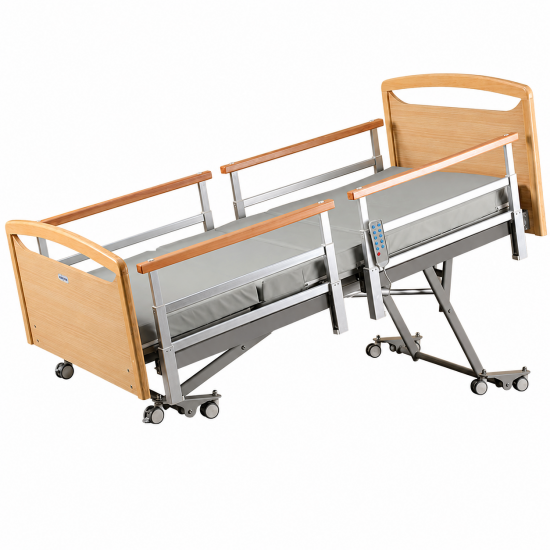
Premium Ultra-Low Nursing Bed Designed Around Resident Safety
This premium electric nursing bed combines an ultra-low 23 cm sleeping position with a professional 70 cm caregiver working height, providing a practical solution for elderly care, long-term care and rehabilitation environments. Unlike conventional care beds that focus primarily on electric positioning, this model also features four independently adjustable side rails that provide extended protection along both sides of the mattress platform.
The five electric functions, wide hi-low adjustment range and residential-style wooden finish make the bed suitable for facilities seeking to balance resident safety, caregiver efficiency and a warmer living environment.
23–70 cm Ultra-Low Hi-Low Adjustment
23 cm Low Position for Elderly Care
The mattress platform can be lowered to approximately 23 cm from the floor. This ultra-low position is particularly useful in elderly and long-term care environments where reducing the height of the sleeping surface is an important part of bedside safety planning.
Reduced Height Between the Resident and Floor
When the bed is placed at its lowest position during rest periods, the reduced mattress height helps limit the distance to the floor compared with a conventional fixed-height nursing bed. This makes the low position especially valuable for elderly residents requiring additional bedside protection.
70 cm Professional Caregiver Working Height
The same bed can be electrically raised to approximately 70 cm, creating a substantially higher working position for caregivers. This allows the mattress platform to be adjusted according to the nursing procedure rather than requiring staff to perform every task at a low fixed height.
Low for Resident Safety, High for Caregiver Efficiency
The wide 23–70 cm adjustment range gives the bed two distinct working modes. It can remain low when resident access and bedside safety are the priority, then be raised for personal care, bedding changes, repositioning and other routine nursing activities.
Four Independently Adjustable Side Rails
Extended Protection Along Both Sides of the Bed
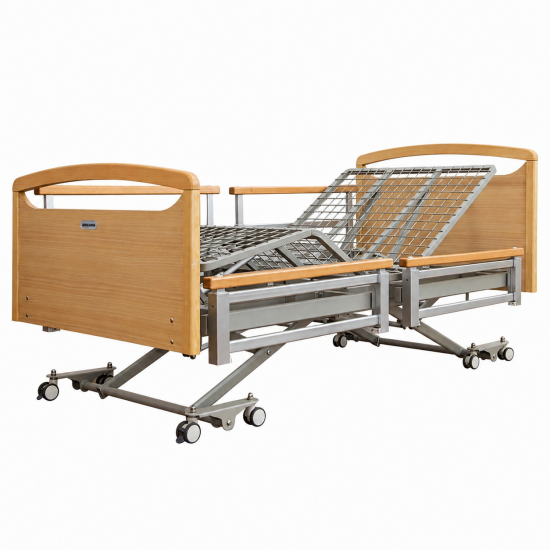
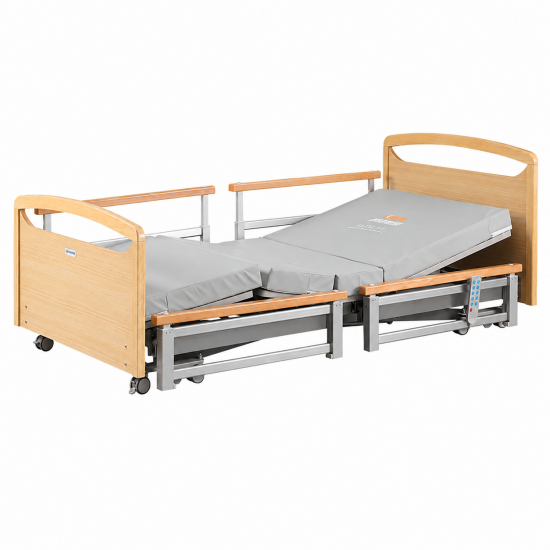
One of the most distinctive features of this model is its four-section side protection system. Two independently operated rail sections are positioned on each side of the mattress platform, creating broader protective coverage than nursing beds equipped only with short upper-body rails.
The segmented configuration allows protection to be distributed along both the upper and lower sections of the bed while maintaining flexibility for daily care.
Each Side Rail Can Be Operated Separately
Instead of requiring the entire side protection system to move as one unit, each rail section can be raised or lowered independently. Caregivers can therefore open the section required for a particular nursing procedure while keeping the remaining sections in their protective position.
Better Access for Transfer and Bedside Care
Independent rail operation is particularly useful during resident transfer, repositioning, personal hygiene and other bedside procedures. The caregiver can create localized access without unnecessarily lowering all side protection.
Five Electric Functions for Daily Positioning
Electric Backrest Adjustment
The back section can be raised electrically to provide a more upright position for eating, reading, conversation and other daily activities. Positioning is controlled through the handheld controller for convenient adjustment by caregivers or suitable users.
Electric Knee-Rest Adjustment
The knee section can be elevated to provide additional lower-body positioning. It can be used independently or together with the raised backrest according to individual comfort and care requirements.
Whole-Bed Height Adjustment
The complete mattress platform moves between the approximately 23 cm ultra-low position and 70 cm high working position, allowing the bed height to be adapted to different stages of resident care.
Trendelenburg Position
The complete mattress platform can be electrically tilted to create a Trendelenburg position when required by the facility's care procedures.
Reverse Trendelenburg Position
Reverse Trendelenburg adjustment provides an additional whole-platform tilt direction, extending the positioning capability beyond the standard backrest and knee-rest functions.
A Side Rail System Designed as Part of the Bed
Four-Section Layout Follows the Adjustable Platform
For an articulated electric nursing bed, side protection should work together with the movement of the mattress platform. The segmented rail arrangement allows the protective structure to better correspond with the different sections of the adjustable bed deck.
Greater Coverage Without Creating a Single Large Barrier
Rather than using one long continuous rail, the four-section design divides the protective area into independently controlled zones. This provides substantial bedside coverage while giving caregivers more flexibility when access to a particular part of the resident's body is required.
Warm Wood-Finish Design for Long-Term Living Environments
The appearance of this bed has been developed differently from a conventional clinical hospital bed. Large wood-finish head and foot panels create a furniture-inspired profile, while matching wooden tops on the side rails visually connect the protective system with the rest of the bed.
A Less Institutional Resident Room
For elderly residents who may use the same bed for extended periods, room atmosphere can be an important consideration. The combination of wood-finish surfaces and a professional metal chassis helps reduce the strongly clinical appearance associated with traditional hospital equipment.
Coordinated Headboards and Side Rails
The repeated wood finish across the head panel, foot panel and four side rails gives the bed a more integrated appearance. This makes it easier to coordinate with bedside cabinets, wardrobes and other furniture commonly used in nursing homes and long-term care rooms.
Designed for Professional Long-Term Care
Nursing Homes
The ultra-low sleeping position, high caregiver working position and four-section side protection system make this model particularly suitable for nursing home residents requiring frequent assistance and daily positioning.
Long-Term Care Facilities
Five electric adjustments provide flexible positioning for extended care, while the segmented rails allow caregivers to manage bedside access according to different procedures.
Elderly Care Centers
The combination of low-level positioning and broad side protection is well suited to environments focused on elderly resident care, while the wooden exterior creates a warmer atmosphere than standard institutional beds.
Rehabilitation Facilities
Backrest, knee-rest and height adjustment provide useful positioning options for residents undergoing longer-term rehabilitation or assisted recovery.
Home and Community Care Projects
Its residential-style appearance also makes the bed suitable for professional home-care projects where advanced nursing functions are required without introducing an excessively hospital-like design into the living space.
More Than a Standard Ultra-Low Electric Bed
When comparing ultra-low nursing beds, buyers should look beyond minimum bed height alone. Two models may both reach a similar low position while offering very different levels of bedside protection, caregiver access and overall construction.
This model combines a 23–70 cm electric height range with five positioning functions and four independently operated side rails. The result is a more comprehensive configuration for facilities where both low-level resident positioning and extensive side protection are important purchasing considerations.
A Higher-Specification Safety Configuration
The four independent rail sections are particularly important in differentiating this model from more basic ultra-low beds. They provide broader coverage while allowing individual sections to be opened according to the caregiver's immediate access requirements.
This balance between protection and accessibility makes the bed suitable for professional care environments where side rails are used frequently throughout the day.
What Buyers Should Evaluate Before Ordering
Minimum and Maximum Bed Height
Confirm both ends of the adjustment range. The 23 cm low position serves a different purpose from the 70 cm high position, so both resident access and caregiver working requirements should be considered.
Side Rail Coverage
Do not compare nursing beds only by the number of side rails. Buyers should also evaluate how much of the mattress side is protected and whether each section can be operated independently.
Daily Care Access
Consider how easily caregivers can access different sections of the mattress platform for transfer, personal care, repositioning and other regular procedures.
Room Environment
For long-term residential facilities, exterior design should also be considered. Wood-finish components can help the bed integrate more naturally with furniture used throughout the resident room.
A Premium Ultra-Low Solution for Elderly and Long-Term Care
This electric Nursing Bed brings together two requirements that are sometimes treated separately: professional electric positioning and comprehensive resident-side protection.
The approximately 23 cm low position supports low-level resident care, while the 70 cm maximum height provides a practical working level for caregivers. Five electric adjustments provide flexible positioning, and four independently adjustable side rails extend protection along both sides of the mattress while preserving localized caregiver access.
Combined with its coordinated wooden headboards and side-rail tops, the bed offers a higher-specification solution for nursing homes, elderly care centers, rehabilitation facilities and long-term care projects seeking both professional functionality and a more residential appearance.
For specifications, configuration options, bulk purchasing or OEM requirements, please contact us for further information.