
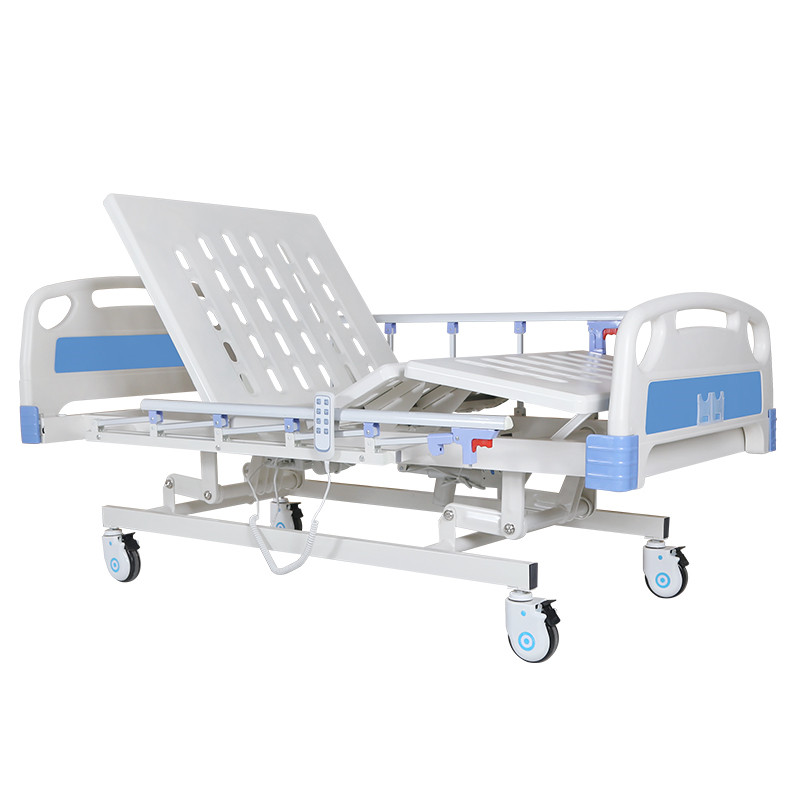
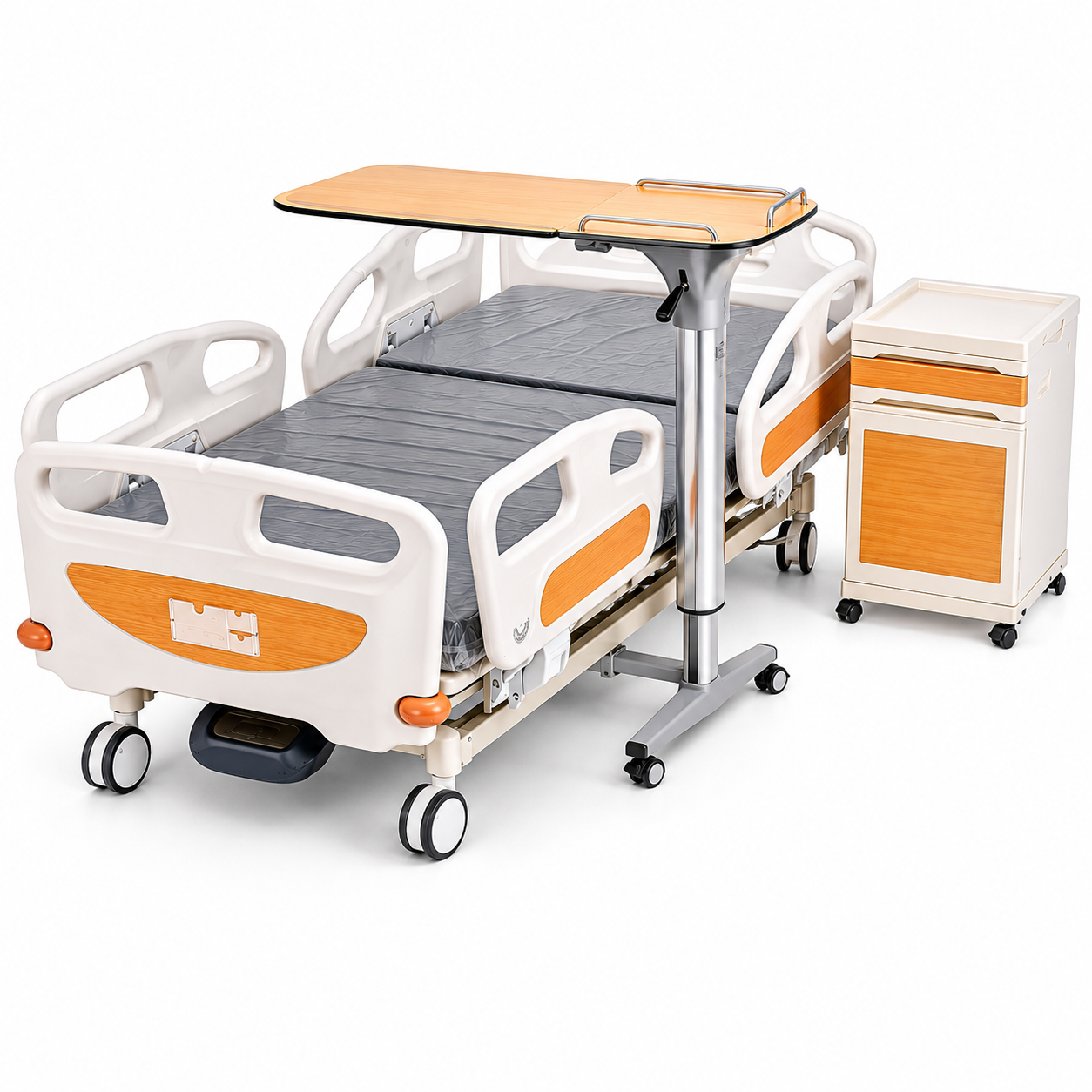

A fixed height hospital bed keeps the main mattress platform at one predetermined height while still allowing other patient-positioning functions such as backrest and leg adjustment, depending on the model. For some buyers, a bed without vertical lifting may initially appear less capable than a height-adjustable model. In practice, however, not every hospital ward needs electric or mechanical height adjustment. If the main requirement is basic patient positioning, reliable side rails, medical casters and a strong frame, a fixed-height configuration can provide a simpler and more economical solution. The important question is not whether height adjustment sounds more advanced. The useful question is whether staff will actually need to change the complete bed height during everyday ward use. Different fixed height hospital bed and manual hospital bed models can be compared according to ward function, patient mobility and required adjustment features. A fixed height hospital bed is a medical patient bed whose complete sleeping platform does not move vertically. The mattress platform remains at one working height above the floor. Depending on the model, the bed can still provide: The fixed-height design only means that the complete platform does not rise or lower. This is an important distinction. A fixed-height bed can still be adjustable. The upper section can rise to support sitting and semi-seated positions. The lower platform can change angle depending on the bed configuration. Only the vertical height of the complete sleeping platform. Many general wards do not require every bed to provide powered vertical lifting. A simpler bed can still meet everyday patient-care requirements while reducing mechanical complexity. The correct application depends on the hospital and patient population. Fixed-height beds may be considered for: Higher-dependency environments may require more advanced height and positioning functions. Height adjustment becomes less critical when staff do not need to change the bed's working height frequently. A height-adjustable bed becomes more useful when staff perform intensive bedside care. The ideal height depends on the target market and bed design. Buyers should consider the relationship between: There is no single fixed height that is ideal for every hospital. Hospital specifications often list the height of the mattress platform. However, the patient lies on top of the mattress. If a fixed platform is approximately 500 mm above the floor and an 80 mm mattress is installed, the final sleeping surface will be higher than 500 mm. This should be considered when evaluating patient access. On a height-adjustable bed, caregivers can compensate for some differences by moving the platform. On a fixed-height bed, mattress thickness directly determines the final user height. Even without vertical lifting, the backrest function can support many everyday activities. Depending on the model, the upper section may reach approximately 70–75°. Many fixed-height beds use a mechanical crank to raise and lower the back section. A bed can also use powered backrest adjustment while keeping the complete platform height fixed. This can provide easier operation without adding a full vertical lifting system. A fixed-height bed may also include manual or electric leg positioning. Depending on the model, the leg section may reach approximately 30–45°. Using both functions can create a more supportive semi-seated position. Fixed-height hospital beds can be produced with different function combinations. May provide backrest adjustment only. Typically provides backrest and leg adjustment. If overall height is added, the bed is no longer truly fixed-height. Back and leg adjustment cover many basic patient-positioning needs. If staff do not need vertical movement, adding a third lifting mechanism may not provide enough additional value. A bed that does not need to rise vertically does not require a scissor-lift or similar complete-platform lifting system. A fixed-height hospital bed still needs a strong load-bearing structure. The main frame supports: Depending on the model, hospital beds may use rectangular steel tubing such as approximately 80 × 40 mm with different wall thicknesses. However, tube size alone does not determine quality. Without a complete vertical lifting mechanism, the main frame can have a relatively direct load path. This can support a robust and straightforward product design. The actual stability still depends on materials, welding and assembly quality. The sleeping platform may use punched or formed steel sections. The movable back and leg sections should remain properly aligned when adjusted. A fixed-height design does not automatically mean a lower load capacity. Depending on the product, robust hospital beds may provide rated capacities around 250–260 kg or more. The exact safe working load should be confirmed for the selected model. The rating depends on the complete system: A simple bed still requires practical side protection. Common configurations may use: Depending on the design, side rails may be approximately 400 mm above the mattress platform. But the useful protective height is the part that remains above the mattress. The visible rail may look strong while the supporting hardware is relatively weak. Repeated raising and lowering places load on: Folding aluminum alloy rails are widely used because they provide a practical balance between function, weight and cost. The quality of the hinge and locking mechanism should still be inspected carefully. Many fixed-height hospital beds use detachable PP or ABS head and foot boards. Depending on the design, removable head and foot boards can simplify: A general ward bed still needs occasional repositioning. Quality casters need to support: Each caster can be locked separately. This is often sufficient when the bed remains in one ward position for most of the day. Not necessarily. Central braking can still be added on selected higher-level designs, but it is most valuable when beds are moved frequently. For basic ward use, individual brakes may provide a simpler solution. A more advanced brake system adds value only if staff use that advantage. The mattress width is usually smaller than the complete external width of the bed. For example, a bed around 960 mm wide externally may use a mattress around 900 mm wide depending on the product. The external width includes: The mattress only needs to fit the usable platform. Because the bed height cannot be lowered, mattress thickness becomes especially important. The bed and mattress should be considered together. Common hospital mattress options may include approximately 60 mm, 80 mm or other project-specific thicknesses. The final choice should match the platform and rail structure. Yes, provided the size and thickness are compatible with the bed. A thick inflated mattress can raise the patient much higher than a standard foam mattress. On a fixed-height bed, this cannot be compensated for by lowering the platform. This makes rail and transfer-height checks particularly important. Many models include IV pole sockets at the bed corners. A bed-mounted IV pole moves together with the bed when staff reposition it. An overbed table can be used for: For many general ward patients, this simple accessory may provide more daily value than an unused advanced bed function. Hospital projects often combine beds with matching ABS or steel bedside cabinets. The cabinet should be positioned so that it does not interfere with: A bed without vertical lifting has fewer lifting components. This can reduce the number of mechanical parts requiring inspection. For large projects, simpler configurations can reduce the variety of components that distributors or hospitals need to keep in stock. If a hospital purchases hundreds of beds, every additional function increases the number of components across the total fleet. Choosing simpler beds for wards that do not need height adjustment can reduce unnecessary technical complexity. Different departments may use different configurations. This allows hospitals to allocate functions according to real clinical needs. These categories often overlap. A typical manual 2-crank hospital bed provides: However, fixed-height is a structural description, while 2-crank describes the number of mechanical adjustment systems. A three-crank bed normally adds overall height adjustment. Therefore, the major difference is the additional complete-platform lifting mechanism. Today's article does not repeat the separate 2-crank vs 3-crank comparison topic. Instead, the key point is whether a fixed structural height is sufficient for the target ward. An electric three-function bed typically provides powered: This is useful when movements occur frequently. A fixed-height bed can remain more practical where staff only need basic positioning. Not necessarily. A bed can have a fixed platform height while still using: Height function is only one part of the complete specification. A simple bed can be manufactured to a high structural standard. Likewise, a high-function bed can still perform poorly if its components and assembly quality are weak. Buyers should compare the complete product. The final decision should follow hospital procedures and patient requirements. In general, these beds are more relevant where patients do not require intensive repositioning or highly adjustable transfer heights. Consider a height-adjustable model when: A complete fixed height hospital bed specification should identify: The phrase fixed height does not tell buyers where the sleeping platform actually sits. The numerical height should always be included in the technical specification. This prevents confusion when comparing products from different suppliers. The most useful quotation clearly identifies: A fixed bed with a thick mattress may become too high for some users. The final configuration should therefore be evaluated rather than selecting the thickest mattress automatically. A bed that is convenient for patient entry may be relatively low for some caregivers. This is the main compromise of a fixed-height design. Buyers need to determine which working height best fits the intended environment. Many facilities already use a common bed height across general wards. In these cases, a properly selected fixed height can provide predictable room layout and equipment compatibility. The overbed table must have enough clearance to move above the mattress and bed frame. If the table height is fixed or has a limited adjustment range, bed and mattress height should be confirmed together. If mobile transfer devices or other equipment need to approach the bed, buyers should confirm: Some fixed-height designs have a relatively open underside because they do not contain a full vertical lifting system. This can support cleaning and equipment access, depending on the exact frame design. Two fixed-height beds can differ significantly in: A lower price may reflect differences in any of these areas. A two-function fixed-height bed with a strong structure can be a better choice for a general ward than a more complex bed whose additional features are never used. The correct product is the one that matches actual ward workflow. Buyers can compare additional fixed height and adjustable hospital bed configurations according to patient-care requirements and budget level. Hebei Heyuan Medical Equipment has approximately 20 years of experience manufacturing hospital beds, nursing beds and related medical furniture. Our hospital-bed range includes manual fixed-height beds, manual height-adjustable models, electric three-function beds, electric five-function beds and other medical patient-bed configurations. Depending on the selected model, beds can be configured with aluminum alloy side rails, PP or ABS head and foot boards, medical casters, individual or central brake systems and compatible mattresses. OEM and ODM requirements can also be discussed according to the required configuration and order quantity. A fixed height hospital bed can be a practical choice when a ward mainly needs reliable backrest and leg positioning without frequent vertical bed adjustment. Its simpler structure can reduce unnecessary mechanical complexity while still providing a strong frame, side rails, medical casters, brakes, mattress compatibility and ward accessories. The key is to select the correct fixed platform height and mattress thickness for the intended patients and caregivers. If your project includes different care levels, fixed-height beds can also be combined with height-adjustable and electric beds rather than forcing one configuration across every ward. If you are selecting fixed-height hospital beds for general wards, clinics, distributors or bulk hospital projects, please contact our team with your required functions, quantity and destination market. We can help you compare suitable hospital-bed configurations.Fixed Height Hospital Bed: When Is a Non-Lifting Bed the Better Choice for General Wards?
What Is a Fixed Height Hospital Bed?
Fixed Height Does Not Mean Fixed Position
Backrest Adjustment
Leg Adjustment
What Remains Fixed?
Why Do Hospitals Still Buy Fixed Height Beds?
Common Reasons Include:
Which Wards Can Use a Fixed Height Hospital Bed?
When Is Height Adjustment Less Important?
For Example:
When Should Buyers Choose a Height-Adjustable Bed Instead?
Consider Height Adjustment When:
Fixed Height vs Height Adjustable Hospital Bed
Fixed Height Hospital Bed
Height Adjustable Hospital Bed
What Is a Practical Fixed Bed Height?
Platform Height Is Different From Mattress-Top Height
For Example
Why Mattress Thickness Matters More on a Fixed Height Bed
A Thicker Mattress Can:
Backrest Adjustment Can Still Provide Significant Value
Common Uses Include:
Manual Backrest Adjustment
Advantages Include:
Electric Backrest on a Fixed Height Bed
Leg Adjustment Adds More Positioning Options
Combined Back and Leg Adjustment
One-Function, Two-Function or More?
Single-Function Configuration
Two-Function Configuration
Higher-Function Configurations
Why Two-Function Beds Are Common in General Wards
Fixed Height Beds Can Have a Simpler Frame Geometry
This Can Mean:
Simpler Does Not Mean Weaker
Main Frame Structure Still Matters
Buyers Should Also Review:
Why Fixed Height Beds Can Be Structurally Stable
The Mattress Platform Must Remain Flat and Aligned
Important Areas Include:
Safe Working Load Must Be Confirmed
What Determines Load Capacity?
Side Rails Are Equally Important on Fixed Height Beds
Rail Height Must Be Checked With the Mattress
Therefore, Buyers Should Check:
Why Rail Connectors Matter
Aluminum Rails Are Common on Value-Oriented Beds
Headboard and Footboard Material
Advantages Can Include:
Detachable Panels Can Help With Handling
Casters Are Important Even if the Bed Rarely Moves
Common Reasons Include:
Medical Casters Should Match the Complete Load
Buyers Should Check:
Individual Brakes Are Common on Fixed Height Beds
Does a Fixed Height Bed Need Central Braking?
Why Buyers Should Match the Brake System to Ward Workflow
Individual Brakes May Be Suitable When:
Central Braking May Be Useful When:
Mattress Size Should Match the Sleeping Platform
Why This Difference Is Normal
Mattress Thickness Changes Patient Entry Height
A Thicker Mattress:
Do Not Select Mattress Thickness Independently
Can an Anti-Decubitus Air Mattress Be Used?
Check:
An Air Mattress Can Significantly Change Bed Height
Fixed Height Beds Can Still Use IV Poles
Overbed Tables Can Add Practical Value
Bedside Cabinets Can Be Supplied as Part of the Ward Set
Fixed Height Beds Can Simplify Maintenance
Typical Maintenance Points Still Include:
Fewer Functions Can Mean Fewer Spare Parts
Potential Spare Parts Include:
Why This Matters for Bulk Hospital Projects
A Hospital Does Not Need the Same Bed Everywhere
Example Product Mix
Fixed Height Bed vs Manual 2-Crank Bed
Fixed Height Bed vs Manual 3-Crank Bed
Fixed Height Bed vs Electric 3-Function Bed
Does Fixed Height Mean a Budget Bed?
Do Not Confuse Simplicity With Poor Quality
Which Patient Types Can Use a Fixed Height Bed?
When Might a Fixed Height Bed Be Less Suitable?
What Should Buyers Confirm Before Ordering?
Ask for the Actual Bed Height, Not Just “Fixed Height”
Also Ask Whether Height Is Measured With or Without the Mattress
Consider Patient Entry Before Finalizing the Mattress
Consider Caregiver Height at the Same Time
Why Standardized Ward Height Can Still Work
Check Compatibility With Overbed Tables
Check Compatibility With Transfer Equipment
Under-Bed Clearance Can Be Simpler Without a Lifting Frame
Export Buyers Should Compare Complete Configurations
Do Not Compare Only the Number of Functions
Fixed Height Hospital Beds From an Experienced Manufacturer
Choose Fixed Height When Vertical Adjustment Does Not Add Enough Daily Value