
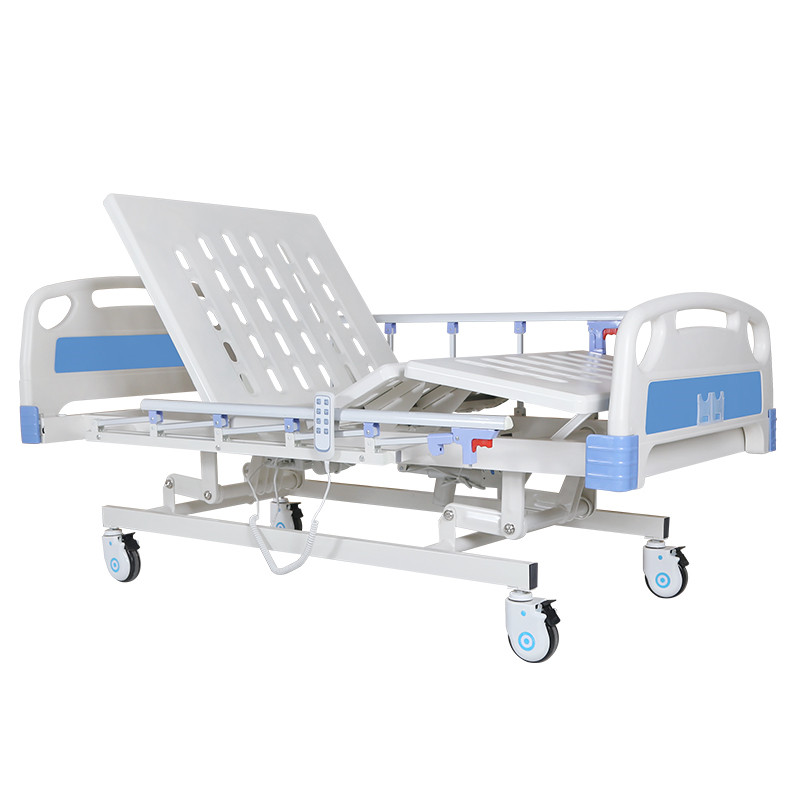
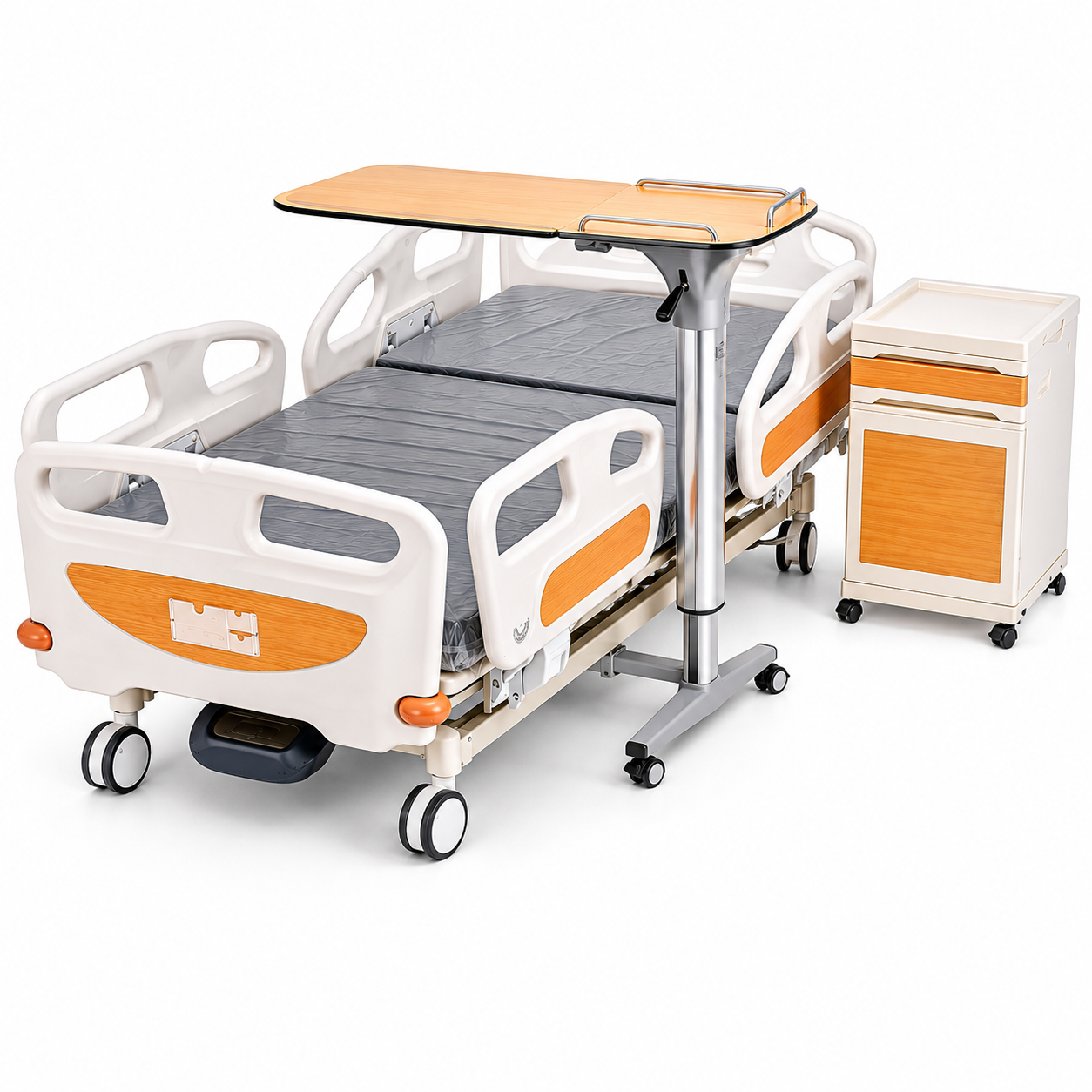

A hospital project needs 200 manual patient beds. The buyer receives two common options from suppliers: Manual 2-crank hospital bed. Manual 3-crank hospital bed. The immediate difference appears simple. A 2-crank hospital bed commonly provides backrest and leg-section adjustment. A 3-crank hospital bed commonly adds whole-bed height adjustment. Does that mean the 3-crank model should automatically be selected for the entire project? Not necessarily. For professional hospital procurement, the better question is: Which functions are actually required for each application, and which complete bed configuration should be supplied? Crank count is only the starting point. Buyers should also compare adjustment ranges, bed height, side rails, casters, brake configuration, mattress platform, headboard and footboard, safe working load, accessories, packaging and maintenance requirements. This guide explains how distributors, importers and hospital project buyers can compare a manual 3-crank hospital bed and manual 2-crank hospital bed before requesting final quotations or placing a bulk order. A common manual 2-crank hospital bed configuration provides: The exact design depends on the manufacturer and model. The caregiver operates the required movement using the mechanical crank system. However, buyers should verify the exact function list instead of assuming that every 2-crank bed is identical. A common manual 3-crank hospital bed provides: For example, one manual 3-crank hospital bed configuration may provide a backrest range around 0–75 degrees, leg adjustment around 0–45 degrees and bed-height adjustment around 450–720 mm. The exact values should always be confirmed for the quoted model. It changes the range of positions available from the bed. This means a buyer comparing only these two functions may see little reason to move from a 2-crank to a 3-crank bed. If it does, a fixed-height 2-crank configuration may not satisfy the requirement. Two 3-crank hospital beds may both provide height adjustment but use different minimum and maximum positions. For example: Platform height: 450–720 mm. Determine whether the value is measured from the floor to the mattress platform or another specified point. A typical configuration can provide: A typical configuration can provide: The exact functions and ranges should be written into the final technical specification. If the project requires manual backrest and leg adjustment but does not require whole-bed height adjustment, a 2-crank configuration may be considered. It can also provide a simpler mechanical configuration when that matches the buyer's technical requirement. A 2-crank bed and a 3-crank bed serve different specification requirements. This is the clearest reason to consider the 3-crank configuration. Do not stop at the statement: “Third crank controls height.” A 3-crank bed provides an additional mechanical adjustment. If the project requires height adjustment, that requirement matters. If the project does not require it, the buyer can compare whether the additional function provides sufficient value for the intended application. One may use aluminum alloy side rails. Another may use a different rail design. One may use a central brake system. Another may use individual caster brakes. Crank count is only one row in the specification sheet. But the adjustment range should still be confirmed. A manual hospital bed may provide backrest adjustment from approximately 0 to 75 degrees depending on the model. Request the actual specification of the quoted model. The buyer should confirm how the section moves and the available adjustment range. A particular model may provide leg adjustment around 0–45 degrees. Use manufacturer-confirmed technical data for the final comparison. A typical 2-crank bed may use a fixed platform height. Buyers should check how the platform is manufactured. Do not rely only on catalogue photographs. A manual hospital bed may use aluminum alloy side rails or another design depending on the model. But the exact design and connection method can vary. The bed still needs a defined caster and braking configuration. The crank system controls manual bed adjustments. A manual bed may have individual brakes. Another manual model may be configured with a central locking system. For manual beds, its design deserves attention. Do not approve the mechanism only from photographs. During sample review, operate the available adjustments according to the manufacturer's instructions. If a movement appears abnormal, investigate it before approving the sample. For example, a manual 3-crank hospital bed configuration may have a safe working load around 250 kg depending on its design and manufacturer specification. Also make sure buyers understand which load term is being used in the technical documentation. The same applies to accessories. These can include: There are no powered actuators required for the manual adjustment functions. This can include the crank system, moving structures, side rails, casters, brakes and other components. Procurement teams should consider how the supplier supports long-term service. A hospital or distributor may need access to compatible crank components, caster parts, rails or other model-specific items over time. Packaging therefore affects export logistics and project handling. The buyer should understand what is already assembled and what needs to be installed at destination. A 3-crank model may use a different lifting structure and complete frame configuration. A hospital may have different technical requirements across departments or bed groups. Another may have a specification that can be met by a fixed-height manual bed. This is more precise than automatically specifying the highest function count for every bed. For example, instead of writing: 200 manual hospital beds. Quantity A — manual 3-crank hospital bed. Quantity B — manual 2-crank hospital bed. This can include functions, dimensions, rails, casters, brakes, mattress and accessories. A buyer may prefer fewer models for procurement, staff familiarity or parts management. First determine whether all intended applications actually require the same configuration. If a particular bed group does not require whole-bed height adjustment, a 2-crank configuration may be considered. A cheaper configuration that does not meet the requirement is not a valid substitute. Before deciding between 2-crank and 3-crank manual beds, confirm that a manual bed is appropriate for the project requirement in the first place. Manual beds use mechanical operation for their adjustable functions. Different healthcare projects operate under different budgets, infrastructure conditions and technical specifications. Buyers should determine which manual configuration meets the actual requirement. At minimum, identify the required configuration. Do not inspect only the appearance. If both models are part of the project, each configuration should be clearly documented. Quantity, model and technical specification should remain connected. Customers should understand why each model exists. Manual 2-Crank Hospital Bed — backrest and leg adjustment with fixed bed height. Manual 3-Crank Hospital Bed — backrest, leg and whole-bed height adjustment. Side rails. Casters. Brake system. Mattress. Accessories. Before a large order, buyers can ask which replacement components are available for the exact model. Model number, drawings, photographs or part references can help future communication. The difference between a manual 3-crank hospital bed and a manual 2-crank hospital bed is easy to describe. A typical 2-crank model provides backrest and leg adjustment. A typical 3-crank model adds whole-bed height adjustment. But professional procurement should go further. The buyer should compare: Functions → Adjustment Ranges → Height → Platform → Side Rails → Casters → Brakes → Load Specification → Mattress → Accessories → Maintenance → Packaging → Project Application. If the project requires whole-bed height adjustment, that requirement should be clearly specified. If a bed group does not require it, the buyer can evaluate whether a 2-crank configuration is appropriate instead of automatically purchasing an additional function. For large projects, the answer may even be a controlled combination of 2-crank and 3-crank hospital beds rather than one model for every department. Hebei Heyuan Medical Equipment Co., Ltd. manufactures manual hospital beds, electric hospital beds, ICU hospital beds, pediatric hospital beds and related medical furniture for international distributors and healthcare projects. Buyers can review our manual and electric hospital bed range for different hospital procurement requirements. For manual 2-crank hospital beds, manual 3-crank hospital beds, OEM and ODM requirements or bulk project quotations, please contact Heyuan Medical with your required configuration, quantity and destination market.Should Every Manual Hospital Bed in a Project Have Three Cranks?
What Is a Manual 2-Crank Hospital Bed?
The Two Cranks Normally Control Two Main Adjustments
The Bed Height Is Generally Fixed on This Type of Configuration
Manual Operation Removes the Need for Powered Adjustment
This Makes the Manual Bed a Practical Product Category for Many Hospital Projects
What Is a Manual 3-Crank Hospital Bed?
A Third Mechanical Adjustment Is Added
The Additional Height Function Is the Main Functional Difference
The Third Crank Does More Than Increase the Number in the Product Name
This Is Why Buyers Should Compare the Application, Not Just the Crank Count
The Core Difference: Fixed Height vs Adjustable Height
Backrest and Leg Adjustment Can Exist on Both Models
The Key Additional Question Is Whole-Bed Height Adjustment
Ask Whether the Project Requires the Mattress Platform to Move Vertically
If it does not, the buyer should evaluate whether the additional mechanism is necessary for that application
Do Not Assume Every 3-Crank Hospital Bed Has the Same Height Range
“Height Adjustable” Is Not a Complete Specification
Ask for Actual Values
Also Confirm the Measurement Reference
This allows meaningful supplier comparison
Manual 3-Crank vs 2-Crank Hospital Bed: Compare Functions First
Manual 2-Crank Hospital Bed
Manual 3-Crank Hospital Bed
But Never Approve a Product From This Generic Description Alone
Product names classify the bed; technical data defines the bed
When Can a Manual 2-Crank Hospital Bed Be Considered?
Start With the Project Requirement
This Can Be Relevant to Cost-Sensitive General Bed Projects
Do Not Interpret “Simpler” as “Lower Quality”
Quality still depends on materials, components, workmanship and production control
When Does a Manual 3-Crank Hospital Bed Become More Relevant?
When Whole-Bed Height Adjustment Is Required
The Bed Can Be Raised or Lowered Within Its Designed Range
The Buyer Should Then Verify the Actual Range
Record minimum and maximum platform height in the specification
Does 3-Crank Automatically Mean Better Than 2-Crank?
No Product Configuration Is Automatically Better for Every Project
That Does Not Mean Every Hospital Project Requires It
Procurement Should Match the Specification to the Application
Buy functions because the project needs them, not because a larger number sounds better
Do Not Compare Only the Crank Mechanism
Two Manual Hospital Beds Can Have the Same Number of Cranks and Still Be Very Different
The Bed Surface and Headboard Configuration Can Also Differ
The Complete Product Must Be Compared
A hospital buys a complete bed, not three crank handles
1. Compare the Backrest Adjustment
Both Product Types Commonly Provide Backrest Adjustment
For Example
Do Not Assume the Same Range Across Every Supplier
Function name and adjustment range should both be recorded
2. Compare the Leg-Section Adjustment
Leg Adjustment Is Another Common Function on Both Configurations
For Example
The Exact Specification Can Differ
Do not copy specifications from another visually similar bed
3. Compare the Bed Height
This Is Where the Functional Difference Becomes More Important
A 3-Crank Model Can Add Mechanical Height Adjustment
Ask for Three Pieces of Information
These values should correspond to the exact quoted model
4. Compare the Mattress Platform
The Bed Surface Carries the Mattress and Forms Part of the Main Structure
For Example, a Manual Hospital Bed May Use a Perforated Steel Platform
Ask About the Actual Material and Structure
The platform specification should remain consistent between sample and production
5. Compare the Side Rails
Side-Rail Configuration Can Change the Complete Product
Check Both Sides of the Bed
Important Questions Include
“With side rails” is not a complete technical description
6. Compare the Headboard and Footboard
ABS Headboards and Footboards Are Common on Medical Hospital Beds
Check the Quoted Configuration
For Project Procurement, Consider
Do not assume all ABS boards are identical
7. Compare Casters and Brake Systems
Manual Adjustment Does Not Mean the Mobility System Is Unimportant
Buyers Should Confirm the Exact System
Possible Configurations Can Include
The required configuration should be stated in the RFQ
A Central Brake Is Not the Same Thing as a Third Crank
These Are Separate Product Features
The brake system controls bed mobility and locking
A Buyer Can Therefore Encounter Different Combinations
Do not infer the brake system from the function count
8. Compare the Crank Handles Themselves
The Crank Is a Frequently Operated Mechanical Component
Buyers Can Evaluate
Operate the Cranks During Sample Inspection
Manual-bed procurement should include actual manual operation
9. Compare the Mechanical Movement Under Normal Use Conditions
The Bed Should Be Evaluated as an Operating Product
Observe the Complete Movement
Check for Unexpected Behavior
Do not attempt unauthorized modification of the mechanical system
10. Compare Safe Working Load Requirements
Load Specification Should Be Confirmed for the Exact Product
Do Not Automatically Apply That Number to Every Manual Bed
Ask the Manufacturer for the Confirmed Specification
Load claims should be based on the actual product specification
11. Compare Mattress and Accessories Separately
The Hospital Bed Price May or May Not Include a Mattress
This Can Make Two Manual-Bed Quotations Look More Different Than They Really Are
Separate the Main Bed From Optional or Included Items
Normalize the configuration before comparing the final price
12. Compare Maintenance Complexity
Manual Beds Remove Some Electrical Components
But Manual Does Not Mean Maintenance-Free
Mechanical Components Still Require Appropriate Inspection and Service
Follow the manufacturer's maintenance guidance
Manual 2-Crank Does Not Automatically Mean “No Maintenance”
A Simpler Function Set Still Contains Moving Parts
Ask About Replacement Components
Especially for Large Fleets
After-sales planning applies to manual beds too
13. Compare Packaging for Bulk Orders
Manual Hospital Beds Are Often Purchased in Large Quantities
Ask How the Bed Is Packed
Useful Information Can Include
Packaging belongs in the procurement specification, not only in the shipping department
14. Compare Assembly Requirements
Some Export Beds May Require Assembly After Arrival
Ask for Instructions Before Shipment
For Project Orders, Clarify
Simple preparation can reduce project-site confusion
15. Compare the Complete Cost, Not Just the Additional Crank
The Price Difference Between Two Beds Does Not Come From One Handle Alone
Other Specifications May Also Differ
Before Comparing Prices, Normalize
Then evaluate the commercial difference
Should a Hospital Project Use Only One Manual Bed Type?
Not Every Project Has to Use One Configuration Everywhere
One Group May Require Height Adjustment
Project Buyers Can Map Bed Types to Actual Requirements
Standardization can be useful, but it should follow project needs
A Mixed Manual Hospital Bed Procurement Strategy
Large Projects Can Separate Requirements by Bed Group
The Buyer Can Define
Each Group Then Receives Its Own Technical Specification
Quantity should always connect to a defined configuration
When Is Standardizing on 3-Crank Beds Useful?
There Can Be Operational Advantages to Reducing the Number of Configurations
But These Benefits Should Be Evaluated Against Project Requirements and Cost
Do Not Standardize Automatically
Standardization is a procurement decision, not a default rule
When Can 2-Crank Beds Help Control Project Cost?
Removing an Unrequired Function Can Reduce Product Complexity
But Cost Reduction Should Not Remove a Mandatory Requirement
Always Check the Tender or Project Specification First
Cost optimization starts after technical compliance
Manual Hospital Bed vs Electric Hospital Bed
This Is a Larger Procurement Decision
Electric Beds Use Powered Adjustment
The Choice Can Affect
Do not select manual simply because the purchase price appears lower
Why Manual Hospital Beds Remain Relevant for International Procurement
Not Every Hospital Project Requires the Same Technology Level
Manual Beds Can Therefore Remain an Important Product Category
The Important Question Is Product Fit
A well-specified manual bed is different from simply choosing the cheapest available bed
What Should Buyers Put in a Manual Hospital Bed RFQ?
Do Not Send Only “Need 200 Manual Beds”
A Useful Request Can Include
A clearer RFQ produces a more comparable quotation
What Should Buyers Check on a Manual Hospital Bed Sample?
Operate Every Crank
Verify the Available Movements
Then Check the Complete Product
The sample should represent the configuration intended for production
Do Not Approve a 3-Crank Sample and Order a Different 2-Crank Configuration Without Separate Confirmation
The Two Products Share Components but Are Not the Same Bed
Use Separate Model References Where Appropriate
This Helps Prevent Production Confusion
Multi-model orders need clear configuration control
How Should Distributors Build a Manual Hospital Bed Product Range?
Do Not List Five Nearly Identical Manual Beds Without Clear Positioning
A Simple Product Structure Can Be
Then Differentiate Additional Configurations
Clear product segmentation helps customers choose without unnecessary confusion
What Should Importers Ask the Manufacturer About Spare Components?
Manual Beds Still Need Long-Term Product Support
This Can Include Relevant Mechanical and Mobility Components
Ask How Parts Are Identified
Compatibility should be confirmed rather than guessed from appearance
Manual 3-Crank vs 2-Crank Hospital Bed Procurement Checklist
Before Choosing Between the Two Configurations, Confirm These 15 Points
Answer these questions before comparing final prices
Choose the Manual Hospital Bed Configuration From the Project Requirement