
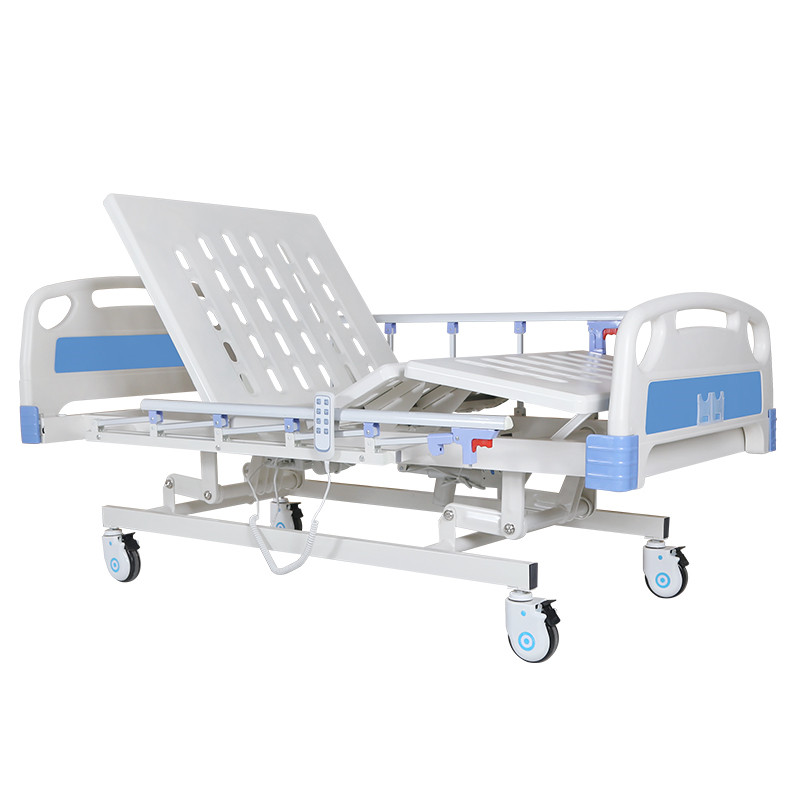


A hospital buyer receives quotations from several suppliers. Supplier A lists a minimum bed height of 450 mm. Supplier B lists 400 mm. Supplier C promotes an even lower configuration. At first glance, the comparison seems simple: The lower the minimum height, the better the hospital bed. But that conclusion is too simple. Bed height is not one isolated number. For an adjustable Hospital Bed, buyers should normally understand at least three different specifications: They should also understand exactly where the manufacturer measures that height. A low minimum position can be useful for some applications, while a higher working position can support other care tasks. The correct procurement question is therefore not: “Which bed goes lowest?” It is: “Does the complete height range match the intended hospital workflow and product requirements?” When a supplier writes: Bed height: 450–720 mm the buyer should confirm exactly what is being measured. Depending on the manufacturer's specification method, height may refer to a defined point on the bed platform or another specified reference. If the published dimension is measured to the mattress platform rather than the top of the mattress, adding a mattress changes the final height experienced by the patient. Two beds with apparently similar published heights may not create exactly the same final sleeping-surface height if their measurement methods or mattress configurations differ. “Is this height measured from the floor to the mattress platform, and does the stated dimension include the mattress?” This tells the buyer how far the adjustable platform can be lowered within the bed's designed operating range. This is equally important when evaluating an electric height-adjustable hospital bed. For example, consider two hypothetical beds: Bed A: 400–650 mm. Bed B: 450–750 mm. Bed A has the lower minimum position. Bed B has the higher maximum position. A hospital bed is used in different positions throughout the day. Depending on the intended use and applicable procedures, the bed may be repositioned for: The purpose is to allow the bed to be repositioned within its designed limits. However, buyers should avoid turning “lower” into a universal quality ranking. If the platform is 400 mm from the floor and a mattress is added, the top surface will be higher than 400 mm. This is particularly important when comparing beds supplied with different mattress thicknesses. Caregivers interact with the patient and the bed repeatedly. A buyer focused entirely on the lowest position may overlook the other end of the operating range. Suppose: Bed A: 400–650 mm. Bed B: 450–750 mm. Both provide substantial adjustment, but their operating envelopes are different. More range can affect: Do not inspect only the lowest and highest positions. Look for: Overall height adjustment changes the elevation of the bed platform according to the bed design. But the functions should still be described separately in the specification. Operate the sample in realistic configurations. Consider: Do not remove components simply to demonstrate an attractive minimum-height number unless that configuration represents the intended product use. This creates a more realistic understanding of the final product. The caster system is part of the complete bed structure. Ask whether the published bed-height specification remains the same for each configuration. Depending on the design, central braking systems include mechanical components connected to the caster system. It is not simply achieved by making the legs shorter. A bed may have a particular platform height while still containing: underneath. For example, the project may need to consider compatibility with other equipment used around the bed. An ultra-low elderly care bed may prioritize a different operating environment from a general hospital ward bed. Consider whether the project requires: A manual hospital bed may provide different combinations of crank-operated functions. Do not assume function count from appearance. Record the minimum and maximum positions using the same measurement method applied to electric beds. Possible factors include: A dimensional drawing can clarify where the measurement starts and ends. A buyer still needs the actual dimension. Without a defined reference, the number can be difficult to compare. If load conditions matter to the project, request the relevant technical information. For formal projects, define the required verification method before inspection. But they may move through that range differently. Observe: This is useful for basic function confirmation. Do not calculate bed capacity from actuator numbers or appearance. During sample approval, use an appropriate measuring tool. Where the project requires defined dimensions, state them clearly. The requirement should reflect the current project. Where dimensional tolerance matters, it should be technically appropriate. The factory needs to know the acceptance criteria before manufacturing begins. Production consistency matters. Representative units can be checked against the agreed specification according to the inspection plan. Depending on the design, shipment configuration may differ from the operating configuration. Follow the installation instructions. The receiving or technical team can confirm the intended functions according to the agreed acceptance procedure. Do not continue repeated operation if an unresolved fault is observed. Minimum height alone cannot define its suitability. Room layout, doors, elevators and surrounding equipment can all influence project requirements. Record the actual number. Do not compare only the minimum. Confirm the reference point. Avoid mixing two different measurement methods. Understand the final surface height. Confirm this if multiple caster options are available. Ask separately where relevant. Understand the bed's lifting configuration. Use technical documentation rather than visual estimation. Include critical dimensions in the agreed quality requirements. Minimum height is easy to advertise. 400 mm. 350 mm. 250 mm. As the number becomes smaller, the specification can appear increasingly impressive. But professional procurement should not become a competition for the smallest number. A hospital bed operates across a range. The buyer needs to understand: how low it goes, how high it goes, where those measurements are taken, how the mattress changes the final surface height, how the bed moves between those positions, and whether the complete range matches the intended hospital environment. The right hospital bed height is therefore not one universal number. It is a dimensional range that should be selected according to the intended application and clearly defined in the procurement specification. Instead of asking: “Which supplier has the lowest hospital bed?” ask: “What height range does our project actually require, how is it measured, and can the supplier consistently deliver that specification?” That question leads to a much more meaningful product comparison. Hebei Heyuan Medical Equipment Co., Ltd. manufactures electric hospital beds, ICU hospital beds, manual hospital beds and related medical furniture for distributors, hospitals and international healthcare projects. Buyers can explore our Hospital Bed range to compare different height-adjustable hospital bed configurations. For hospital projects, distributor orders, OEM requirements or bulk hospital bed procurement, please contact us with the required functions, dimensions, quantity and destination market.Is a Lower Hospital Bed Always Better?
First Confirm What “Hospital Bed Height” Actually Means
Different Measurements Can Produce Different Numbers
Possible Reference Points Can Differ
Mattress Thickness Can Change the User's Actual Surface Height
This Is Why Measurement Method Matters
Ask the Supplier a Precise Question
This One Question Can Prevent a Misleading Comparison
Minimum Height and Maximum Height Serve Different Purposes
Minimum Height Describes the Lowest Available Position
It Is Only One End of the Specification
Maximum Height Describes the Highest Available Position
Do Not Ignore It Because the Catalogue Emphasizes the Minimum Number
The Complete Range Matters
Neither Single Number Tells You Which Configuration Matches a Specific Project
Why Do Electric Hospital Beds Have Height Adjustment?
Because One Fixed Height Cannot Suit Every Activity
The Required Position Can Change With the Task
This Is Why Height Adjustment Is a Range Rather Than a Single Ideal Number
Evaluate the range according to the intended environment
Why Can a Lower Position Be Useful?
Some Applications Benefit From a Lower Sleeping-Surface Position
The Appropriate Position Depends on the User and Care Environment
Remember the Mattress
Always Evaluate the Complete Bed-and-Mattress Configuration
Do Not Use Catalogue Platform Height as the Final User Height Without Checking
Use the same measurement basis for every supplier
Why Can a Higher Working Position Be Important?
The Bed Is Also a Workplace for Care Staff
Height Adjustment Allows the Platform to Be Repositioned for Different Tasks
This Is Why Maximum Height Should Not Be Treated as an Unimportant Number
Compare both minimum and maximum positions
Do Not Compare Height Range Only by Subtracting Two Numbers
A Larger Numerical Range Does Not Automatically Mean a Better Bed
The Better Procurement Question Is Whether the Range Fits the Intended Use
Specification Matching Is More Useful Than Specification Maximizing
Do not purchase a number simply because it is larger
Check Whether the Head and Foot Ends Stay Level During Height Adjustment
Overall Height Adjustment Should Be Evaluated as a Movement
Operate the Bed Through the Complete Intended Range
Observe the Platform During Movement
Evaluate actual movement rather than relying only on the specification sheet
Height Adjustment and Trendelenburg Are Different Specifications
Buyers Sometimes Mix These Movements Together
Trendelenburg Changes the Longitudinal Tilt of the Platform
A Bed Can Use Related Mechanical Systems to Produce Different Movements
Do not assume height adjustment automatically defines tilt capability
Check the Bed Height When the Backrest Is Raised
A Hospital Bed Does Not Remain Flat All Day
Raise the Backrest and Recheck the Overall Bed Environment
Look at More Than the Platform
Hospital bed specifications interact with each other
Check the Lowest Position With the Side Rails in Their Normal Configurations
The Bed Should Be Evaluated as a Complete Product
Evaluate the Bed in the Configuration the Customer Will Actually Receive
Include the Mattress Where It Is Part of the Supplied Configuration
A catalogue number should correspond to a clearly defined configuration
Casters Affect the Overall Geometry Too
Hospital Beds May Use Different Caster Sizes and Designs
Changing the Caster Can Potentially Affect Dimensions
If a Supplier Offers Different Caster Options
Do not assume component substitutions leave every dimension unchanged
Central Braking and Height Should Be Evaluated Together
The Brake Mechanism Occupies Physical Space Under the Bed
Low-Bed Design Requires Careful Under-Bed Packaging of Components
This Is Another Reason Minimum Height Is an Engineering Result
The complete mechanism must fit and operate within the design
Under-Bed Clearance Is Different From Bed Height
This Is a Frequently Missed Specification
Therefore Platform Height Does Not Tell You the Available Under-Bed Clearance
Ask Separately If Under-Bed Access Matters
Request the relevant dimensional drawing rather than guessing from photographs
A 250 mm Elderly Care Bed and a 450 mm Hospital Bed May Be Designed for Different Applications
Do Not Compare Different Product Categories From One Number
The Lowest Number Does Not Automatically Make It the Better Hospital Product
Product Category Matters
Then evaluate the height specification within that application
Manual Hospital Beds Need a Different Height Discussion
Not Every Manual Bed Has Adjustable Overall Height
Confirm the Exact Model
A Three-Crank Bed May Have a Different Configuration From a Two-Crank Bed
Ask which crank controls which movement
If Overall Height Is Adjustable
This allows a fairer comparison
Why Do Two Suppliers Quote Different Heights for Beds That Look Almost Identical?
The Difference May Come From the Mechanical Design
Do Not Assume One Supplier Is Wrong Simply Because the Numbers Differ
Request a Technical Drawing
Technical drawings are more useful than visual estimation
Be Careful With “Ultra-Low” Marketing Language
Ultra-Low Is a Descriptive Term, Not a Complete Specification
Ask for the Minimum Platform Height in Millimeters
Then Ask How It Was Measured
Numbers plus measurement method are more useful than marketing labels
Check Whether the Minimum Height Is Achieved Under Load
Product Specifications Should Be Understood According to the Manufacturer's Defined Conditions
Do Not Invent Your Own Test Conditions
Use the Supplier's Declared Specification and Applicable Product Documentation
Test conditions should be agreed rather than improvised at the factory
Height Adjustment Speed Is Separate From Height Range
Two Beds Can Have the Same 450–720 mm Range
Do Not Use Range to Infer Speed
Operate the Sample
Range and movement quality are separate evaluation points
Do Not Judge Height Adjustment From an Empty Bed Alone
A Factory Demonstration Often Uses an Unloaded Bed
But Project Evaluation Should Follow the Manufacturer's Specified Conditions
Ask About the Declared Safe Working Load
Height adjustment belongs to the complete validated bed system
Measure a Sample Instead of Trusting the Catalogue Blindly
For a Large Order, Physical Verification Is Simple
Record the Measurement Method
Measure
Keep the results with the approved sample record
Hospital Tender Specifications Should Define Height Clearly
A Tender That Says Only “Adjustable Height” Leaves Too Much Unspecified
For Example, the Procurement Specification Can Define
Avoid Copying Numbers From an Old Tender Without Understanding Them
Every specification should have a reason
Do Not Set an Unrealistically Narrow Height Tolerance Without a Technical Reason
Manufactured Products Require Defined Tolerances
Discuss the Requirement With the Manufacturer Before Production
Do Not Wait Until Final Inspection to Introduce a New Tolerance
Inspection criteria should come from the approved specification
Check Height Consistency Across Mass Production
One Approved Sample Does Not Represent Every Bed in a 500-Unit Order
Include Critical Dimensions in Quality Control Where Required
During Inspection
Do not introduce random dimensional requirements after production is complete
Height Range Can Affect Packaging and Transport Configuration
An Adjustable Bed Contains a Lifting Structure
Ask Whether Any Assembly or Adjustment Is Required After Delivery
Do Not Assume the Bed Is Ready to Use Immediately After Removing the Carton
Transport position and operating position can be different concepts
Height Adjustment Should Be Included in Acceptance Testing
When Beds Arrive at the Hospital
For Height Adjustment, This Can Include
Record Any Abnormal Behavior
Follow the manufacturer's technical guidance
Buyers Should Compare Height Together With Other Core Dimensions
A Hospital Bed Is a Three-Dimensional Product
Also Review
These Dimensions Interact With the Hospital Environment
Use a complete dimensional drawing for serious procurement
Ask These 10 Questions When Comparing Hospital Bed Height
1. What Is the Minimum Platform Height?
2. What Is the Maximum Platform Height?
3. Where Is the Height Measured?
4. Does the Published Height Include the Mattress?
5. What Mattress Thickness Is Intended for the Bed?
6. Does Caster Configuration Affect the Height?
7. What Is the Under-Bed Clearance?
8. How Is Overall Height Adjustment Produced?
9. Can the Supplier Provide a Dimensional Drawing?
10. Will the Mass-Produced Beds Follow the Approved Height Specification?
These Questions Make Height Specifications Comparable
The Lowest Bed Is Not Automatically the Best Hospital Bed