
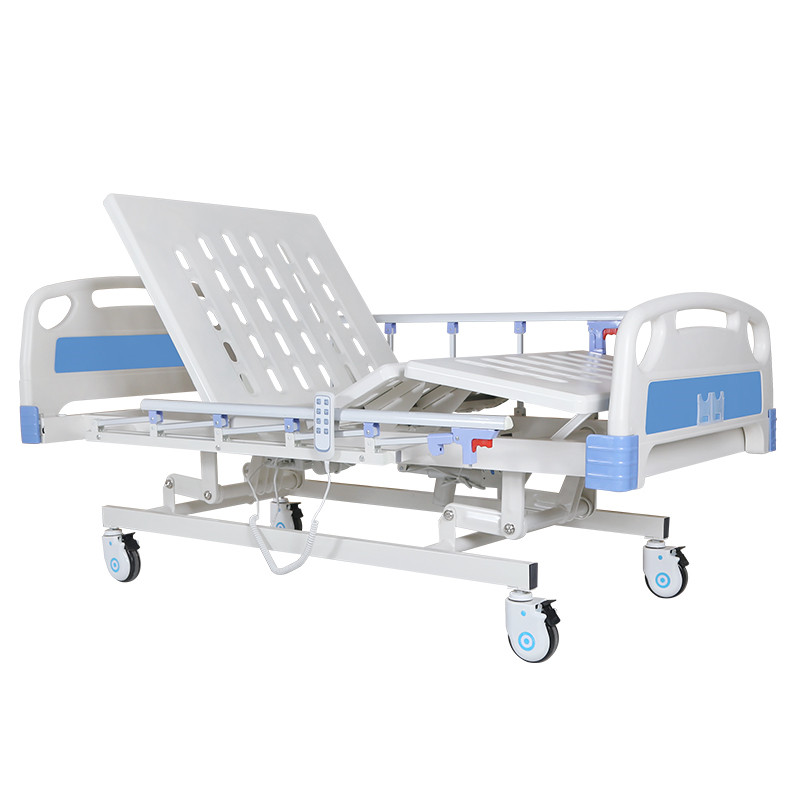
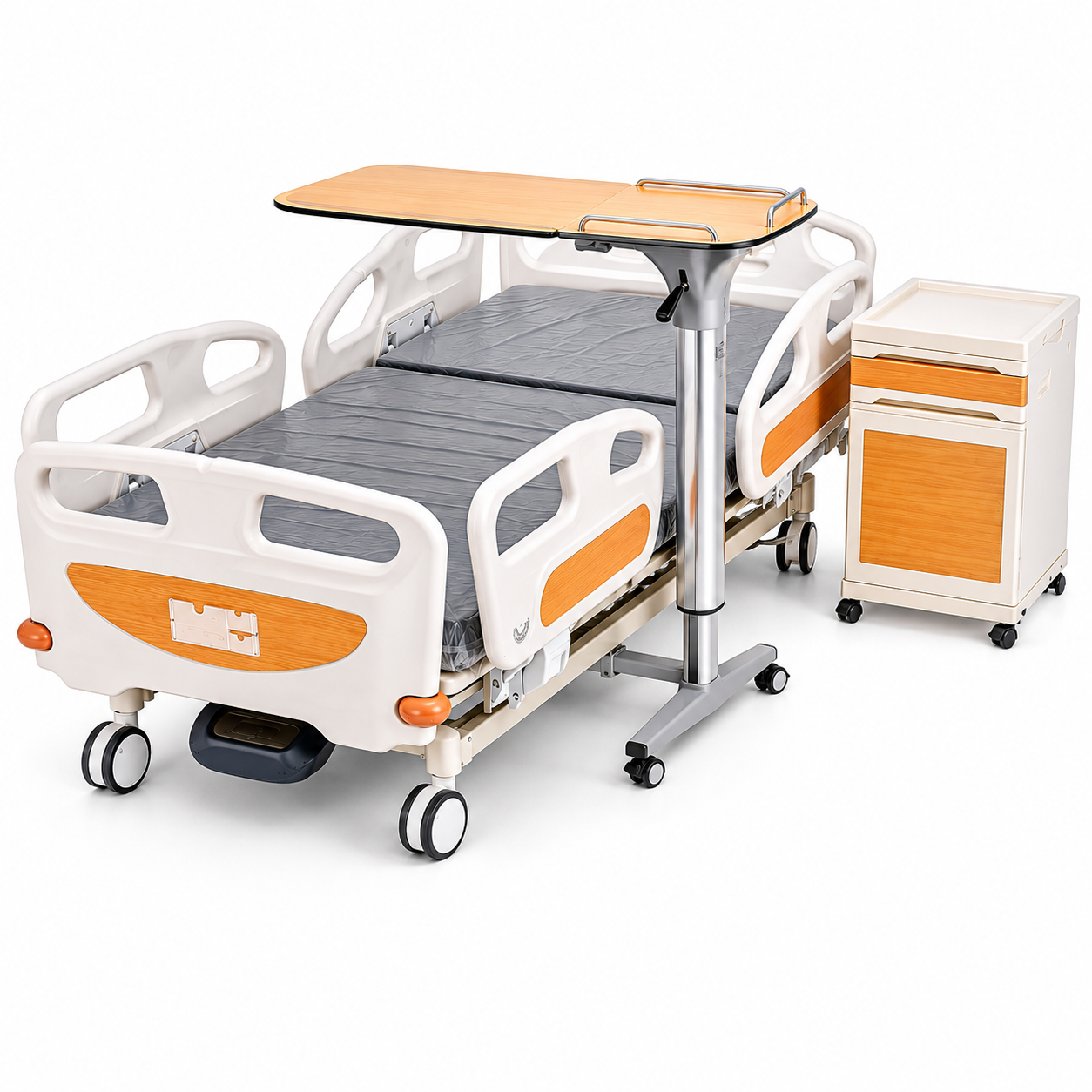

Hospital bed buyers often compare visible components first: side rails, headboards, casters, controls and overall appearance. One important part of the bed receives much less attention because most of it is hidden beneath the mattress. This is the mattress platform, sometimes also described as the bed deck, mattress deck or mattress support platform. The platform supports the mattress and forms the adjustable surface of the bed. On manual and electric hospital beds, different platform sections may move as the backrest, leg section or other bed functions are adjusted. For procurement teams comparing a hospital bed, the mattress platform should therefore be treated as a structural and functional component rather than simply as a surface for holding the mattress. A useful evaluation sequence is: Platform Construction → Sections → Support Structure → Surface Design → Movement → Mattress Compatibility → Cleaning → Production Consistency. The mattress platform is the part of the hospital bed directly beneath the mattress. Depending on the bed design, it may consist of several articulated sections that move relative to one another. These sections can correspond to areas such as: The exact structure depends on the hospital bed model. When the bed is adjusted, the platform geometry changes while continuing to support the mattress. No. These components are related, but they should not automatically be treated as the same structure. The main bed frame provides the primary structural foundation of the bed. The mattress platform supports the mattress and includes the sections involved in bed positioning. Depending on the design, the complete hospital bed may therefore include: Base Structure → Main Frame → Adjustable Platform → Mattress → Patient Surface. Understanding this distinction helps buyers ask more precise technical questions. Do not evaluate the platform only from product photographs. Ask the manufacturer to identify the material and construction. Hospital bed platforms may use different steel structures or other model-specific designs. Useful questions include: This provides a better technical picture than a description such as “strong bed board.” The word “one-piece” can be confusing when discussing adjustable hospital beds. An adjustable bed normally needs multiple moving platform sections. A manufacturer may use a formed panel for each individual section while the complete platform remains articulated. Therefore, if a supplier describes a “one-piece bed board,” ask what exactly the term refers to. Does it mean: Clarifying terminology prevents two suppliers from appearing identical when their structures are actually different. Hospital bed platforms can use different support structures. Some models use formed or pressed steel panels. Others may use multiple steel strips or another supporting arrangement. Neither description should be judged from the name alone. Buyers should compare the complete design: The quality of the finished structure matters more than one isolated construction term. The mattress platform should correspond to the movement architecture of the hospital bed. Ask the supplier to identify the sections clearly. For example: This is especially useful when comparing manual and electric beds with different function counts. The number of visible platform sections and the number of adjustable bed functions are not necessarily the same thing. A platform can contain several structural sections while only some of them are actively driven. Likewise, one bed function may involve coordinated movement between more than one section. Therefore, compare: Platform Sections and Adjustable Functions as related but separate specifications. The backrest section is one of the most frequently adjusted parts of many hospital beds. During sample evaluation, buyers should inspect: The evaluation should be performed on the complete mechanism rather than only on the visible platform panel. The same principle applies to the leg area. Do not inspect only whether the platform moves. Look at how the movement is created and supported. Depending on the bed design, this can involve: These parts work together as one positioning system. This is one of the simplest practical checks a buyer can perform during factory inspection or sample evaluation. Remove the mattress and inspect the platform from above. Then inspect the structure underneath. Look for: A hospital bed should not be evaluated only from the side that appears in a catalogue photograph. During sample inspection, operate the bed through its intended movements and observe the platform. Look for unnecessary: The objective is not to expect an adjustable structure to behave like one completely rigid panel. The objective is to verify that the articulated system operates as designed. Pressed or formed steel mattress platforms often contain openings or perforated areas depending on the design. Buyers may see these features and assume they are purely decorative. Instead of guessing their purpose, ask the manufacturer to explain the design. When comparing products, evaluate whether the platform: For coated steel components, the platform finish should be inspected together with the rest of the bed structure. Look at: If the project specifies a particular coating or surface-treatment requirement, include it in the technical specification rather than relying on visual appearance alone. A thicker-looking platform is not necessarily made from thicker steel. Forming, bends, edges and surface design can change how a panel looks. If material thickness is an important purchasing specification, request the actual value from the supplier and define how it is stated. This is more reliable than trying to estimate thickness from photographs. A specification such as “1.0 mm steel” is incomplete unless the buyer knows which component it describes. Hospital beds contain multiple steel components that can use different material specifications. Ask separately about: This prevents one thickness number from being incorrectly applied to the entire bed. Likewise, a frame tube dimension should not be confused with the mattress platform specification. A complete structural comparison can include: Main Frame Tube → Supporting Structure → Mattress Platform → Moving Joints. This provides a much more useful understanding of the bed than a single statement such as “heavy-duty steel frame.” Where welded steel structures are used, inspect accessible welded areas during sample evaluation. The buyer can look for consistency and general workmanship across the structure. This is especially useful when comparing beds that look almost identical after painting but use different fabrication processes underneath. The platform and mattress should be evaluated together. Confirm: A mattress should not be selected independently from the bed and assumed to fit correctly simply because its approximate dimensions look similar. When an adjustable bed changes position, the mattress should remain appropriately located on the platform according to the bed design. Some platforms use model-specific mattress retainers or structural features intended to help position the mattress. During sample evaluation, check the complete bed with the intended mattress installed. Do not test only an empty platform. A bare hospital bed platform and a complete bed with mattress do not provide exactly the same evaluation experience. Once the correct mattress is installed, operate: Observe how the mattress follows the platform movement. This can reveal fit or compatibility issues that are not obvious when the bed is flat. During sample evaluation, do not move the bed only a small distance. Operate the relevant sections through their intended adjustment range according to the product instructions. Observe: This helps the buyer understand how the complete platform behaves throughout adjustment. Adjustable platform sections operate close to one another. During movement, check whether components interact as intended. Unexpected contact, abnormal resistance or visible misalignment should be investigated before approving a sample. The supplier should explain the correct movement sequence for the specific model. The mattress normally covers most of the platform during use, but the platform still needs to be included in the facility's cleaning and maintenance procedures. Buyers can ask: Follow the manufacturer's instructions and the healthcare facility's applicable procedures. On electric hospital beds, actuators, cables, linkages and other components may be located beneath the mattress platform. The platform design should therefore be considered together with maintenance access. Ask how technicians access relevant components if inspection or replacement is required. Electric beds are not the only products with mechanisms beneath the mattress platform. Manual hospital beds can include: These components should also be evaluated as part of the complete bed structure. Two hospital beds can have: but still use different mattress-platform structures. If the buyer compares only the visible configuration, the lower quotation may appear equivalent when the underlying construction is different. Ask suppliers to provide enough technical information to compare the same components. Most catalogue photographs are taken with a mattress installed or from an angle that emphasizes the overall bed appearance. This can hide much of the mattress platform. For serious procurement, request additional information such as: This is especially useful when purchasing remotely. A short operation video can provide information that a static image cannot. Ask the supplier to demonstrate relevant bed movements while showing the platform and mechanism. This can help the buyer observe: If a sample is approved before a bulk order, document the mattress-platform configuration. Useful records can include: This gives the buyer a reference for later production inspection. A supplier may sometimes propose a production adjustment for manufacturing, cost or availability reasons. If that change affects the mattress platform, the buyer should understand it before approval. Changing from one platform structure to another should not be treated as an invisible substitution simply because the bed looks similar after the mattress is installed. For project procurement, the objective is not only to approve one good sample. The mass-produced beds should match the agreed specification. Inspection can verify whether the approved: has been maintained throughout the production batch. No single component determines the quality of a hospital bed. A strong platform cannot compensate for poor casters, unstable side rails or unsuitable mechanisms. Likewise, premium-looking rails and headboards cannot compensate for an inappropriate underlying structure. A complete comparison should include: Frame → Platform → Adjustment Mechanism → Side Rails → Head/Foot Boards → Casters → Controls → Mattress. Instead of asking which design is universally better, compare the actual construction of the proposed beds. How is each mattress-support section constructed? What structure supports the platform underneath? How do the sections articulate during adjustment? What material and treatment are used? How does the manufacturer recommend cleaning the structure? Which mattress dimensions and construction are intended for the platform? These questions are more useful than selecting a platform based only on whether it uses a panel or strip appearance. When platform construction matters to the project, buyers can request: This creates a much clearer technical comparison between suppliers. Not automatically. The term “one-piece” needs to be defined first, especially on an adjustable hospital bed that contains multiple moving sections. Buyers should evaluate the actual panel construction, supporting structure, movement mechanism and complete finished bed rather than assuming one manufacturing description guarantees better performance. Not necessarily. Material thickness is only one part of a structural design. Forming, geometry, support locations, frame construction, connections and the complete mechanism also influence how the platform is built. If thickness is specified by the project, verify it accurately, but do not use one thickness number as the only measure of product quality. Because many important differences between hospital beds are difficult to see after the mattress is installed. Looking under the mattress helps buyers understand: This is especially useful when two beds appear nearly identical in catalogue photographs. The mattress platform is easy to overlook because it is normally covered during use, but it is a central part of the hospital bed's structure and positioning system. Professional buyers should evaluate it through: Material → Construction → Sections → Support → Movement → Mattress → Cleaning → Production Consistency. Do not compare hospital beds only by visible side rails, headboards and function count. Remove the mattress, inspect the platform, look underneath the bed and understand how the adjustable sections are supported and operated. This provides a much more complete picture of what is actually being purchased. Hebei Heyuan Medical Equipment Co., Ltd. manufactures manual and electric hospital beds with different frame, mattress-platform and positioning configurations for hospitals, distributors and healthcare projects. If you are comparing hospital bed specifications for a project, please contact us with the required bed type, functions, quantity and technical requirements.Hospital Bed Mattress Platform: What Should Buyers Check Before Ordering?
What Is a Hospital Bed Mattress Platform?
Is the Mattress Platform the Same as the Main Bed Frame?
1. Ask What the Mattress Platform Is Made From
2. Understand One-Piece Panels and Sectional Construction
3. Compare Panel-Type and Strip-Type Platform Designs
4. Check the Number of Platform Sections
5. Do Not Assume More Platform Sections Mean More Bed Functions
6. Check How the Back Section Is Supported
7. Check the Leg Section as a Complete Mechanism
8. Look Under the Mattress Platform
9. Check Whether the Platform Feels Stable
10. Surface Openings Can Serve Practical Purposes
11. Check the Surface Finish
12. Do Not Judge Steel Thickness From Appearance
13. Check Whether Thickness Refers to the Platform or Frame
14. Compare Frame Tube Specifications Separately
15. Check Weld Quality Where Relevant
16. The Mattress Platform Must Match the Mattress
17. Check Mattress Retention
18. Operate the Bed With the Mattress Installed
19. Check the Platform at Maximum Intended Positions
20. Check for Interference Between Moving Sections
21. Cleaning Should Be Considered During Platform Selection
22. Check Access to Components Under the Platform
23. Manual Beds Also Need Under-Platform Inspection
24. Compare Platform Construction Before Comparing Price
25. Product Photos Are Not Enough
26. Use Video to Check Platform Movement
27. Check the Approved Sample Before Mass Production
28. Do Not Allow an Unrecorded Platform Change
29. Bulk Orders Need Production Consistency
30. Platform Quality Should Be Evaluated as Part of the Complete Bed
Panel Platform vs Strip Platform: What Should Buyers Compare?
Platform Structure
Supporting Frame
Movement
Surface Finish
Cleaning
Mattress Compatibility
What Should Buyers Put in a Hospital Bed RFQ?
Hospital Bed Mattress Platform Sample Inspection Checklist
Is a One-Piece Steel Platform Better?
Is a Thicker Hospital Bed Platform Always Better?
Why Should Buyers Inspect Under the Mattress?
Final Advice for Hospital Bed Buyers