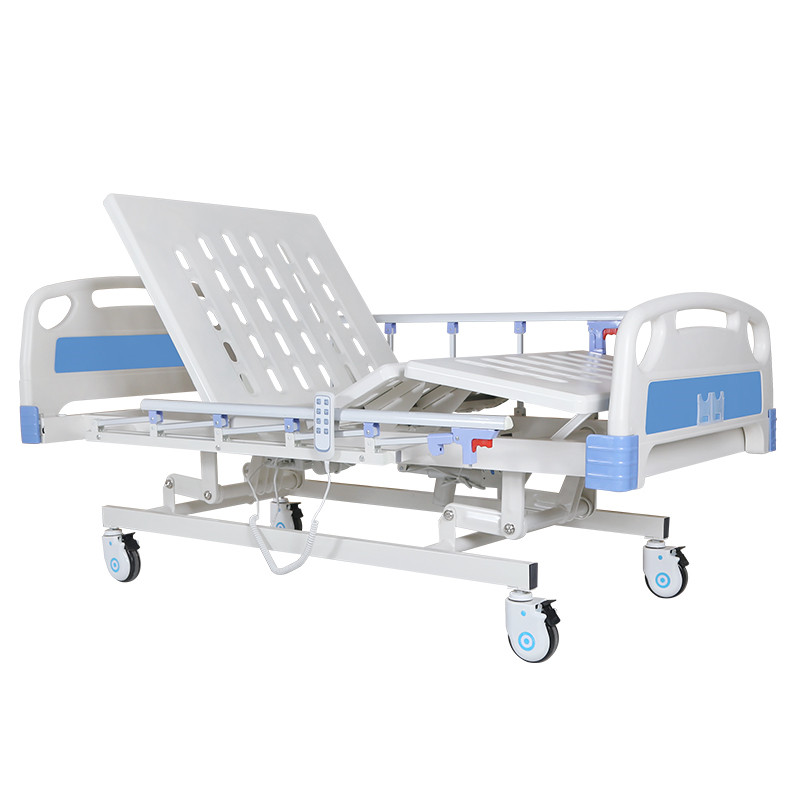
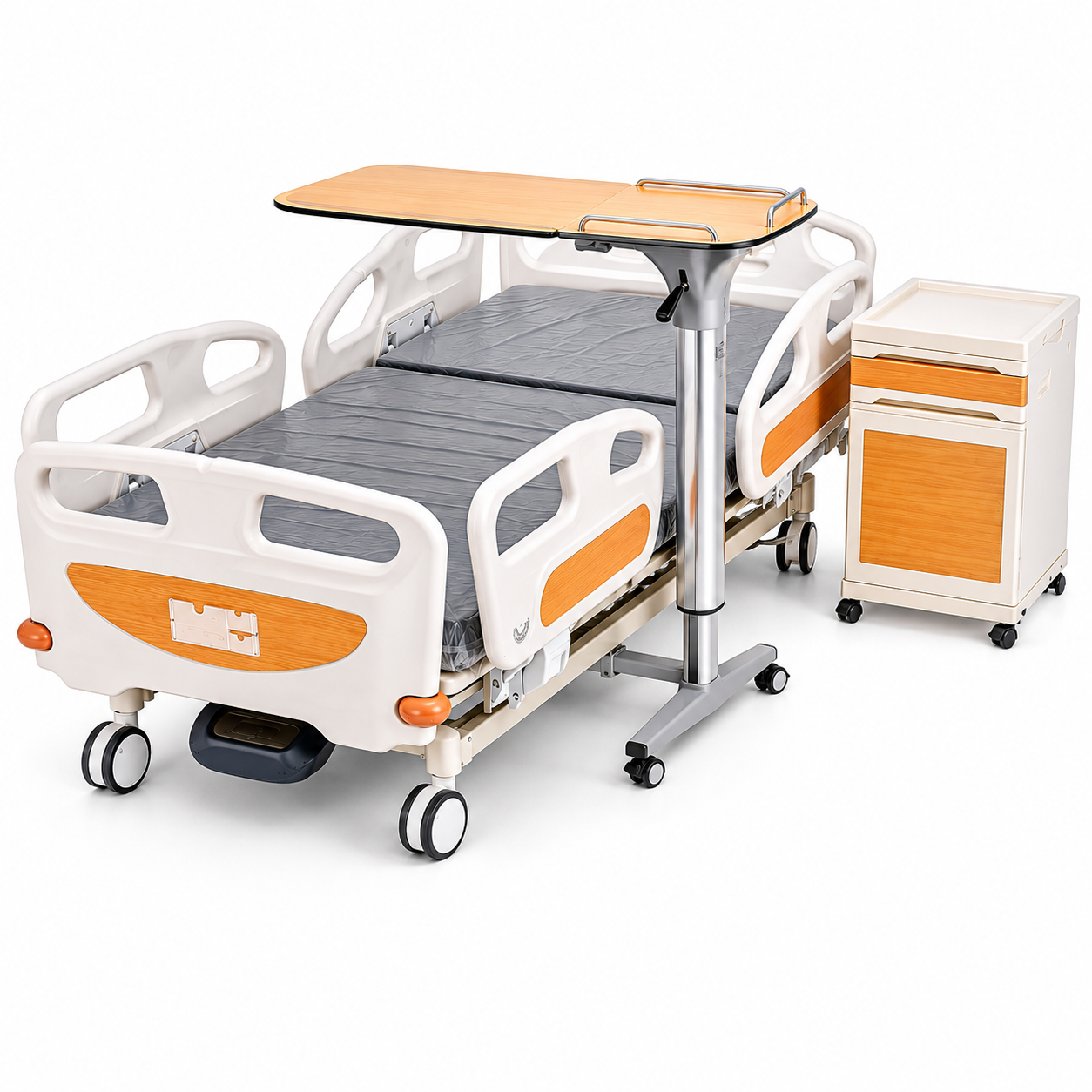

Finding a hospital bed supplier is relatively easy. Finding one that can provide the right bed models, consistent specifications, suitable accessories and reliable support for repeat orders requires a more careful comparison. For medical equipment distributors, importers and hospital purchasing companies, the supplier decision affects more than the initial purchase price. It also determines which products can be offered to customers, how easily different configurations can be sourced and whether future orders can match previously approved specifications. A practical sourcing process starts with the hospital beds themselves. Buyers should first compare available models and configurations, then evaluate prices, production arrangements and long-term supply capability. Explore our hospital bed product range to review electric and manual models for different healthcare applications. A supplier's product range is one of the first things a buyer should examine. Different customers may require different types of hospital beds, and one configuration cannot satisfy every purchasing requirement. Electric hospital beds use actuators and control systems to perform selected positioning functions. Depending on the model, these can include backrest adjustment, leg-rest adjustment, height adjustment and additional platform positioning. Buyers should compare the actual functions rather than assuming that every electric hospital bed has the same capabilities. Manual hospital beds use mechanical adjustment systems such as hand cranks. Common options include two-crank and three-crank configurations. For these products, compare the crank mechanism, frame construction, bed platform, side rails, casters and braking system. ICU hospital beds may incorporate more advanced positioning, controls and model-specific features. Buyers should request the complete technical configuration instead of relying only on the ICU product designation. Pediatric beds require product configurations appropriate to their intended users and healthcare setting. Dimensions, enclosure design and other model-specific features should be reviewed separately from adult hospital beds. Distributors frequently serve customers with different budgets, functional requirements and product preferences. A hospital bed supplier offering multiple product categories can help buyers build a more complete product portfolio without treating every inquiry as a completely new sourcing project. For example, a distributor may require an economical manual hospital bed for one customer and a height-adjustable electric hospital bed for another. The ability to source both products with clear technical documentation can simplify product selection and commercial communication. Two suppliers may use the same product name while offering beds with different components and construction. Before comparing prices, buyers should confirm the following specifications. These specifications help buyers determine whether different quotations actually describe equivalent hospital beds. For electric models, the electrical system requires additional attention. Buyers should request information about the actuators, control box, handset, electrical input and available functions. Battery backup, emergency controls and other features should be confirmed individually. They should not be assumed to be included with every electric bed. It is also important to understand that the number of actuators does not necessarily equal the marketed number of bed functions. A supplier should be able to explain which movements the selected model provides and how those movements are controlled. The price of a hospital bed depends on its complete configuration. Important cost factors can include: A lower quotation does not necessarily represent a better purchasing opportunity if it excludes components included in another supplier's offer. For example, one electric hospital bed quotation may include a mattress and IV pole, while another quotation may cover the bed alone. Similarly, one model may use central brakes while another uses individual caster brakes. Before choosing a supplier, confirm the complete product and accessory configuration behind each price. Many B2B buyers need more than hospital beds. Depending on the supplier's product range, related items may include: Sourcing compatible products together can make order coordination easier, provided that every product has its own confirmed specification and price. For wholesale purchasing, supply capability matters alongside product quality. A supplier should be able to explain how the requested quantity, product mix and customization requirements affect production arrangements. A single-model order requires consistent specifications across the full quantity. The approved components, dimensions and accessories should remain unchanged unless the buyer authorizes a modification. Some buyers need electric and manual hospital beds in the same shipment. Each model should be identified separately by product code, quantity, configuration and packaging information. For distributors, repeat-order consistency is particularly important. Buyers should retain approved specifications and confirm whether the supplier can continue providing the same configuration for subsequent orders. A supplier's ability to deliver a sample does not automatically establish its ability to fulfill a larger order. Before placing a substantial purchase, discuss: The purpose is to establish whether the proposed delivery arrangement is realistic for the specific order. For a new model, customized product or unfamiliar supplier, sample evaluation can help buyers confirm the proposed configuration. Inspection can cover the bed's dimensions, functions, frame, side rails, casters, controls, mattress and accessories. Once approved, the sample specification can serve as a reference for subsequent production. Some medical equipment distributors require hospital beds under their own brands. Depending on the product and order quantity, OEM arrangements may include: All approved changes should be documented before production. Branding should not obscure the identity or specifications of the underlying product. Hospital beds are relatively large products, and their export packaging affects shipment volume, handling and container utilization. Buyers should request: Container capacity should be calculated from actual export package dimensions rather than the assembled dimensions of the bed. Documentation requirements depend on the product and destination market. Buyers should ask the supplier which certificates, declarations, technical documents and test reports are available for the exact model being purchased. A general company certificate should not be treated as proof that every product meets every destination-market requirement. Importers should confirm applicable regulatory and documentation requirements before finalizing an order. Warranty and spare parts arrangements are important when evaluating long-term supply relationships. Before purchasing, clarify: Components such as casters, rails, controls and actuators should be identified accurately so that future replacement requests can refer to the correct model. A clear inquiry helps the supplier recommend suitable products and prepare a comparable quotation. Provide the following information whenever possible: If the exact model is unknown, provide the main functional requirements so that the supplier can suggest suitable alternatives. Depending on the company, available products may include electric hospital beds, manual hospital beds, ICU beds, pediatric beds and related medical furniture. Buyers should verify the actual product range. Yes, some suppliers offer both categories. Each model should have its own specification, quantity and quotation. Many suppliers serve distributors and institutional buyers. Production capability, minimum order quantity and delivery arrangements should be confirmed for the specific products required. Provide the bed type, functions, quantity, component preferences, mattress and accessory requirements, destination market and any customization needs. Some manufacturers offer OEM branding and selected customization options. Availability depends on the model, quantity and agreed production specification. Prices can vary because of differences in functions, construction, side rails, casters, electrical components, mattresses, accessories and packaging. Yes. Packing dimensions and gross weight help buyers evaluate shipping volume and plan international transportation. Compare equivalent product specifications first. Then evaluate pricing, production capability, packaging, documentation, warranty and commercial terms. A reliable hospital bed supplier should offer more than a list of product prices. For international B2B buyers, the supplier should help clarify product configurations, provide accurate technical information and support consistent supply for both initial and repeat orders. The most practical purchasing process is: Select Bed Models → Confirm Functions and Components → Compare Equivalent Quotations → Review Supply Capability → Approve Specifications → Confirm Production and Packaging → Place the Order. Heyuan Medical manufactures electric hospital beds, manual hospital beds and related patient-care equipment in China for international distributors, importers and healthcare equipment buyers. Browse our hospital bed collection to compare available models. For product specifications, wholesale quantities, OEM requirements or quotations, please contact our sales team.Hospital Bed Supplier: How to Compare Products, Prices and Supply Capability
What Products Should a Hospital Bed Supplier Offer?
Electric Hospital Beds
Manual Hospital Beds
ICU Hospital Beds
Pediatric Hospital Beds
Why Product Range Matters for Medical Equipment Distributors
Compare the Actual Hospital Bed Specifications
Bed Dimensions
Bed Frame Construction
Side Rail Configuration
Caster and Brake System
How to Compare Electric Hospital Bed Configurations
Hospital Bed Supplier Prices: What Are You Actually Paying For?
Compare Like-for-Like Products
Can One Supplier Provide Beds and Related Hospital Furniture?
Hospital Bed Supplier for Wholesale and Bulk Orders
Single-Model Orders
Mixed-Model Orders
Repeat Orders
What Should Buyers Check About Production Capability?
Should You Request a Hospital Bed Sample?
OEM Hospital Bed Supply for Distributors
Why Export Packaging Matters When Choosing a Supplier
What About Quality Documents and Certifications?
Hospital Bed Warranty and Spare Parts Support
How to Request a Quotation From a Hospital Bed Supplier
Hospital Bed Supplier Comparison Checklist
Frequently Asked Questions About Hospital Bed Suppliers
What types of hospital beds can a supplier provide?
Can I buy electric and manual hospital beds from the same supplier?
Can a hospital bed supplier provide wholesale quantities?
What information is needed for an accurate hospital bed quotation?
Can hospital beds be supplied with OEM branding?
Why do hospital bed supplier prices vary?
Should buyers request packing dimensions before ordering?
How can I compare two hospital bed suppliers fairly?
Choose a Hospital Bed Supplier Based on Products and Long-Term Supply Value