
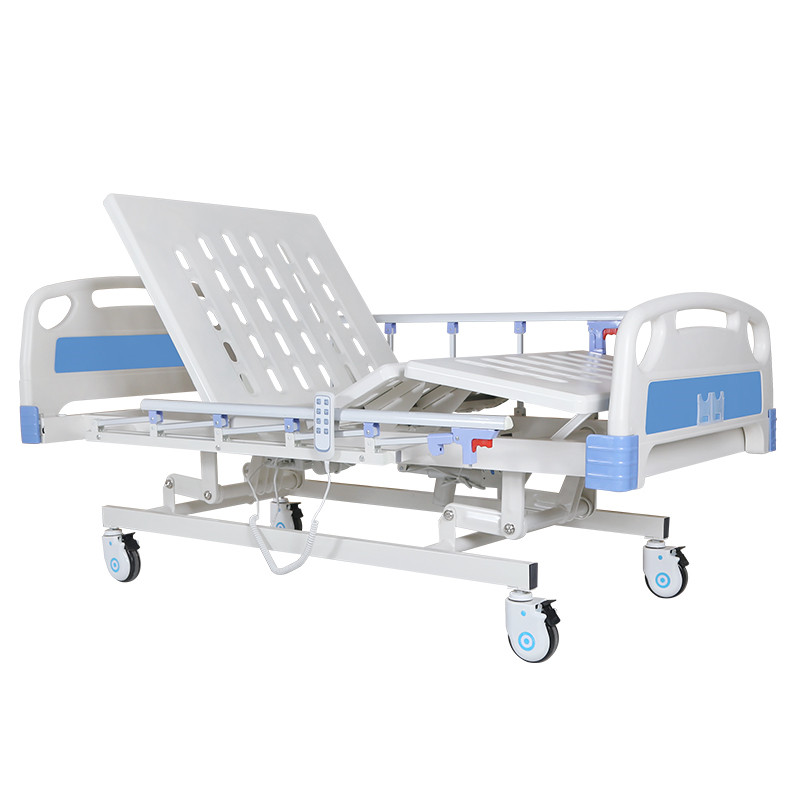
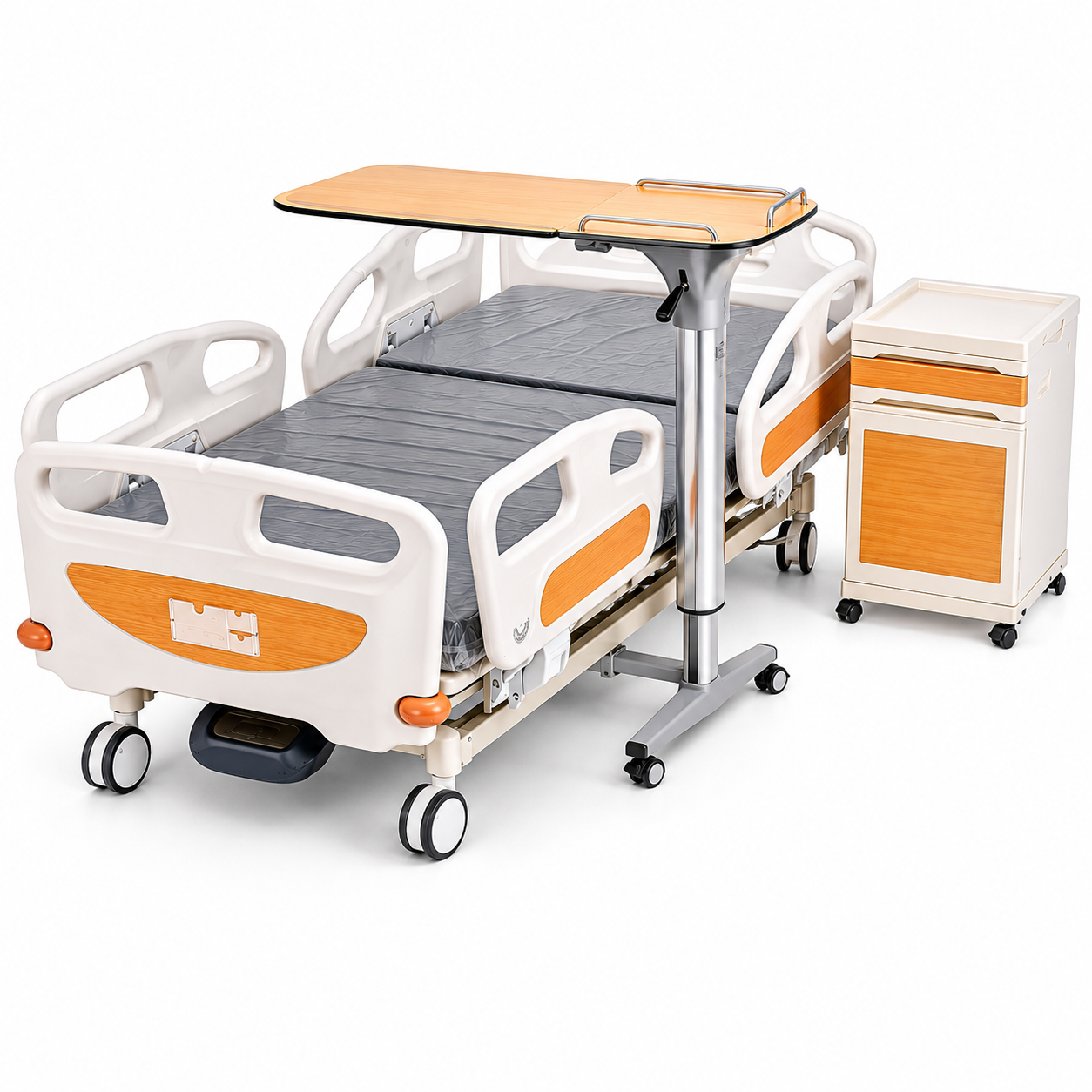

A hospital bed may look like a relatively straightforward piece of medical furniture, but different models can provide very different levels of adjustment, structural design and operating convenience. A bed intended for a general ward does not necessarily need the same functions as a model selected for intensive care or a specialized patient room. For hospital equipment importers, distributors and healthcare project buyers, understanding how to choose a hospital bed begins with comparing actual product configurations. The most suitable model is not automatically the one with the greatest number of functions or the highest price. Manual two-crank beds, manual three-crank beds, electric three-function beds, electric five-function beds and ICU models each have different mechanical and electrical characteristics. Their adjustment mechanisms, frames, side rails, casters and control systems may also differ. When comparing hospital beds, the first step is to identify what the selected model can physically do. The second is to verify that its complete configuration, including mattress and accessories, is suitable for the intended clinical setting and applicable requirements. This guide explores those differences from a product perspective, helping professional buyers compare hospital beds without relying solely on product photographs, function counts or broad marketing descriptions. Browse our hospital bed product range to review available manual and electric configurations. Hospital beds are commonly grouped by their adjustment systems and intended applications. However, even within one product category, there may be variations in frame construction, operating mechanisms and standard components. A manual hospital bed operates specified movements through mechanical cranks. An electric bed uses powered actuators, compatible controls and a supporting mechanical structure to produce its adjustment functions. ICU hospital beds may incorporate additional positioning, controls and other model-specific features. Their exact capabilities should always be confirmed rather than assumed from the product category. These categories provide a useful starting point, but they should not replace a detailed technical comparison. A model described as multifunctional, for example, should specify exactly which movements are included. A manual two-crank hospital bed commonly provides backrest elevation and leg-section adjustment through separate mechanical systems. In this type of configuration, crank rotation is transferred through shafts, screws or other linkages to the articulated mattress platform. The precise mechanism varies between models. Many two-crank beds use a fixed-height supporting frame, although buyers should confirm the construction of the specific product. Manual two-crank beds can be a product option where powered adjustments and overall height adjustment are not required by the specification. However, buyers should not assume that all two-crank models have identical adjustment ranges, load ratings or frame dimensions. The exact technical data should be verified for each model. A manual three-crank hospital bed may provide an additional mechanical adjustment beyond backrest and leg positioning. In a common configuration, the third crank operates overall bed height. This changes more than the number of visible handles. A height-adjustable manual bed requires a suitable lifting and supporting mechanism connected to the frame. The design of that lower structure can differ from the arrangement used on a fixed-height two-crank model. The third crank should not automatically be assumed to provide height adjustment on every model. Its function must be confirmed in the product documentation. For a project requiring height adjustment but not powered operation, a suitably specified manual model may be considered alongside electric alternatives. An electric three-function hospital bed commonly provides powered backrest adjustment, leg-section adjustment and overall height adjustment. Instead of using crank handles to generate movement, the bed uses actuators connected to the mechanical structure. The user or authorized operator controls the supported movements through a handset or other approved interface. The electrical components and bed mechanisms must be compatible with one another. Two three-function electric beds may look almost identical yet use different actuators, control systems, height ranges and side-rail configurations. The term three-function therefore describes only part of the product. Buyers should request the actual adjustment ranges and a complete description of the standard configuration. A common electric five-function hospital bed provides backrest adjustment, leg adjustment, overall height adjustment, Trendelenburg positioning and reverse Trendelenburg positioning. These functions should be distinguished from one another. Raising the backrest is not the same movement as changing the orientation of the complete bed platform. A five-function bed may use a more complex mechanical and control configuration than a simpler model, although the exact design varies. Not every five-function bed has the same adjustment angles or operating characteristics. Some may also offer optional components or additional features that are not included in the standard price. The extra functions should be selected because they match the intended requirements, not because a higher function count is assumed to be better in every application. ICU hospital beds are commonly associated with more demanding positioning and care requirements, but their configurations vary significantly by manufacturer and model. Some ICU beds may include specialized controls, additional positioning functions, integrated components or particular side-rail and braking systems. These features must be identified individually. The designation ICU does not guarantee the presence of every advanced function. A product intended for an ICU environment should be evaluated against the hospital's actual technical specification and applicable safety requirements. For importers, describing the exact features is more useful than relying on ICU terminology without a corresponding datasheet. Hospital bed photographs are often taken with the mattress installed, hiding the structure beneath it. However, the mattress platform is an essential part of the adjustment system. It provides the supporting surface and transfers movement from the bed's mechanisms to the mattress. Adjustable beds may contain several articulated sections connected through hinges, pivots and supporting frame members. Two beds with similar adjustment functions can use different platform geometries. Buyers should therefore evaluate the actual deck construction and verify that the intended mattress can accommodate the specified movements. Overall bed-height adjustment moves the mattress platform to different heights relative to the floor. Backrest adjustment changes the angle of the upper mattress section. These are separate functions and should not be confused in product specifications. A fixed-height bed may have an adjustable backrest without providing overall height adjustment. A height-adjustable bed requires an additional lifting mechanism, which may be electric or manual depending on the model. The height of the mattress platform is not the same as the final mattress-top height. When comparing products, buyers should use consistent measurement references and consider how the installed mattress affects the complete configuration. Different hospital bed models may use aluminum rails, molded ABS panels or other rail configurations. The rail material influences its appearance and construction, while the operating mechanism determines how it moves and locks. Full-length and segmented designs can also differ in their mounting positions and relationship to the articulated platform. Rail suitability must be evaluated together with the bed and mattress. Appropriate entrapment and other safety requirements should be considered for the intended patient population. Side rails are not automatically suitable for every individual and should not be presented as a universal fall-prevention solution. Casters and brakes are another important difference between hospital bed configurations. Some models use individually operated caster brakes. Other models may have a central braking system controlled through an integrated mechanism. The systems differ in their construction and method of operation. A central braking system should not be assumed to be included merely because the bed is electric or marketed for intensive care. The buyer should confirm the standard braking configuration and any available alternatives for the selected model. The bed's external panels influence its appearance and dimensions. ABS, metal and other materials may be used, depending on the design. Some headboards are removable through a manufacturer-defined mechanism, while other beds use fixed or differently mounted assemblies. These differences affect model compatibility and replacement-part identification. Buyers should distinguish changes in exterior appearance from changes in the bed's mechanical functions. Two beds may share the same adjustment system while using different headboard and footboard designs. The mattress is frequently shown in product photography, but it may or may not be included in the quoted bed configuration. Mattress dimensions must correspond to the selected platform, while thickness and construction can affect compatibility with the articulated sections and side rails. A mattress that fits one hospital bed should not automatically be assumed suitable for another bed of similar overall size. Model-specific compatibility should be established using the manufacturer's approved specifications. Hospital bed specifications may state safe working load, maximum patient weight or another manufacturer-defined rating. These figures do not necessarily mean the same thing. Safe working load may account for more than the patient's weight according to the applicable definition and approved configuration. For this reason, comparing a numerical load rating without checking its meaning can be misleading. The rated capacity applies to the complete product, not merely the mattress platform, actuator or caster assembly. Buyers should rely on the specified and supported complete-bed rating rather than estimate it from individual component characteristics. Hospital beds are frequently photographed with mattresses, IV poles, bedside cabinets, overbed tables and other accessories. However, these items are not automatically included in every quotation. Some accessories may be standard, while others are optional or supplied as separate products. Accessories that attach to the bed should be compatible with its approved configuration. For bulk orders, listing each included item separately helps prevent differences between the product photograph, quotation and delivered equipment. The main difference between hospital bed applications is not necessarily their exterior appearance. It is the set of functions and technical requirements defined for the intended environment. A general ward may specify manual beds for certain applications and electrically adjustable beds for others. A facility may also require particular height ranges, braking systems or side-rail configurations. Recovery areas and intensive care settings can have different positioning and equipment requirements. The correct mix must therefore be established from the hospital's actual specifications rather than a universal rule about which bed belongs in which department. These are product descriptions, not universal clinical placement recommendations. Any selection for a particular clinical area should meet the institution's applicable requirements and be reviewed by the relevant healthcare professionals. Hospital beds are often advertised with photographs showing a selected adjustment position, rail design and exterior finish. These images help identify the product, but they do not establish every function or technical characteristic. For example, a photograph of a raised backrest does not indicate whether the movement is electric or manual. A photograph of a bed with a mattress also does not show the complete supporting platform beneath it. When product photographs and technical specifications refer to different configurations, the difference should be clarified before an order is confirmed. Two quotations can show similar unit prices while describing different products. One bed may include powered height adjustment, a particular rail mechanism and a mattress. Another may offer a different drive system, alternative rails or no mattress. For a meaningful comparison, buyers should identify the actual differences in the supplied equipment. The purpose is not to choose the quotation with the largest number of features. It is to determine which quotation supplies the specified bed configuration. This approach is particularly useful when importers compare models from different manufacturers or prepare a multi-model hospital bed order. Understanding how to choose a hospital bed involves more than selecting manual or electric operation. Buyers also need to compare the adjustment mechanisms, mattress platform, height range, frame, side rails, braking system, mattress and included accessories. The suitable configuration depends on the intended application and the requirements of the purchasing institution. A practical product-selection sequence is: Hospital Application → Manual or Electric Operation → Required Adjustments → Frame and Platform → Rails and Brakes → Mattress → Accessories → Technical Specification This approach helps healthcare buyers identify meaningful product differences without relying only on price, exterior appearance or the number of advertised functions. Explore our manual, electric and ICU hospital bed models to review available product configurations. Hebei Benhui Medical Equipment Technology Co., Ltd. supports international customers with hospital bed and medical furniture supply, with products manufactured by Hengshui Heyuan Medical Equipment Co., Ltd. Product functions, dimensions and available options vary by model and should be confirmed against the corresponding technical documents. If you are sourcing hospital beds for distribution or a healthcare project, please contact our team with your required bed types, functions, quantities and destination market. We can help clarify suitable product options and provide model-specific quotations.A General Ward, a Recovery Room and an ICU Don't Need the Same Hospital Bed
The Starting Point Is the Type of Hospital Bed
Common hospital bed categories
Manual Two-Crank Hospital Beds Provide Basic Mechanical Adjustment
Typical components to examine
What Changes When a Third Manual Crank Is Added?
Compare the mechanical assemblies
Electric Three-Function Beds Add Powered Operation
Major electrical and mechanical components
Five-Function Hospital Beds Offer Additional Positioning
Functional details to confirm
ICU Hospital Beds Require Their Own Product Evaluation
Product features that may require confirmation
The Mattress Platform Reveals How the Bed Actually Moves
Important platform details
Height Adjustment Is Different from Backrest Adjustment
Height specifications should identify
Side Rails Should Be Selected with the Bed, Not Separately
Rail characteristics to compare
Individual Caster Brakes and Central Brakes Are Different Systems
Compare the installed components
Headboards and Footboards Change the Finished Configuration
Details worth specifying
Mattresses Are Part of the Complete Product Specification
Confirm the mattress requirements
Safe Working Load and Patient Weight Must Not Be Confused
Important information to establish
The Standard Bed and Its Optional Accessories Must Be Distinguished
Common items to clarify
A General Ward May Need a Different Product Mix from an ICU
Compare models by application and product characteristics
One Product Photograph Cannot Show the Whole Specification
Pair photographs with technical details
How to Compare Two Quotations for Different Bed Models
Useful quotation comparison points
Choosing the Right Bed Means Choosing the Right Configuration