

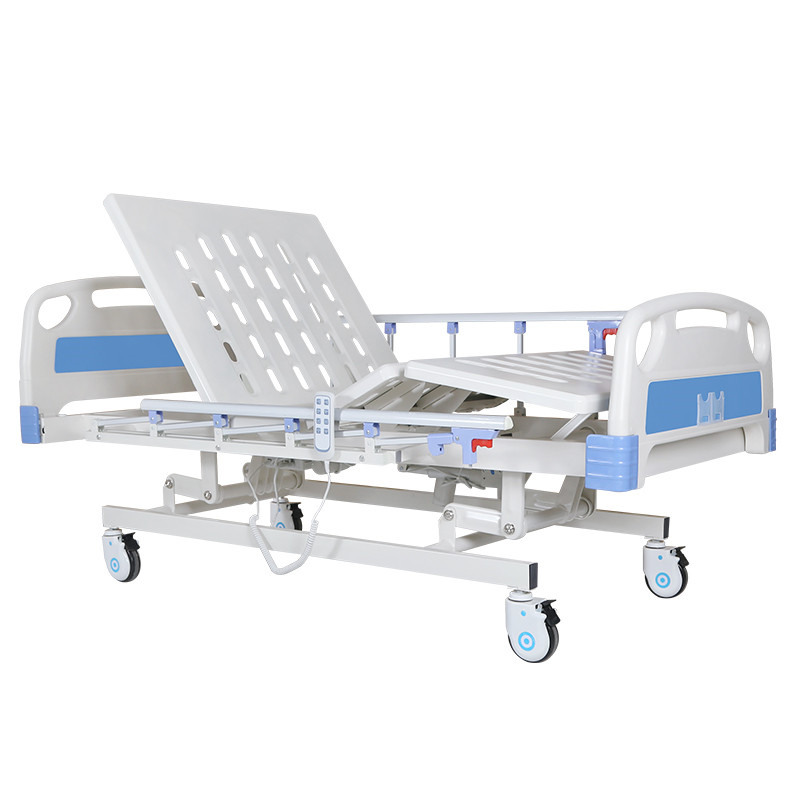
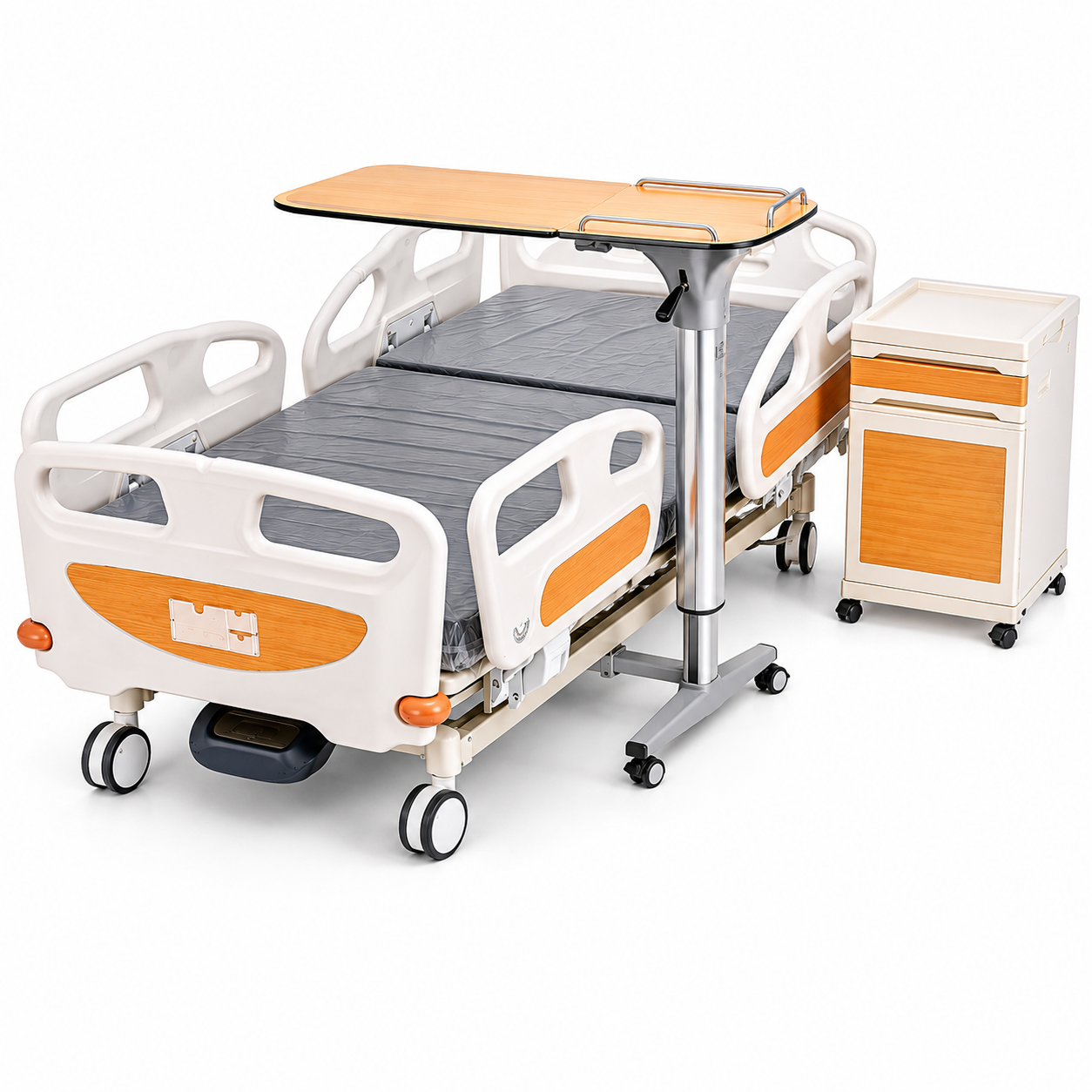

Today's topic focuses on patient care bed carton packing from a practical procurement point of view. The article is written for buyers who need clear, usable details before they approve a sample, compare quotations, or prepare a repeat order.
Why packing deserves an engineer's attention
A patient care bed can be well built and still arrive with avoidable damage if the packing plan is weak. Export buyers often spend weeks discussing frame thickness, rail style, actuator brand, and price, then leave the carton design to the final week. That is risky because beds are large, heavy, and full of painted corners, plastic parts, cables, and accessories that do not like rough handling.
For a distributor, packing quality is not a warehouse detail. It affects replacement cost, customer confidence, delivery schedules, and the first impression of the product. A bed that reaches the dealer with scratched rails or bent brackets creates doubt before anyone has tested the functions. When you compare suppliers through patient care bed category, treat packing as part of the product specification, not as a shipping afterthought.
Start with the real route, not an ideal route
The safest carton is designed around the real journey. A full container shipped direct to one hospital is different from mixed cargo that moves through a forwarder, local warehouse, and regional dealer. Ask how many times the cartons will be lifted, stacked, opened, checked, and moved before the bed reaches the end customer. Each handling point adds risk.
If the shipment will be sold through distributors, assume the cartons may be moved by forklift, pallet truck, hand truck, and sometimes by two people in a tight warehouse. The carton needs clear lifting logic and enough protection at the points where people naturally grab or push. A beautiful outer carton is not enough if the load inside can slide.
Review what touches what inside the carton
Inside the package, every painted metal surface should be separated from another hard surface. Side rails, head and foot boards, remote holders, IV pole brackets, and actuator covers should not rub during vibration. Thin foam sheets help with light scuffing, but heavier parts need shaped blocks, corner guards, straps, or fixed positions.
A useful inspection question is simple: if the carton is tilted, what moves first? If the answer is a rail, control box, or accessory bundle, the packing plan needs improvement. The buyer should ask for internal packing photos before mass production, especially for the first order or when the bed configuration changes.
Carton strength and pallet logic
Carton thickness should match the weight, shape, and stacking plan. Some beds travel as one main carton plus accessory cartons. Others are packed in several cartons to reduce lifting weight. There is no single correct answer, but the plan should be clear. The carton must protect the bed and also make sense for the buyer's warehouse team.
Pallet use is another important decision. Pallets improve forklift handling and reduce floor moisture risk, but they add cost and volume. For a large project, ask the supplier to calculate container loading with and without pallets. Do not decide only by carton price. A small saving in packing can disappear if local handling damage increases.
Labels should help the person doing the work
Labels are often designed for office records, but the most important reader may be a warehouse worker who has thirty seconds to decide where the carton goes. The label should show model name, carton number, gross weight, orientation marks, and any fragile or keep-dry instructions. If accessories are packed separately, the label should make the pairing obvious.
For distributor orders, ask whether your model code and purchase order number can appear on the label. This reduces confusion when several similar beds arrive together. A clear label also helps after-sales teams identify which carton or component caused a problem.
Do not ignore accessory packing
At this stage, confirm whether loose accessories are packed in a fixed and clearly labeled position.
At this stage, buyers should confirm whether the carton includes loose accessories, whether the same packing method applies to each nursing bed variant, and whether the model code matches the product list used by the sales team.
Accessories are often the source of small but annoying complaints. Screws, hooks, handset holders, side rail pins, cable clips, and user instructions can be lost if they are packed loosely. The best approach is to group small parts in marked bags and fix the bags inside a predictable carton location.
Ask for a packing list that separates bed frame parts, electrical parts, hardware, and optional accessories. When the buyer's team opens the carton, they should be able to confirm completeness quickly. This is especially useful when beds are installed at several sites and the installer cannot wait for missing small parts.
Moisture and surface protection
Export shipments may face humid ports, temperature changes, and warehouse storage. Painted steel, cartons, labels, and instructions all need reasonable moisture protection. A plastic bag, desiccant, or stronger outer carton may be appropriate depending on route and season. The point is not to overpack every order; it is to match protection to the actual risk.
Surface protection should also be easy to remove. If film, tape, or foam leaves residue on painted parts, the customer may think the product is dirty or poorly finished. Ask the supplier to test the packing materials on the actual paint and plastic parts used in the bed.
Drop risk and corner damage
Beds are awkward to handle because the weight is long and uneven. Corners and protruding brackets receive the most punishment. A carton may look acceptable in the factory but fail after one edge drop. Buyers should ask for corner protection photos and, for important orders, request a simple carton handling test or at least a documented internal check.
If previous shipments had damage, do not only ask for stronger cartons. Identify where the damage happened. Was it a corner, rail end, motor cover, head board, or accessory carton? The solution should match the damage pattern. Otherwise the next shipment may be heavier and more expensive without being safer.
Inspection before shipment
A practical packing inspection includes outer carton condition, inner protection, accessory placement, label accuracy, carton weight, and container loading method. The inspector should open at least one packed unit and take photos before resealing. Full-carton photos alone do not prove that the inside is controlled.
For repeat orders, compare the packing photos with the approved sample packing. Silent changes in foam thickness, carton grade, or part location can cause new complaints even when the bed itself has not changed. Keep the approved packing photos in the purchase file.
A buyer-friendly specification
When writing the purchase requirement, include carton structure, inner protection, accessory bagging, label content, pallet requirement if any, and photo confirmation before shipment. Keep the wording practical. You do not need a complicated laboratory standard for every order, but you do need a clear reference that the supplier and inspector can follow.
Good packing is quiet quality. Customers rarely praise it when it works, but they notice immediately when it fails. For patient care bed export procurement, a stable packing plan protects margin, reduces service pressure, and makes the buyer look more professional from the first delivery.
Container loading should be discussed before the cartons are printed
Carton size is connected to container loading, warehouse storage, and local delivery cost. If the carton is made too large, the buyer may lose container efficiency and pay more freight for air inside the package. If the carton is too tight, the bed may be difficult to repack after inspection or local display. This balance should be discussed while the order is still flexible.
Ask the supplier for a loading plan that shows carton quantity, carton dimensions, gross weight, and whether the cartons are stacked flat or upright. If the order includes several models, confirm the loading mix instead of calculating each model separately. A mixed shipment can create different pressure points inside the container, especially when accessory cartons are lighter and easier to crush.
Use unpacking feedback to improve the next order
For repeat orders, keep the model name aligned with the product list so carton labels and sales records stay consistent.
The best packing improvement often comes from the buyer's own warehouse team. They see which tape is hard to remove, which carton is difficult to lift, which foam breaks apart, and which small parts are easy to miss. After the first shipment, ask the warehouse or installation team for a short unpacking report. It does not need to be formal; five photos and a few notes can be enough.
Share the useful feedback with the supplier before the repeat order. Good factories appreciate specific information because it is easier to act on than a general complaint. For example, saying that the head board corner rubbed against the side rail during inland delivery is more useful than saying the packing should be stronger. Specific feedback leads to targeted improvement and avoids unnecessary cost.
Balance protection with disposal work
More foam and more cartons can reduce damage, but they also create disposal work for the customer. Hospitals, dealers, and care facilities may not have space for large piles of packing waste. If the product is delivered directly to a project site, excessive packing can slow installation and annoy the facility team. The buyer should ask for enough protection, not careless overpacking.
For project orders, discuss whether cartons will be opened in a central area or inside each room. If installation happens room by room, the packing should be easy to remove without tools that may damage the bed. If beds are unpacked centrally, the package can be optimized for batch handling. This small planning point makes the delivery day smoother.
Photograph the approved packing standard
When the packing method is approved, ask the factory to keep the same photo standard for future batches.
A written packing requirement is useful, but photos are better for daily production control. Keep photos of the outer carton, opened carton, corner protection, accessory bags, labels, and final sealed package. These images become the standard for the inspector and for the next repeat order. They also help a new purchasing colleague understand what was approved.
When the supplier changes a carton supplier or adjusts packing material, ask for updated photos before shipment. This does not mean every minor change is unacceptable. It means the buyer wants visibility. In export bed business, visibility prevents surprises, and fewer surprises usually means fewer claims.
Agree on claim evidence before damage happens
Damage claims become difficult when the buyer and supplier have not agreed on evidence. Before shipment, decide what photos are needed if damage is found: outer carton, shipping mark, opened carton, damaged part, inner protection, and carton number. This helps both sides understand whether the problem came from packing, rough handling, storage, or unpacking.
Dealers should train their receiving team to photograph cartons before throwing them away. Once the carton is gone, it is much harder to prove where the failure started. A simple receiving checklist protects the buyer without creating unnecessary conflict with the supplier.
Separate sample packing from mass production packing
Sample beds are sometimes packed with extra care because the factory knows the buyer will inspect them closely. Mass production packing must be just as controlled. Ask whether the sample packing is the same method planned for the bulk order. If the sample uses temporary foam or hand-cut protection, request the final mass production version before approval.
This point is especially important when the buyer approves a sample months before the first container. People change, material suppliers change, and the production team may not remember every informal promise. A documented packing standard keeps the order stable.
Related pages buyers should review before confirming packing
Before approving the final carton plan, compare the packing requirement with the actual hospital bed and nursing bed models in the order. If the bed ships with extra accessories, ask the supplier to show where those items are packed and labeled. Buyers can also review the product list to keep model names and carton labels consistent across repeat orders.
For factory-side confirmation, use the factory page and the company background as reference points, then send packing photos, quantity, and delivery route requirements through the contact page before mass production.