

Mattress retainers do not look like a major selling point when a buyer first compares a patient care bed quotation. The frame, motors, side rails and price usually get more attention. In real use, however, a small retainer can decide whether the mattress stays square on the platform or slowly walks toward one side after repeated backrest lifting, knee gatch movement and patient transfers. For distributors and hospital project buyers, this is exactly the kind of detail that separates a smooth order from a container of beds that create service calls.
This article looks at mattress retainer design from the practical side: what to check, where weak designs usually fail, and how to discuss the requirement with a patient care bed manufacturer before placing a B2B order.
Why mattress movement becomes a real after-sales issue
A mattress is not a fixed part of the bed. It is pushed by the patient's weight, lifted by the backrest section, compressed during transfers and sometimes pulled by staff when they make the bed quickly. If the platform surface is smooth and the retainers are too low or badly positioned, the mattress edge can creep away from the frame line. The user may not notice it during the first day, but the care team will notice it after repeated use.
For importers, the complaint is usually indirect. A hospital does not say, 'the retainer geometry is wrong.' They say the bed feels untidy, the mattress does not sit straight, or the side rail gap looks inconsistent. These are small complaints, but they damage confidence in the whole patient care bed range.
Check the retainer height against the real mattress
The first check is simple: compare retainer height with the mattress thickness and edge softness. A retainer that works with a firm 100 mm foam mattress may be too weak for a soft air mattress or a thicker pressure-care mattress. Buyers should not review the bed frame and mattress as separate items. Ask the supplier to confirm the mattress type used during fitting tests and, if possible, request photos from the side and foot end with the actual mattress installed.
In a mixed procurement project, the same bed may be used with standard foam, alternating-pressure systems or locally sourced replacement mattresses. That is why a slightly stronger retainer design can be more forgiving. It also makes the bed easier to sell through distributors who cannot control every mattress brand used by the end customer.
Look at the foot-end and side-retainer positions
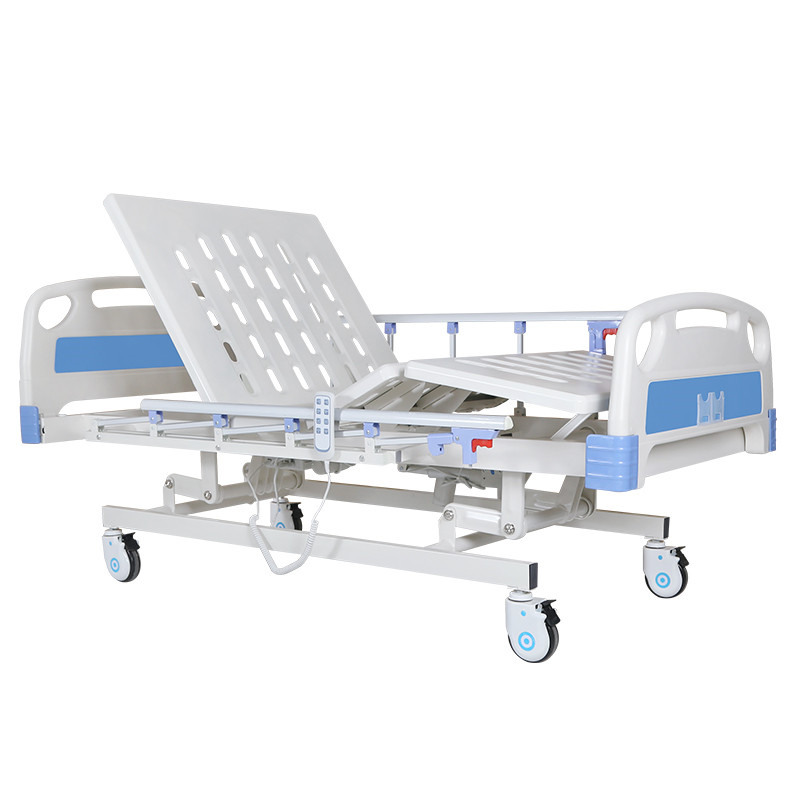
The foot end normally carries more sliding force when the backrest rises. A good layout uses enough support at the foot section without making cleaning difficult. Side retainers should hold the mattress line but should not interfere with side rail movement, patient transfer boards or staff hands when changing sheets. When I review samples, I always ask someone to raise the backrest several times and then check whether the mattress corner has shifted.
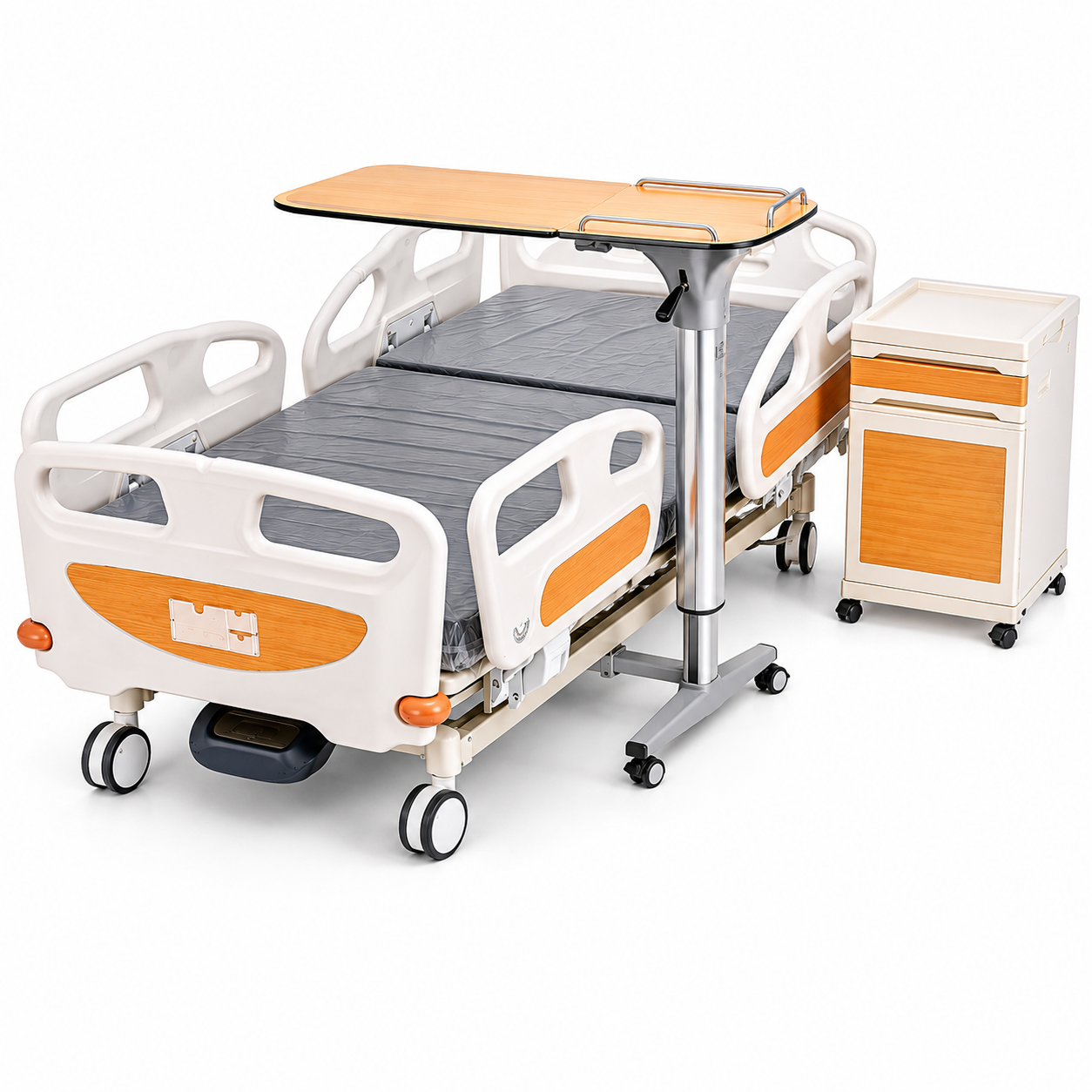
If the bed is close to a nursing bed configuration, the buyer should also check how the retainer works with side rails, guard panels and optional accessories. A retainer that looks fine in a showroom can become awkward when accessories are added.
Material, welding and surface finishing matter
Retainers are often made from steel rod, formed steel parts or removable plastic components. Each option can work, but the finishing must match the use environment. Welded steel retainers should have clean welding points and smooth coating, because a sharp corner will damage mattress covers over time. Removable retainers should lock firmly; otherwise they disappear during cleaning or transport.
A buyer should not only ask whether the bed has retainers. Ask how they are fixed, how many are included, whether replacements are available, and whether the design has changed in recent production. These questions are small, but they tell you whether the supplier has handled real feedback from the field.
How to write the requirement in a purchase specification
The requirement does not need to be complicated. A useful specification can say that the bed must include mattress retainers suitable for the quoted mattress size, with foot-end and side-position support, smooth finished edges, and no interference with side rail operation or normal cleaning. If the order includes optional mattresses, list those mattresses together with the frame requirement.
For buyers building a long-term supply program, it is worth asking the factory for a short retainer inspection photo before shipment. The photo should show the retainer positions clearly, not only a full-bed beauty shot.
Final buying advice
Mattress retainers are not a premium feature, but they protect the perceived quality of the whole bed. If they are weak, the bed looks careless. If they are well designed, nobody talks about them, which is usually the best result in daily care equipment. Before confirming a bulk order, ask for the mattress-retainer match, the fixing method and the spare part plan. For a custom project or distributor program, contact the supplier through the patient care bed quotation page with the mattress thickness and platform size you plan to use.
Sample approval points before mass production
For a first order, I would not approve the mattress retainer only from the quotation drawing. Ask for a short sample report with three practical views: the bed platform without mattress, the mattress installed in flat position, and the mattress after the backrest has been raised several times. These photos are easy for a supplier to provide and they remove a lot of guesswork from the discussion.
If your market sells several mattress types, tell the supplier which mattress will be used most often. A distributor selling patient care bed systems to hospitals may use a firmer institutional mattress, while a rehabilitation customer may choose a softer pressure-relief surface. The same retainer can behave differently in those two cases, so this detail should appear in the purchase file.
What to inspect during container loading or pre-shipment check
During inspection, the retainer check should be quick but disciplined. Confirm quantity, position, coating condition and whether removable parts are packed with the correct bed model. If the retainer is welded, look for clean coating around the weld area. If it is removable, check that the locking method is obvious and that the part cannot be lost too easily during unpacking.
A useful inspection note is to photograph one bed from the head end, one from the foot end and one close-up of the retainer fixing point. Those three images are enough to prove that the order matches the approved design. They also help your sales team explain the bed better when a buyer asks why one model costs more than another.
How this detail affects distributor reputation
A mattress that stays neatly in position makes the whole bed feel more stable. Nobody praises the retainer directly, but the user notices the clean alignment. For a distributor trying to build repeat business, these small quiet details matter. They reduce the feeling that the product was assembled from generic parts without thought for daily care.
The opposite is also true. When the mattress shifts, the customer starts looking for other faults. They may question the side rail, the platform, or the mattress quality even if those parts are acceptable. A small design weakness can therefore create a larger trust problem.
How to discuss this requirement with the supplier
When you send an inquiry for a patient care bed, do not only ask for the best price. Give the supplier the room type, expected user group, mattress or accessory plan, and the quantity range. A serious supplier can then answer with a suitable configuration instead of pushing the nearest standard model. This also makes the quotation easier to compare, because each offer is responding to the same working condition.
For a distributor, the discussion should include repeat-order stability. Ask whether the current design is a regular production model, whether important parts are shared with other models, and whether the factory expects any design change in the next batch. A low price is less attractive if the second order arrives with different fittings, different labels or a changed accessory interface.
What to keep in the purchase file
A good purchase file should contain more than the proforma invoice. Keep the approved model name, final slug or article reference, photos, key dimensions, accessory list, packing method and any special note agreed with the supplier. If a question appears after delivery, this file becomes the shared memory for your sales, service and purchasing teams.
For care equipment, small differences can matter. A cable route, rail release, mattress holder, wheel type or handset label may decide whether the bed is easy to use in the local market. If these details are recorded before production, the buyer has a clear basis for inspection and the supplier has a clear basis for manufacturing.
A practical inspection rhythm before shipment
Pre-shipment inspection does not need to be complicated, but it should be consistent. Start with the visible structure, then check moving parts, then confirm accessories and labels. After that, inspect packing. This rhythm prevents the team from spending all its time on appearance while missing the parts that create service problems after installation.
Ask for photos or video clips that show the real action, not only a clean showroom angle. For electrical beds, show movement under load where relevant. For manual or care-home beds, show locks, rails, castors and accessory positions. The goal is to see how the product behaves, because customers judge the bed by use, not by a specification table.
How to use supplier information after the goods arrive
The best technical information is useful after delivery, not only before payment. Keep the supplier's photos, part names and inspection notes in a place where your service team can find them. When a customer asks about a replacement part or a function, the local team should not need to search through old chat records to understand the product.
This habit is especially important for buyers who sell through dealers. The dealer may not know the factory background, but they still need clear answers. If the original order file is organized, the distributor can respond faster, protect the brand reputation and make repeat orders more consistent.
Adapting the specification to the local market
A product that works well in one market may still need adjustment for another. Local room sizes, caregiver habits, mattress brands, plug standards, language labels and delivery conditions all affect the final specification. Before treating the patient care bed as a fixed catalogue item, compare the supplier's standard configuration with the way your customers actually use care equipment.
This does not mean every order should become a custom project. Too much customization can make spare parts and repeat orders harder. The better approach is to identify the few changes that genuinely matter for your market and keep the rest stable. That gives the buyer a more suitable product without creating unnecessary complexity.
When customization is worth requesting
Customization is worth discussing when it reduces repeated complaints, helps the product fit local rooms, or makes service easier for the distributor. Examples include language labels, accessory position, packing method, mattress matching, cable length, spare part kits or a small change in documentation. These changes are practical because they support real use after delivery.
Customization is not worth requesting only because a competitor's brochure looks different. A unique feature that your service team cannot explain or your warehouse cannot support may become a burden. The strongest B2B specifications are usually simple, repeatable and clearly connected to customer use.