
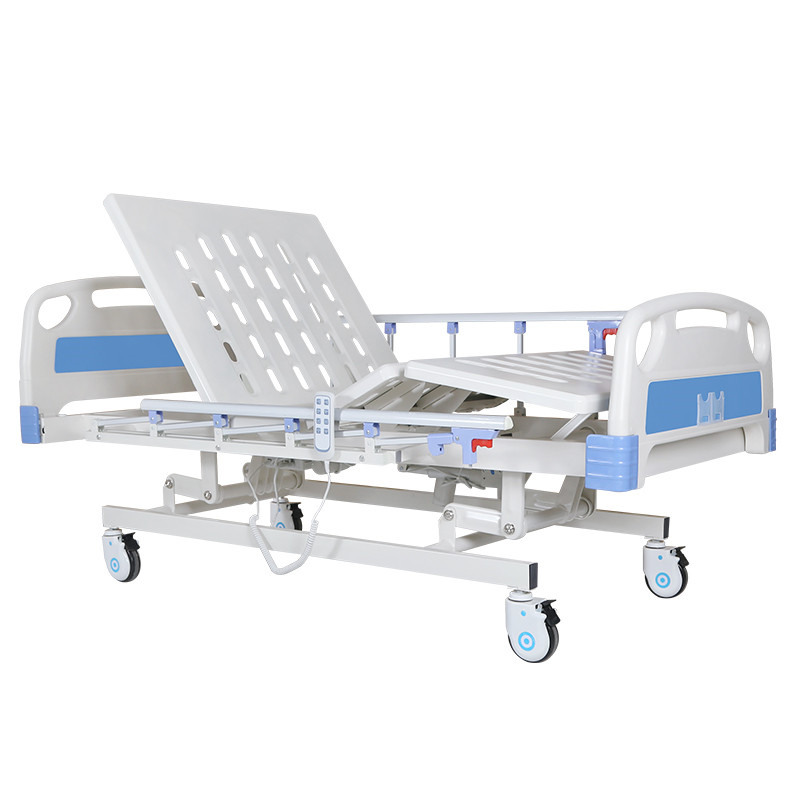

The head end of a patient care bed is a busy area. Staff may connect power, check boards, move the bed, adjust patient position, and handle accessories near the same space. If the control layout is crowded or unclear, the bed can still function but feel awkward in daily care. Buyers should review the head-end layout before approving a sample or confirming a repeat order.
Start with staff access
The head-end layout should support the way nurses and caregivers approach the bed. If the bed is used in a ward, the head end may be close to a wall, oxygen point, or power outlet. A hospital bed with poorly placed controls can be difficult to inspect once installed.
During sample review, do not only look at the bed from the front. Stand at the head end, reach for the controls, check cable paths, and imagine the bed placed in a real room rather than an open showroom.
Cable routing and board clearance
Cables should not be pinched by head boards, side rails, or moving platform sections. If the head board is removable, confirm that removal does not pull cables or expose weak connectors. These small points decide whether maintenance is easy or frustrating.
For care environments that use a nursing bed configuration, the bed may stay in service for longer periods. That makes cable protection and board clearance more important.
Mobility and standing functions
If the project includes transfer or mobility support, the head-end layout should not interfere with repositioning. Buyers comparing options with a standing bed should check whether added functions change the cable path or control position.
A function that looks useful on paper can create service issues if the wiring is exposed or if staff cannot reach the control area easily.
Accessories around the head end
IV poles, oxygen holders, hooks, remote holders, and other accessories may share space near the head end. Their positions should be approved together. Otherwise, one accessory can block another or make the bed look untidy.
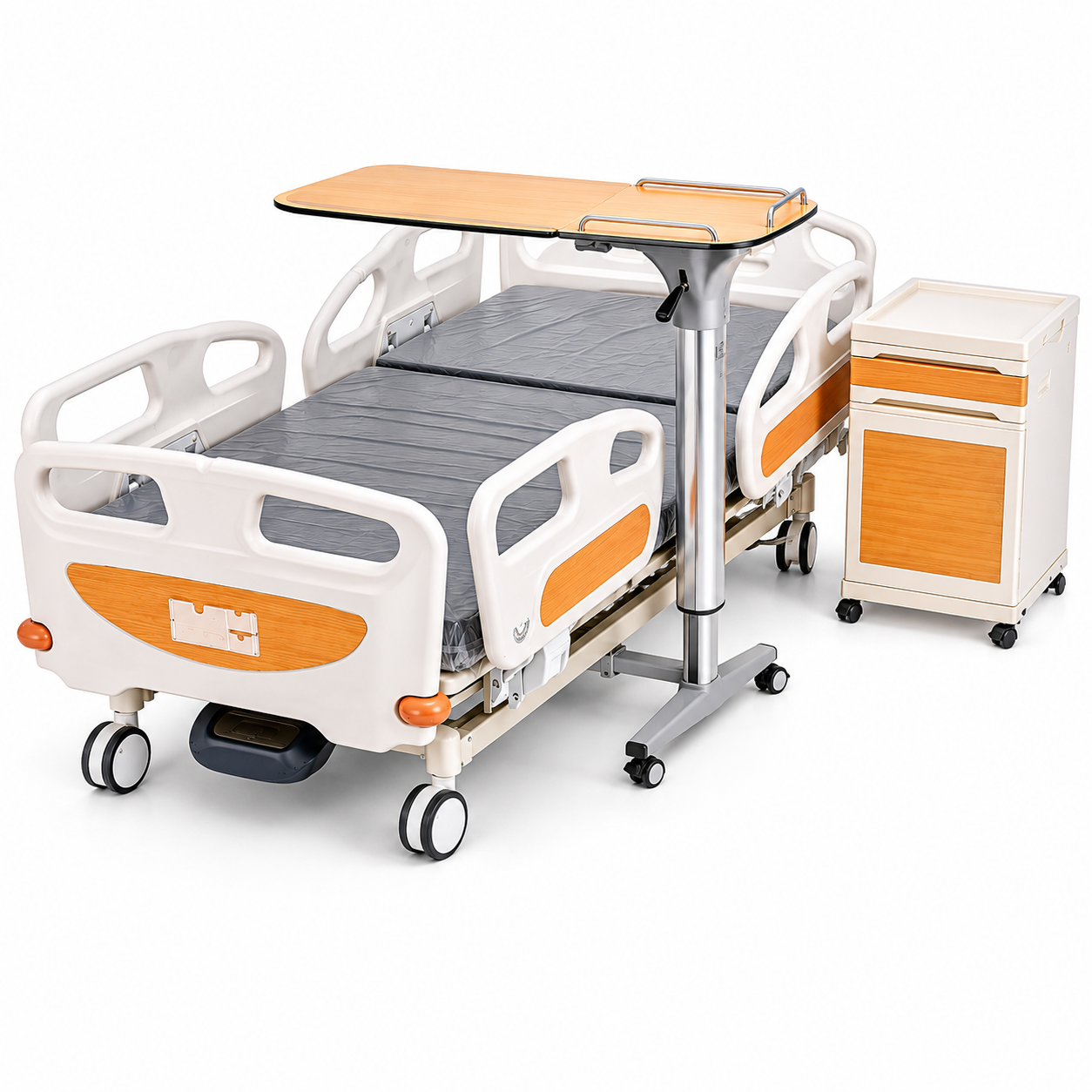
Ask for photos of the complete configuration, not just the bare bed. This is especially useful for distributor orders where the final customer expects a ready-to-use package.
Bedside furniture and room layout
The head-end layout also affects nearby furniture. If a hospital bedside table or overbed table is used, check whether the table blocks access to controls, cables, or boards during cleaning.
A simple sample-room check can prevent repeated complaints after installation. Place the bed, table, mattress, and accessories together before final approval.
Final buying advice
Head-end control layout should be reviewed as a working area, not a hidden technical corner. Check staff access, cable protection, board clearance, accessories, and room layout. For project-specific head-end requirements, send photos or layout notes through the contact page before confirming production.
Sample approval notes
Before mass production, ask for photos from the same angles that your inspection team will later use. This creates a shared standard between buyer and supplier.
If the product will be sold through dealers, store the approved photos where the sales and service teams can find them.
Inspection rhythm
A useful inspection checks appearance first, then function, then accessories, then packing. This keeps the inspector from missing small parts while focusing on the main frame.
For large orders, inspect several cartons and several units. One good bed does not prove the whole batch is consistent.
Repeat order control
Repeat orders should follow the approved configuration unless the buyer requests a change. If the supplier changes a component, label, or accessory position, the buyer should be informed before shipment.
Consistency makes sales training and after-sales support easier for distributors and facility teams.