

Sample approval is where a patient care bed order becomes real. The quotation may look complete, but the sample shows whether the frame, mattress fit, rail movement, accessories, labels, and packing logic actually work together. For import buyers, a disciplined sample review prevents many problems before a container is produced.
Start with the intended product category
Before reviewing a sample, confirm whether the order is positioned as a hospital bed, a home care model, or a general patient care bed. The category affects function expectations, accessory selection, and inspection details.
A buyer should not approve a sample only because it looks good. The sample must match the actual market, room type, and user group.
Check nursing use and daily handling
If the bed will be used in long-term care or assisted care rooms, compare the sample with a nursing bed workflow. Staff need easy access, stable brakes, smooth rail operation, and parts that are not difficult to clean.
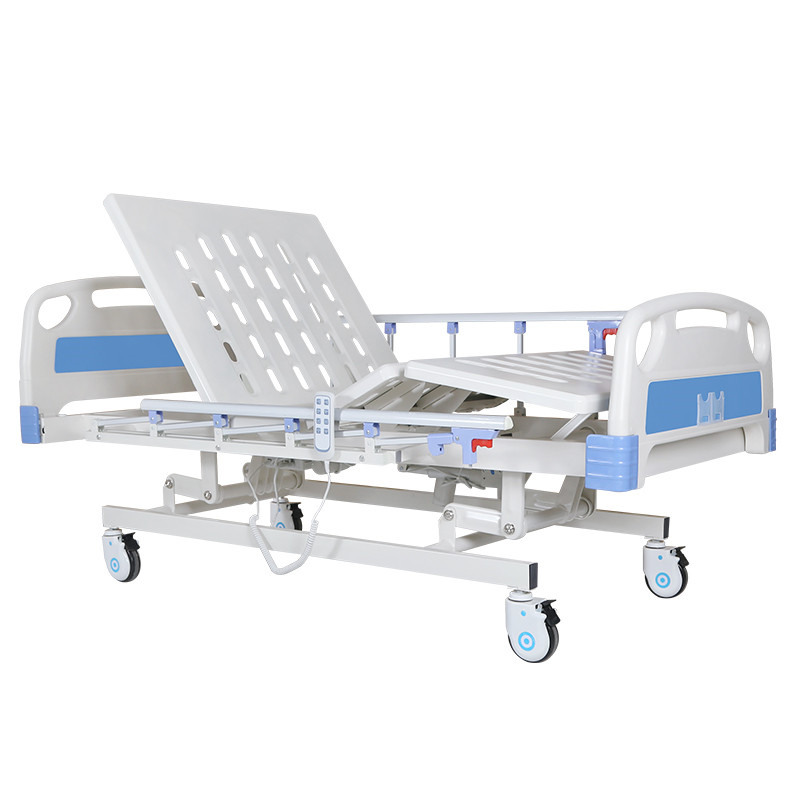
For sample comparison, keep the approved hospital bed reference close to the inspection file so the buyer and factory are judging the same configuration.
Ask a practical person to operate the bed, not only the sales team. A caregiver's comment often reveals small issues that drawings do not show.
Review transfer and standing support
Some projects require more active transfer support. If the buyer is considering mobility assistance, compare the sample with a standing bed concept and check whether the frame, rail, and mattress edge support that use case.
Do not approve transfer-related details with an empty frame. Test with the intended mattress and accessory package.
Confirm accessories as part of the sample
Remote holders, rails, mattress retainers, IV sockets, and other accessories should be mounted on the sample, not discussed separately. A bed can look clean when bare and become crowded after parts are added.
Take close-up photos of every approved accessory position. These photos become the reference for bulk inspection.
Check bedside furniture relationship
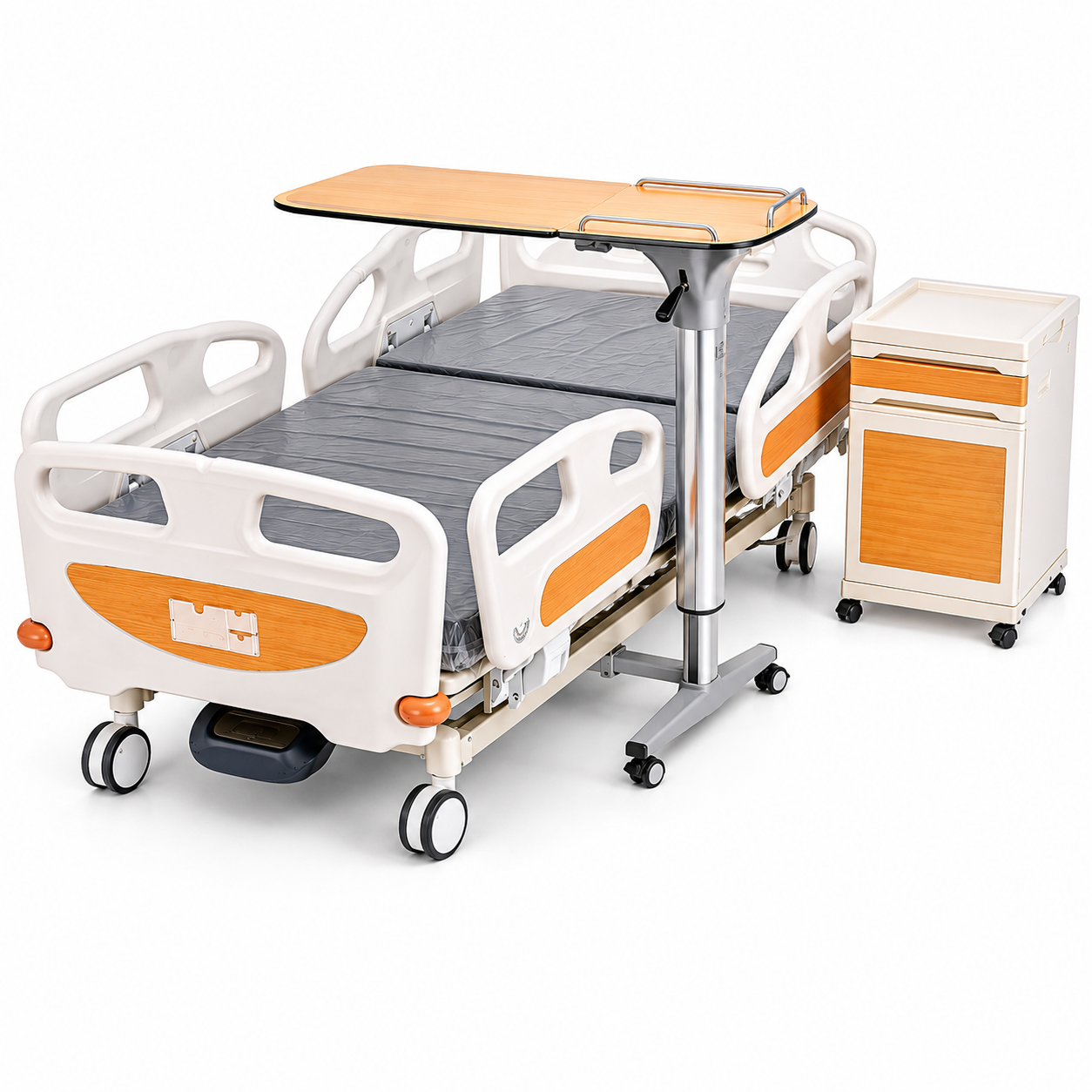
If the project includes a hospital bedside table, place it beside the sample and test reach, drawer direction, and rail clearance. Bed and table dimensions should work together in a real room layout.
This simple check prevents complaints after installation, especially in narrow rooms.
For sample comparison, keep the approved nursing bed reference close to the inspection file so the buyer and factory are judging the same configuration.
Final approval and communication
After the sample is accepted, write down what is approved: frame, color, rail, mattress size, accessory positions, labels, packing, and spare part notes. Do not rely on memory or chat history.
For sample changes, project quantities, or final confirmation, send the approved notes through the contact page before mass production.
Make the sample review close to real use
A patient care bed sample should not be reviewed like a showroom item. In real projects, the bed will be moved through corridors, cleaned by staff, adjusted many times, and sometimes used by people who are not familiar with the product. That is why I normally suggest building the sample approval around use scenarios rather than around a simple appearance checklist.
Start with the buyer's actual sales channel. A distributor selling to small clinics may care most about simple operation, stable supply, and easy replacement parts. A contractor supplying a ward project may care more about consistent dimensions, carton marks, and installation speed. A care facility buyer may focus on rail safety, cleaning access, and whether staff can work around the bed without awkward movement.
When these conditions are written down before the sample is checked, the review becomes more practical. The supplier also understands which details are fixed and which details can still be adjusted before bulk production.
Do not approve the frame alone
Many bed samples look acceptable when only the steel frame is assembled. Problems appear after the mattress, rails, holders, labels, and packing parts are added. The final sample should include the complete configuration that will be shipped. If a buyer approves only a bare frame, later arguments about accessory position or packing space become difficult to settle.
Check weld finishing, coating coverage, castor movement, brake operation, head and foot board fitting, screw access, and under-bed clearance. These are not glamorous details, but they affect service life and buyer complaints. For export orders, I also like to check whether the coating surface can survive normal carton handling without obvious rubbing marks.
Take photos of both good details and accepted minor details. This avoids a common problem: the buyer remembers one version of the sample, while the factory team uses another reference during production.
For sample comparison, keep the approved standing bed reference close to the inspection file so the buyer and factory are judging the same configuration.
Use a written decision sheet
A sample approval sheet does not need to be complicated. It should list model name, bed size, function type, rail type, mattress size, castor size, packing method, label requirements, spare part notes, and approved accessory positions. If any item is pending, mark it clearly instead of leaving it in a chat message.
For B2B buyers, this small document is valuable later. It helps sales teams explain the product, helps inspectors compare bulk goods, and helps after-sales staff identify whether a complaint is about a real defect or a configuration misunderstanding.
The best sample approval process is calm and boring. It catches the small things before they become expensive. A patient care bed project usually fails not because one dramatic part is wrong, but because several ordinary details were never confirmed properly.
Questions import buyers should ask before signing the approval
Before signing a patient care bed sample, ask whether the sample was made with production materials or temporary sample-room parts. This matters because some sample workshops can polish a one-off unit very nicely, while the bulk production line may use different fixtures, workers, or surface treatment timing. A serious supplier should be able to explain which details are already production standard and which details are still being adjusted.
Ask whether the approved sample will be kept as a reference in the factory. For larger B2B orders, this is useful. The factory can compare bulk units with the approved bed, and the buyer can request photos against the reference unit during production. If the sample must be shipped to the buyer, then the supplier should still keep a full photo record and a configuration sheet.
Also ask how changes will be controlled. If a castor model, rail fitting, board color, packing foam, or label position changes after approval, the buyer should receive confirmation before the change enters production. This is not about making the supplier's work difficult. It is about protecting the buyer's market promise.
If the bed will be sold under the buyer's own brand, confirm logo position, carton mark, instruction sheet, and any language requirements at the sample stage. These items look simple, but they often delay shipment when they are left until the final week.
Finally, confirm the inspection standard in plain language. A sample approval is useful only when the same standard can be applied to bulk goods. Avoid vague words such as good, normal, or acceptable when the issue can be described with a photo, a dimension, or a clear function test.
For sample comparison, keep the approved accessories reference close to the inspection file so the buyer and factory are judging the same configuration.
How to turn the approved sample into repeatable orders
A strong first order is good, but repeatability is what makes a supplier valuable. After the sample is approved, create a small record that your purchasing, sales, and quality teams can all understand. Include the slug or model reference, function list, bed size, finish, accessory package, mattress option, packing method, and any special export marks.
For distributors, this record helps sales staff quote the same configuration every time. Without it, one salesperson may promise a different rail, another may offer a different mattress height, and the purchasing team may not notice the difference until production begins.
For hospital and care projects, the approved sample can also become part of the installation plan. If the bed height, rail opening, and bedside clearance are already confirmed, the project team can plan room layout more confidently. This reduces arguments after delivery, especially when the buyer is coordinating many rooms at once.
Do not forget spare parts. The sample stage is a good time to identify which parts should be stocked with the first order. Remote holders, rail parts, castor-related pieces, fasteners, and labels are low-cost compared with the trouble of waiting for replacements later.
The practical rule is simple: never treat sample approval as a ceremonial step. Treat it as the point where sales promise, engineering detail, production standard, and after-sales support all meet in one physical product.
Common mistakes during patient care bed sample approval
The first mistake is approving a sample without checking the exact order configuration. A bed may have the right frame but the wrong rail, mattress retainer, castor size, or accessory package. When the purchasing team later compares the shipment with the sample, this creates confusion because nobody recorded which version was final.
The second mistake is ignoring packing. For export orders, packing is part of product quality. A strong bed can still arrive with scratched boards or missing accessories if the inner protection is weak. Buyers should open the sample packing, check how parts are fixed, and confirm whether labels are clear enough for warehouse handling.
The third mistake is checking function once and moving on. A bed should be operated several times, especially electric or crank functions. Smooth movement, stable braking, and rail locking should remain consistent, not only work during the first demonstration.
The fourth mistake is leaving small customization points to the end. Logo, instruction language, plug type, carton mark, and spare part labels should be confirmed early. These items are easy to overlook, but they can delay the order when production is almost finished.
A practical closing thought for buyers
A good supplier will not be offended by a detailed sample checklist. Serious manufacturers understand that B2B buyers carry responsibility to hospitals, distributors, care homes, and project owners. Clear approval protects both sides.
If the supplier answers quickly, provides photos without resistance, and helps improve details before production, that is a good sign. If every question feels difficult, the buyer should be careful before scaling the order.
The sample is not only a product. It is a preview of how the supplier communicates, solves problems, and controls details. That is why experienced buyers treat sample approval as a business test, not just a technical step.
When the approved sample, written checklist, and production file all match, the buyer can move toward bulk order with much more confidence.
For final model confirmation, project quantities, or configuration questions, use the contact page after reviewing the technical details.