

A patient care bed order becomes much easier when the buyer and supplier are working from the same specification sheet. Without a clear sheet, important details are often discussed in scattered messages: bed size in one email, motor quantity in another, side rail style in a chat, and packaging requirements at the end. This creates risk for both sides, especially when the order is for a distributor, hospital project, nursing home, or government tender.
For B2B buyers, a good specification sheet is not only paperwork. It is a practical tool that helps the patient care bed supplier understand the project and repeat the same configuration during production. It also helps the buyer compare quotations fairly instead of comparing different products by mistake.
Start With the Use Scenario
The first section should describe where the bed will be used. A general ward, long-term care room, home care program, and rehabilitation center may all need different configurations. If the supplier knows the use scenario, the recommendation becomes more practical.
Buyers should include patient type, expected care level, room space, transfer method, and whether caregivers will adjust the bed frequently. This information helps decide whether a manual, semi-electric, or fully electric model is more suitable.
Define the Bed Functions Clearly
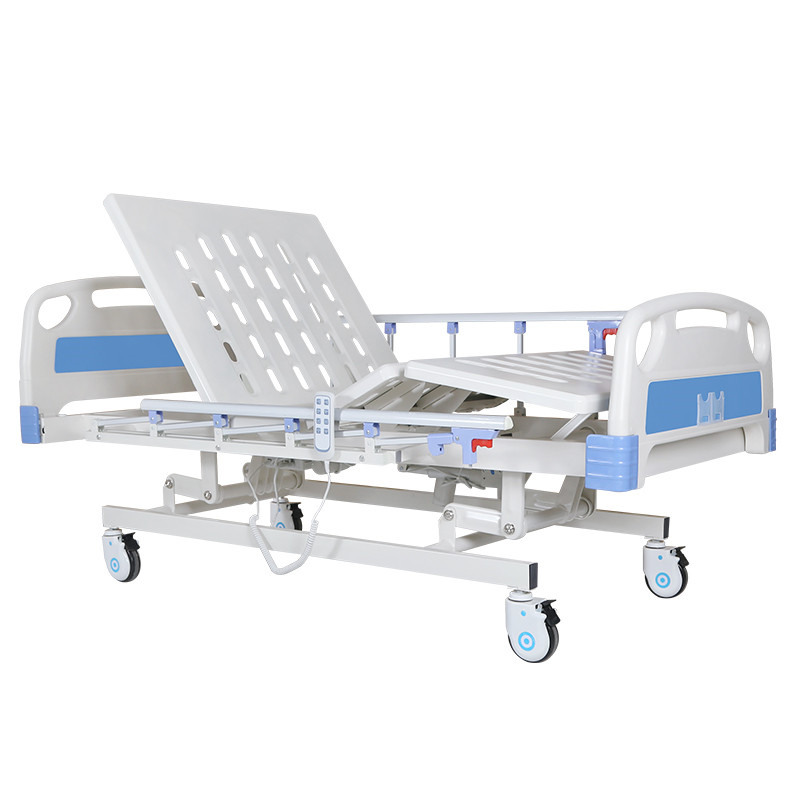
Do not only write “electric bed” or “three-function bed.” List each function: backrest lifting, knee-rest lifting, hi-low adjustment, Trendelenburg, reverse Trendelenburg, or other required movement. If a function is optional, mark it clearly.
For electric models, confirm voltage, plug type, handset style, control box position, and whether lockout control is needed. A serious factory will use these details to prepare the correct production plan.
Specify Size and Loading Requirements
Bed size should include overall length, overall width, mattress platform size, bed height range, and safe working load. Buyers should also confirm mattress thickness because it affects side rail height and user comfort.
If the order includes an anti-bedsore air mattress, the specification sheet should mention mattress size, pump voltage, tube route, and retainer compatibility. Bed and mattress should be reviewed as one system, not two separate products.
Describe Side Rails and Boards
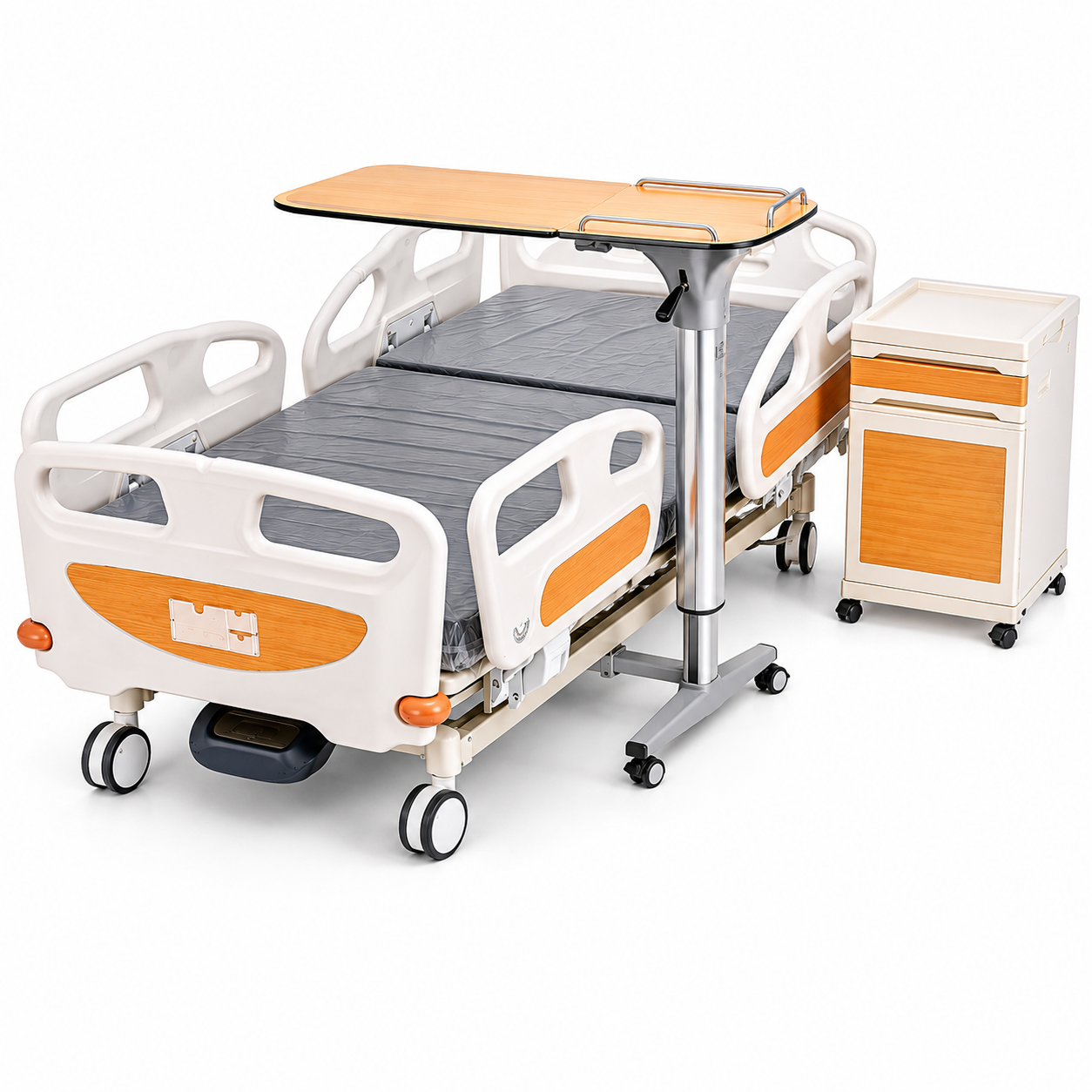
Side rail style has a strong effect on safety, appearance, and market acceptance. Aluminum rails, ABS rails, split rails, full-length rails, and home-style rails all serve different projects. The sheet should include rail material, operation method, locking style, and any local preference.
Head and foot boards should also be defined. ABS boards are common for medical projects because they are easy to clean. Wooden-style boards may suit senior care or home care rooms better. The buyer should confirm the appearance and material before production.
Include Casters and Brakes
Casters are small in the quotation but important in daily use. The sheet should state caster diameter, brake type, and whether central brake or directional control is required. For facilities with frequent movement, caster quality can affect staff workflow.
Buyers should ask the supplier whether replacement casters are available. This is useful for distributors who need to support projects after delivery.
List Accessories and Spare Parts
Accessories should be included in the specification sheet, not added casually after the price is agreed. Common items include IV poles, lifting poles, dining tables, mattress retainers, oxygen holders, side rail pads, and other patient care bed accessories.
Spare parts should also be discussed early. Handsets, motors, control boxes, casters, rail locks, board connectors, screws, and power cables may be needed for local service. A good patient care bed manufacturer can provide part photos and codes.
Confirm Packaging and Loading
Packaging affects cost and delivery quality. The sheet should include packing method, carton size, gross weight, loading quantity, and whether the bed ships assembled, semi-assembled, or knock-down. A cheaper bed may not be cheaper if container loading is poor or installation is difficult.
For distributors, clear packing labels and assembly instructions reduce warehouse and after-sales problems. Export packaging should protect painted parts, boards, motors, and accessories during long transport.
Final Advice for Buyers
A clear specification sheet saves time before production and reduces disputes after delivery. It helps buyers compare suppliers fairly and helps suppliers prepare the right patient care bed configuration. The sheet should cover use scenario, functions, size, rails, boards, casters, accessories, spare parts, packaging, and loading data.
If your project is still being defined, you can contact the team with your target market, order quantity, required functions, and room type. A precise specification sheet is one of the simplest ways to make B2B patient care bed procurement smoother.