
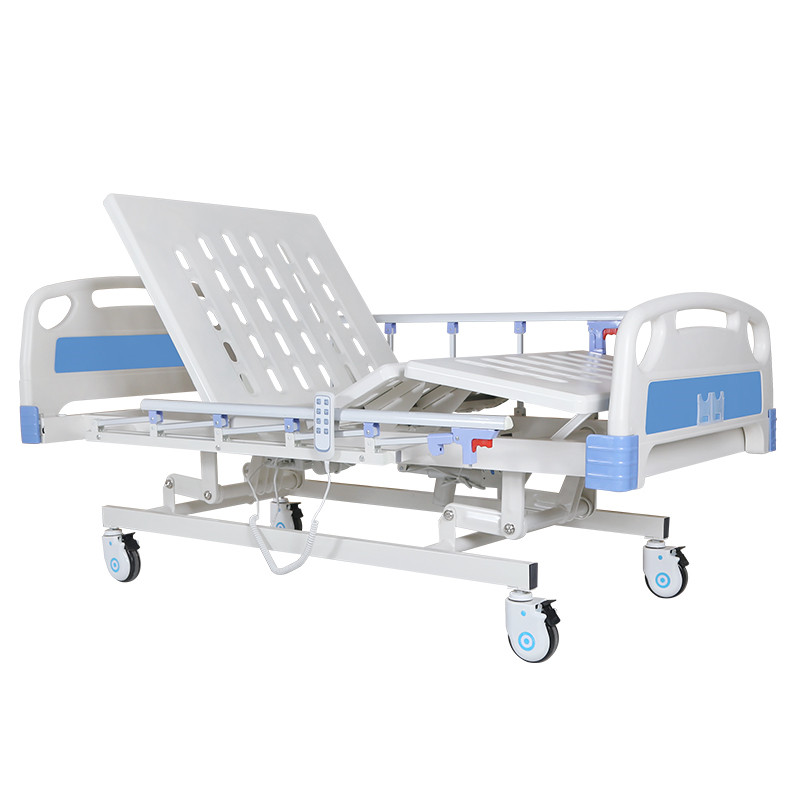
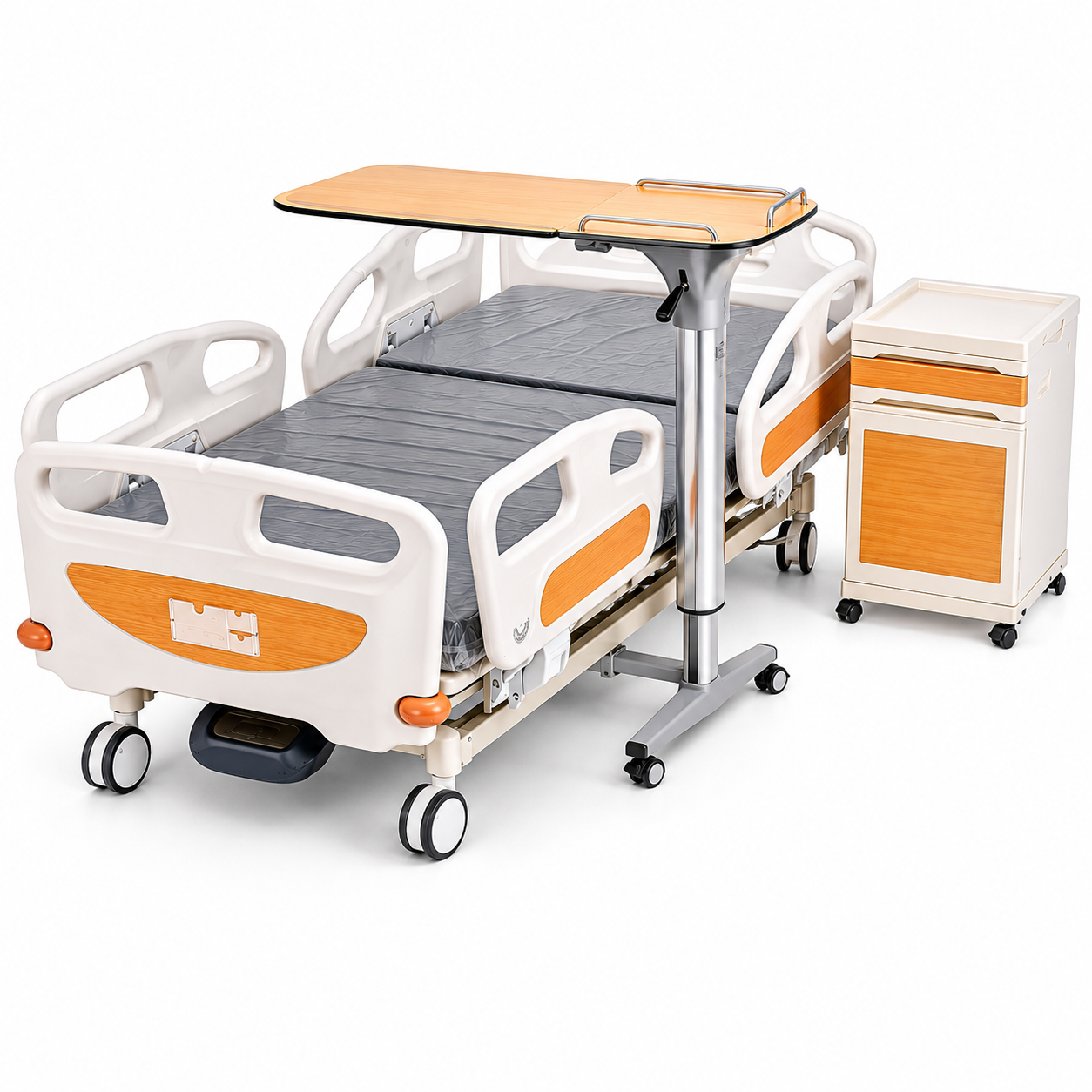

You have compared several suppliers. You have discussed the price. You have reviewed photographs and videos. You may even have approved a sample. The supplier sends the Proforma Invoice. The next step appears simple: Pay the deposit and begin production. But for a bulk hospital bed order, this is one of the most important moments in the entire procurement process. Before payment, the buyer should ask: “Can someone who has never read our emails understand exactly what must be manufactured by reading the final order documents?” If the answer is no, important specifications may still be open to interpretation. A description such as “5-function electric hospital bed with ABS side rails” identifies the general product, but it may not completely define the bed that should arrive at your warehouse or hospital project. For importers purchasing an Hospital Bed in quantity, the objective before paying the deposit should be to convert discussions, quotations and sample decisions into one clear written specification. The original inquiry may ask for a basic electric bed. Then the buyer requests larger casters. Later, a battery is added. The mattress thickness changes. A different side rail is selected. The buyer requests a particular plug. Packaging is discussed in another email. The salesperson may understand the final requirement. The buyer may understand it. But the production department needs a precise manufacturing instruction. “Same as sample.” “Same as previous quotation.” “As discussed on WhatsApp.” “Standard configuration.” Where practical, important specifications should appear directly in the PI, purchase order, technical attachment, approved drawing or another mutually recognized order document. “Electric hospital bed” is a product category. It is not necessarily a unique configuration. This becomes especially useful when the same supplier offers several visually similar beds. Different suppliers may describe functions differently. The adjustment range tells you how far it moves. Different manufacturers and models can use different dimensions. This becomes important when mattresses are sourced separately or when the beds must fit an existing facility layout. Marketing descriptions are not measurable procurement specifications. The applicable evidence depends on the destination market, product and procurement requirement. A supplier may manufacture multiple side-rail designs. Confirm whether they are removable where required. This can be relevant for hospital projects requiring a consistent visual identity. Confirm the caster diameter and relevant configuration. Do not rely only on the phrase “electric motor.” A basic model may use a handheld controller. Another model may include additional controls on the side rails or footboard. Do not assume that every visible button has the same function across different models. Battery backup may be standard, optional or unavailable depending on the model. Any project-specific battery requirements should be discussed before production. The bed must be configured appropriately for its intended destination and applicable requirements. Do not wait until the shipment is ready to discuss destination-market electrical requirements. Depending on the bed design, CPR-related functions may involve mechanical release, electrical control or other arrangements. Ask the supplier to demonstrate the approved function where relevant. Mattresses can differ in: This prevents assumptions when calculating the complete delivered bed cost. A buyer may request an IV pole and drainage hooks. But are they included with every bed? Screen settings and lighting can change appearance. For steel structures, the supplier may use a powder-coated finish according to its manufacturing process. Do not discuss it only after the beds are completed. Confirm what information must appear on the product, packaging and documentation. For a simple order, it may contain enough information. Such as: Before paying the deposit, consolidate the final decisions. This can reduce confusion when specifications have changed during negotiation. Does a blank battery field mean: Battery not included? Battery included as standard? Battery not discussed? It can help identify the approved: The buyer may receive five side-rail options and three caster options during negotiation. Label the images with the corresponding model or component reference. The buyer approves the sample but later requests: Update the final specification sheet before mass production. But important technical decisions should also be recorded in writing. Confirm the final component, quantity or configuration that was agreed. A Bill of Materials or approved component list can identify important parts used in the product. A component can become temporarily unavailable. A supplier may identify an alternative. For critical approved components, define an appropriate change-control process. For example: Do not combine everything into one ambiguous total. An IV pole supplied for everyday use is an accessory. An additional handset kept for future maintenance is a spare part. The buyer can verify whether operational accessories and maintenance inventory have both arrived. This can help warehouses separate products by: The warehouse should not need to open every carton to identify the bed inside. Project or regulatory requirements may require another language or additional documentation. Late documentation requests can delay shipment. If the destination market or tender requires specific documentation, identify those requirements during supplier qualification. Where regulatory interpretation is important, buyers should verify requirements with the relevant competent parties. A tender requirement may be mandatory. A preferred color may be negotiable. The buyer negotiates the price from US$460 to US$440. That may be a genuine commercial discount. Or the revised quotation may use a different component or remove an option. “Is this revised price based on exactly the same specification?” Compare: If the sample has a central locking system but the PI says only “125 mm casters,” clarify the brake configuration. These are exactly the types of gaps that should be closed before production. The supplier's final configuration should be compared with the tender or project specification. For a complex project, there may be several documents. The commercial PI may reference an approved technical specification with a specific version and date. Eventually there may be: Final Specification. Final Specification New. Final Specification Latest. Final Specification Latest 2. For example: Model-ABC-Specification-V1 Model-ABC-Specification-V2 Model-ABC-Specification-V3-Approved Once the final configuration is approved, establish a clear production version. A standard model may use components already available. A customized version may require additional procurement or production. This is especially important for hospital opening dates, tenders and project schedules. If the buyer waits until the beds are finished to decide what to inspect, disagreements become more likely. Keep the final versions together. It can also help receiving and quality teams when the shipment arrives. Identify the specific bed being ordered. Define each required movement. Record important angles and height ranges. Confirm external and mattress-related dimensions. Use measurable requirements rather than marketing descriptions. Confirm material, design and configuration. Confirm the approved construction and appearance. Record caster size and braking system. Lock important approved electrical components where required. Confirm handset and integrated controls. State clearly whether it is included. Confirm voltage, power requirements and plug where applicable. Define the actual required mechanism. Confirm size, thickness and other agreed requirements. Record item and quantity per bed. Approve project-specific appearance requirements. Confirm export packing and shipping marks. Complete branding and documentation requirements before production. Ask that person to answer: Which exact bed are we buying? What functions does it have? Which side rails? Which casters? Is the battery included? Which mattress? Which accessories? What electrical configuration? What packaging? What quantity? Ten minutes of specification review can prevent much longer discussions after the shipment has been manufactured. By the time a buyer pays the deposit, the supplier should have a clear answer to one question: “Exactly what are we manufacturing?” The answer should not depend on somebody remembering a WhatsApp conversation from three weeks ago. It should not depend on an unlabeled photograph. It should not depend on the phrase “standard configuration.” And it should not require searching through dozens of emails. The final configuration should be visible in the agreed order documents. This is especially important when purchasing 50, 100 or 500 hospital beds. A small misunderstanding repeated across one hundred units becomes a large procurement problem. For that reason, professional hospital bed procurement should move through a clear sequence: Requirement → RFQ → Quotation → Sample/Technical Approval → Final Specification → PI/PO → Deposit → Production → Inspection → Shipment. Each stage should reduce uncertainty. By the time production begins, the important specifications should already be locked. Hebei Heyuan Medical Equipment Co., Ltd. manufactures electric hospital beds, ICU beds, manual hospital beds and related medical furniture for distributors, hospitals and international healthcare projects. Buyers can review our Hospital Bed range for different hospital and project requirements. For bulk orders, distributor procurement, OEM projects or hospital tenders, please contact us with your required functions, technical specifications, quantity and destination market.A Quotation Is Not Always a Complete Hospital Bed Specification
Why Specifications Become Unclear During a Long Purchasing Process
Hospital Bed Orders Often Develop Through Many Conversations
After Several Weeks, the Final Product Exists Across Multiple Messages
This Creates a Procurement Risk
The final order documents should consolidate the approved configuration
Do Not Let “Same as Discussed” Become a Specification
This Phrase Is Convenient but Ambiguous
Each Phrase Depends on External Information
A Better Order Record Identifies the Actual Requirement
The exact contractual documents should be agreed between buyer and supplier
Specification 1 — Exact Product Model
Start With a Model Number, Not Only a Generic Product Name
Record the Exact Model Being Ordered
If the Supplier Uses Internal Model Numbers, Include Them
A model number creates a reference point for later communication
Specification 2 — Number and Definition of Functions
“Five Functions” Should Not Be the End of the Description
Write the Required Movements
For Example, a Configuration May Include
Confirm the actual function definition for the exact model
Specification 3 — Adjustment Ranges
The Function Name Tells You What Moves
Record Important Angles and Heights Where They Matter to the Project
This May Include
Use the approved technical specification rather than assumptions from photographs
Specification 4 — Overall Dimensions and Mattress Platform Size
Do Not Record Only “Standard Hospital Bed Size”
Confirm the Overall External Dimensions
Also Confirm the Mattress Platform or Recommended Mattress Dimensions
Dimensions should correspond to the exact production model
Specification 5 — Safe Working Load or Other Required Load Rating
Load Requirements Should Not Be Left as “Heavy Duty”
Record the Required Rating and Applicable Basis
If Supporting Documentation Is Required, Request It Before the Order Is Finalized
Do not replace defined technical requirements with marketing terminology
Specification 6 — Side-Rail Type
“ABS Side Rails” May Still Describe Several Different Products
Confirm the Exact Configuration
Depending on the Bed, Record Details Such As
Use a model reference or approved photograph when visual configuration matters
Specification 7 — Headboard and Footboard
These Components Can Look Similar but Differ in Construction
Record the Material and Approved Design
If Color Matching Matters, Define It Before Production
Appearance requirements should be documented before mass production
Specification 8 — Caster Size and Brake System
“Medical Casters” Is Not Specific Enough for a Large Order
Then Define the Brake System
For Example
Do not assume the brake system from the product photograph
Specification 9 — Motor and Actuator Configuration
If a Particular Brand or Component Specification Has Been Approved, Record It
The Required Level of Detail Depends on the Procurement Project
Where Relevant, Confirm
Any component requirement that influences the purchasing decision should be documented
Specification 10 — Control System
Hospital Beds Can Use Different Control Arrangements
Confirm Exactly Which Controls Are Included
Also Confirm Which Functions Each Control Can Operate
The approved control layout should match the production order
Specification 11 — Battery Backup
Never Assume the Battery Is Included Because the Bed Is Electric
Write “Included” or “Not Included” Clearly
If a Battery Is Required, Confirm the Relevant Configuration
An optional component should never remain implicit
Specification 12 — Power Supply, Voltage and Plug
This Is Particularly Important for Export Orders
Confirm the Required Electrical Input
Also Confirm the Plug Configuration Where Applicable
Electrical configuration belongs in the pre-production specification
Specification 13 — CPR Configuration
The Word “CPR” Can Refer to Different Mechanisms
Confirm the Exact Configuration Required
Do Not Assume Two Beds With “CPR” in the Specification Are Identical
Function names should be connected to actual mechanisms
Specification 14 — Mattress
“Mattress Included” Is Still Incomplete
Define the Required Mattress Specification
If the Mattress Is Not Included, State That Clearly Too
Included and excluded items should both be visible in the quotation
Specification 15 — Accessories
Accessories Are a Common Source of Quantity Errors
Record the Quantity Per Bed
For Example
Do not leave accessory quantities to interpretation
Specification 16 — Color and Surface Finish
Catalogue Photographs Are Not a Reliable Color Specification
If a Specific Color Is Important, Define It Appropriately
Also Confirm the Required Finish Where Relevant
Project-specific appearance requirements should be approved before production
Specification 17 — Packaging
Packaging Is Part of an Export Order
Confirm the Intended Packing Method
Depending on the Order, This May Include
Packaging requirements can influence both cost and logistics
Specification 18 — Labeling, Manuals and OEM Requirements
Private-Label Orders Need More Than a Logo File
Do This Before Mass Production
Depending on the Project, Confirm
Destination-market regulatory requirements should be reviewed separately where applicable
The PI Should Not Be the Only Technical Document
A Proforma Invoice Is Primarily a Commercial Document
For a Complex Hospital Bed Project, a Technical Attachment Can Be More Practical
The PI Can Record Commercial Information
The technical attachment can define the product in greater detail
Create One Final Specification Sheet
Do Not Ask the Factory to Reconstruct the Order From 40 Emails
One Specification Sheet Can Include
Give the Document a Version Number and Date
Version control becomes more valuable as the project becomes more complex
Use “Included / Excluded / Optional” Instead of Leaving Blank Spaces
A Blank Field Can Create Ambiguity
Use Explicit Status Where Practical
For Important Options, Record
Explicit exclusions can be as important as inclusions
Photographs Are Useful — But Photographs Alone Are Not Specifications
A Photograph Can Confirm Visual Configuration
But a Photograph Cannot Reliably Define Everything
It Does Not Necessarily Show
Use photographs together with written technical information
Mark Approved Photos Clearly
WhatsApp Conversations Can Contain Many Product Images
Months Later, It May Be Difficult to Know Which One Was Approved
Create a Final Approved Image Set
Do not leave production teams to interpret a long chat history
What If the Sample Was Modified After Approval?
This Happens Frequently in Product Development
The Original Sample Is No Longer the Complete Reference
Record Every Approved Change
The written specification should describe the product that will actually be manufactured
Do Not Approve Important Changes Only by Voice Call
Calls Are Useful for Fast Communication
Send a Written Confirmation After the Call
For Example
This gives both sides a reference for later production
Lock the BOM Where the Project Requires Component Control
For Some Large Orders, the Buyer May Need More Detailed Component Control
The Appropriate Detail Depends on the Project
Critical Items May Include
Do not require unnecessary detail, but do document components that materially affect approval
Define How Component Substitutions Will Be Handled
This Is Particularly Important for Long Production Cycles
The Question Is Not Whether Change Can Ever Happen
The Question Is Whether Important Changes Require Buyer Review
Uncontrolled substitution can undermine specification approval
Confirm Quantity by Model — Not Only Total Quantity
A 200-Bed Project May Include Several Configurations
The Purchase Order Should Separate Them Clearly
Accessories May Also Differ by Model
Quantity control begins at the SKU or model level
Confirm Spare Parts Separately From Bed Accessories
These Are Different Categories
Separate the Quantities
This Makes Packing and Receiving Easier
Clear categories reduce receiving errors
Confirm the Shipping Mark Before Packaging Starts
Large Projects May Require Specific Carton Identification
Shipping marks should be approved before cartons are printed or labeled
For Multi-Model Orders, Clear Identification Becomes More Important
Packaging information can support downstream logistics
Confirm the User Manual Language
An English Manual May Not Be Suitable for Every Destination
Discuss This Before Production
Translation and Printing Require Time
Documentation belongs in the procurement schedule
Confirm Required Compliance Documents Before Paying the Deposit
Do Not Wait Until the Container Is Ready
Ask for Documents Applicable to the Exact Product and Market
Do Not Assume That a Certificate for Another Model Automatically Covers Your Product
Compliance documentation should be checked before commercial commitment where it is a condition of purchase
Separate “Required” From “Preferred” Specifications
Not Every Requirement Has the Same Importance
Mark the Difference
A Useful Internal Classification Can Be
This helps procurement negotiate without accidentally changing a critical requirement
Do Not Let Price Negotiation Accidentally Change the Product
This Is One of the Most Important Final-Order Checks
After Every Major Price Revision, Recheck the Configuration
Ask a Simple Question
Then confirm the answer in the final documents
Check the Final PI Against the Latest Quotation
Do Not Assume the Documents Automatically Match
Resolve discrepancies before payment
Check the Final PI Against the Approved Sample
The Commercial Document and Physical Sample Should Tell the Same Story
If the Sample Includes a Battery but the PI Does Not Mention It, Clarify the Battery
If the Sample Mattress Is 100 mm Thick but the Quotation Says Only “mattress,” Clarify the Mattress
Never rely on memory when written confirmation is available
Check the Final Specification Against the Tender
Project Buyers Have an Additional Reference Document
Create a Compliance Matrix Where the Project Is Complex
For Each Requirement, Record
This makes technical gaps easier to identify before ordering
Agree on the Pre-Production Reference
Which Document Controls the Final Configuration?
Make the Relationship Clear
For Example
The exact contractual arrangement should be determined by the parties
Use Version Numbers When Specifications Change
“Final Specification.xlsx” Is Not a Good Long-Term Naming System
This Creates Avoidable Confusion
Use a Simple Version System
Add the approval date where useful
Freeze the Specification Before Mass Production
Continuous Changes Increase Production Risk
Later Changes Should Be Controlled
Before Requesting a Late Change, Consider
Late technical changes can become commercial and scheduling changes
Confirm the Production Lead Time After the Specification Is Frozen
Lead Time Can Depend on the Final Configuration
Do Not Separate Delivery Planning From Product Configuration
Confirm the Agreed Production Basis
A realistic lead time should reflect the actual ordered configuration
Plan the Pre-Shipment Inspection Before Production Begins
Inspection Is Easier When Acceptance Criteria Already Exist
Use the Approved Specification as the Inspection Reference
Depending on the Project, Inspection May Verify
The inspection plan should correspond to the agreed order requirements
Keep One “Order Master File”
A Large Hospital Bed Order Generates Many Documents
The Master File Can Contain
This File Becomes the Procurement Reference
Good documentation continues to provide value after the deposit is paid
18 Items to Lock Before Paying the Deposit
1. Exact Model
2. Functions
3. Adjustment Ranges
4. Dimensions
5. Load Requirement
6. Side Rails
7. Headboard and Footboard
8. Casters and Brakes
9. Motors and Actuators
10. Control System
11. Battery
12. Electrical Configuration
13. CPR
14. Mattress
15. Accessories
16. Color and Finish
17. Packaging
18. Labels, Manuals and OEM Requirements
If an item materially affects the buying decision, it should not remain only in someone's memory
Before You Send the Deposit, Perform a 10-Minute Document Test
Give the Final Documents to Someone Who Was Not Involved in the Negotiation
If the Answers Require Searching Through Old Emails, the Order Is Not Fully Consolidated
Fix the Documentation Before Production Starts
Procurement control is easier before production than after production
The Deposit Should Start Production — Not Restart the Specification Discussion