
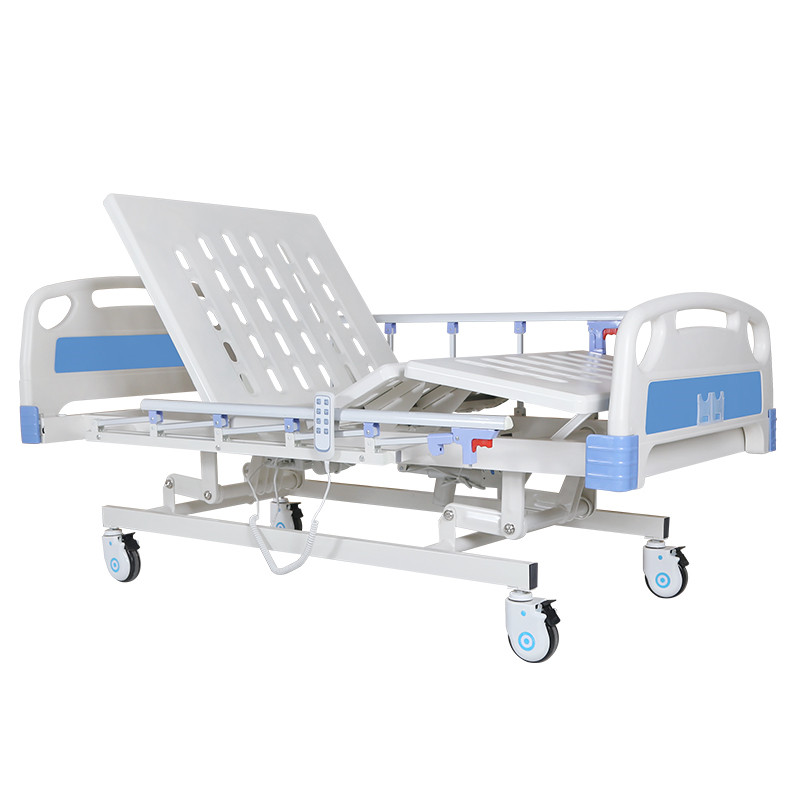
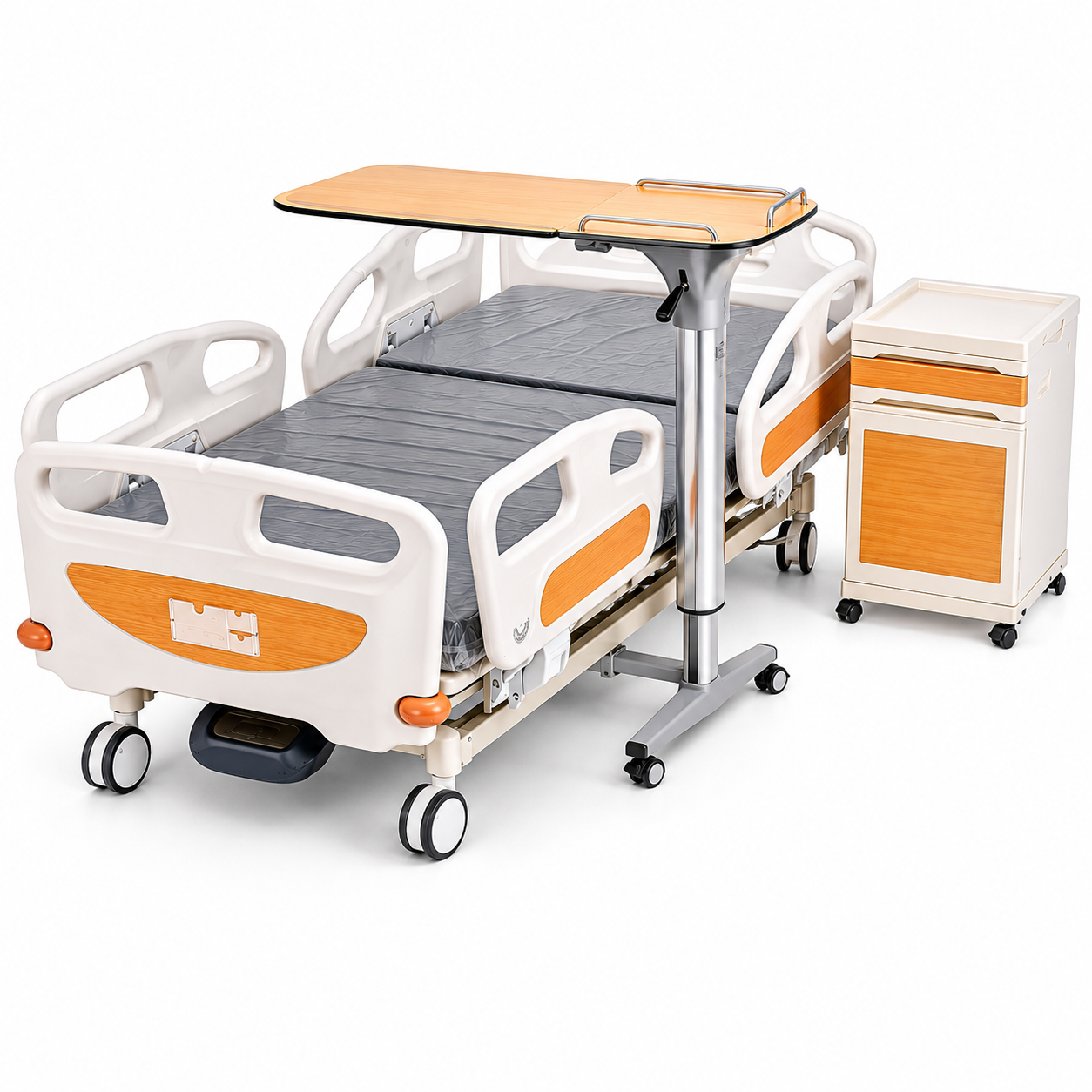

You send the same RFQ to five hospital bed manufacturers. A few days later, the quotations arrive. Supplier A offers an electric hospital bed. Supplier B offers what appears to be almost the same bed. Supplier C is considerably cheaper. You open the specification sheets and compare them. All three say: At first glance, these beds appear almost identical. This creates a very natural purchasing question: If the specifications are the same, why should I pay more? But this is where hospital bed procurement becomes more complicated than spreadsheet comparison. Two beds can use almost identical catalogue language while differing in frame construction, component design, mechanical connections, side-rail structure, braking system, finishing quality, assembly consistency and long-term serviceability. The specification sheet tells you what functions the bed claims to provide. It does not always tell you how those functions are engineered and manufactured. For importers comparing an Hospital Bed, understanding this distinction can prevent a purchasing decision based entirely on superficial specification matching. Buyers absolutely should compare technical specifications. Dimensions, adjustment ranges, functions, load requirements, electrical configuration and accessories all need to match the project. It cannot show every engineering and manufacturing detail inside the finished product. Both can raise the backrest. Both can adjust the leg section. Both can move vertically. Both can tilt forward and backward. The mechanism used to achieve those movements may differ. The supporting frame may differ. The connection points may differ. The selected components may differ. The production tolerances may differ. The final assembly quality may differ. This is why buyers should compare the product behind the specification. ABS headboards and side rails are visually prominent. They influence the appearance of the bed and are therefore easy to compare in catalogues. The steel structure underneath supports the mattress platform, adjustment mechanisms, actuators and other assemblies. Depending on the model and procurement requirements, useful information can include: Two powder-coated frames may look almost identical after finishing. If structural specifications matter to your project, request measurable information. A quotation may simply state: High-quality steel frame. What matters is the actual construction required by the bed design. Instead of comparing adjectives such as “strong,” “heavy-duty” or “premium,” compare relevant technical information. This principle applies not only to the frame but throughout hospital bed procurement. Replace marketing adjectives with measurable requirements whenever practical. Once a mattress is installed, buyers may pay little attention to the platform underneath. Different beds may use different platform designs, materials and manufacturing methods. Request clear photographs or videos of the complete mattress platform. Depending on the model, consider: A bed should not be evaluated only in its most photogenic configuration. Backrest adjustment, leg movement, height adjustment and tilt all depend on mechanical structures working together. Yet it can influence how the product feels during operation. Have the supplier operate the bed while filming relevant mechanisms. Observe the complete movement. Does it operate consistently? Are moving sections aligned? Are there obvious irregular movements? Does the mechanism behave as intended throughout the adjustment? Supplier A writes: 4 pcs ABS side rails. Supplier B writes exactly the same thing. But “ABS” identifies a material category, not the complete rail design. Depending on the product, examine: A side rail is not merely a decorative panel. Buyers should understand how the exact system operates and follow applicable product requirements and manufacturer instructions. Shape and color are only part of the comparison. Look at how the headboard and footboard connect to the frame. Check how they are removed and installed where the design permits removal. Observe rigidity and overall workmanship. A minor difference on one sample may seem insignificant. Repeated across 300 beds, it becomes a fleet-level difference. Two suppliers may both quote 125 mm casters. Depending on the product, buyers can compare: Do not evaluate mobility from photographs. The practical behavior of the complete bed is more informative than wheel diameter alone. But the pedal design, linkage, caster configuration and operating experience can differ. Observe how the brake is engaged and released according to the model's operating instructions. For distributors, sample testing provides information that cannot be obtained from a PDF quotation. For an electric hospital bed, these components are central to the adjustment system. Depending on your procurement requirements, relevant information may include: The five movements describe what the bed does. Its layout influences daily operation. Depending on the bed design, these may include side-rail controls or caregiver control panels. Do not approve a quotation based on a generic product photograph if the final control system matters to the project. Two beds may use the same broad materials and functions while showing different production consistency. Depending on the agreed quality requirements, examine areas such as: For bulk procurement, important workmanship requirements should be converted into agreed inspection criteria where practical. Supplier B also says 0–75°. But the buyer should also consider how the movement is produced and how the complete structure behaves. Do not ask the supplier to show only the final position. Repeat the process where appropriate during sample evaluation. This can reveal practical differences that a single photograph at 75° cannot show. If load performance is important to the purchase requirement, ask what documentation or testing supports the declared specification. Procurement should focus on requirements that can be appropriately supported. Buyers should also consider the mattress platform, rail arrangement and moving sections. Do not record only one height. That phrase may appear clear. Accessories may differ. Control systems may differ. Rail systems may differ. Battery inclusion may differ. Brake configuration may differ. You may believe you are comparing three prices for the same product. Create a structured specification. Then define the important components and project requirements. If every specification is treated as non-negotiable, suppliers may struggle to propose alternatives. Mandatory requirements: specifications the project must meet. Preferred requirements: features that are desirable but can be evaluated against cost or availability. That is useful for understanding appearance. For serious supplier evaluation, request a simple continuous demonstration. For an electric five-function bed, ask the supplier to demonstrate each required movement. Ask the supplier to show the actual model. A distributor cannot physically operate a rail through a screen. You cannot accurately judge rolling behavior from a photograph. You cannot measure a component yourself through a video call. Do not order one sample configuration and then purchase a substantially different production configuration without appropriate confirmation. Some buyers may also want to understand how serviceable components are installed. For distributors, this is particularly useful when after-sales support will be provided locally. If a component requires replacement several years later, the buyer needs to identify the correct part. International transportation creates handling and movement. Depending on the model, check how rails, headboards, controls, casters and other components are protected. Supplier A may include an IV pole. Supplier B may not. Supplier A may include a mattress. Supplier B may quote it separately. Supplier A may include a battery configuration. Supplier B may offer it as an option. Make every supplier clearly state what is included in the quoted bed. A heavier product is not automatically better engineered. Use relevant specifications and appropriate evidence. But it should be evaluated in the context of the complete engineering design and requirements. Structure, components, workmanship, performance and serviceability all matter. Supplier B says the same thing. Request: Commercial competitiveness matters. “High-quality motor.” “Premium caster.” “Strong ABS.” “Heavy-duty frame.” “Best steel.” The objective is not to create unnecessary paperwork. For example, two suppliers may state different bed heights because they measure from different reference points. It cannot communicate every material, dimension, function or internal component. For important bulk orders, combine: If it meets the defined requirements, uses the required configuration and provides the necessary support, paying for unnecessary features would not automatically create more value. The objective is to purchase the required product at an appropriate total commercial cost. This does not automatically mean the lowest quotation is wrong. What is different? Do not substitute components or configurations merely because they appear equivalent. For each important requirement, record whether the proposed bed meets the specification and what evidence supports the response. In many markets, the distributor provides local communication and support. Six months later, you reorder another container. Use model information, specifications, photographs and relevant component details. “Your bed is more expensive than another quotation with similar specifications. Please show me the main construction and component differences.” A useful answer should move beyond statements such as “our quality is better.” Compare relevant structural specifications rather than appearance alone. Look underneath the mattress. Observe how adjustable sections operate. Compare the complete mechanism, not only the ABS material. Inspect construction and connection to the bed. Wheel diameter is only one part of the system. Operate the exact production configuration. Understand what system is actually being supplied. Compare user interface and required functions. Inspect assembly, alignment and finishing against agreed requirements. Consider what happens after the bed enters service. Does the bed provide the required functions, dimensions and configuration? A cheaper product that does not meet the requirement is not an equivalent quotation. How is the bed actually built? Compare price, lead time, spare parts, documentation, packaging and repeat-order support. A distributor may prioritize serviceability and spare-parts support. A hospital project may prioritize a defined tender specification. An importer may prioritize repeat-order consistency. Another buyer may require a particular balance between configuration and budget. This avoids vague quality debates. Hospital bed specifications are essential. Buyers should never ignore them. But a specification table is the beginning of supplier comparison, not the end. Two beds can both be described as: 5-function. ABS side rails. Central brake. 125 mm casters. 250 kg SWL. Yet the actual products may still differ in construction, components, workmanship, usability and serviceability. This is why experienced procurement should move through four stages: Specification → Evidence → Sample → Commercial Comparison. First confirm that the specifications meet the project. Then ask suppliers to provide evidence of the actual configuration. For significant orders, evaluate the physical sample where practical. Only then compare normalized commercial offers. The cheapest hospital bed is not automatically the wrong choice. The most expensive hospital bed is not automatically the right choice. The key is determining whether you are truly comparing equivalent products. When quotations appear similar, look deeper. Ask about the frame. Look underneath the mattress platform. Operate the side rails. Test the casters and brakes. Identify the actuator and control configuration. Inspect the workmanship. Ask about spare parts. Understand what is included in the price. Then your supplier comparison changes from: “Supplier A is $30 more expensive.” to: “Are these two suppliers actually offering the same hospital bed configuration?” That is a much more useful procurement question. Hebei Heyuan Medical Equipment Co., Ltd. manufactures electric hospital beds, ICU beds, manual hospital beds and related patient-care equipment for distributors, importers and healthcare projects. Buyers can review our Hospital Bed range and compare configurations according to project requirements. For distributor orders, hospital projects, OEM production or bulk procurement, please contact us with your required functions, quantity, destination market and technical specifications.Two Hospital Bed Quotations Look Almost Identical — So Why Is the Price Different?
Specification Matching Is Only the First Stage of Supplier Comparison
A Specification Sheet Is Still Important
But a Specification Sheet Is a Summary
Think of Two Beds With the Same Five Functions
That Does Not Automatically Mean Their Structures Are Identical
1. Start With the Main Bed Frame — Not the ABS Plastic
Plastic Components Often Dominate Product Photos
But the Structural Frame Deserves More Attention
Ask for Detailed Frame Information
Do Not Try to Evaluate Frame Strength From a Catalogue Photograph
2. “Steel Frame” Is Not a Complete Material Specification
Almost Every Supplier Can Write the Same Phrase
This Sounds Positive but Provides Little Information for Comparison
Ask for Measurable Specifications Where Necessary
Measurable Information Is Easier to Verify
3. Look at the Mattress Platform Construction
The Mattress Can Hide One of the Most Important Parts of the Bed
But the Platform Is Part of the Bed's Main Working Structure
Ask the Supplier to Remove the Mattress
Inspect the Structure Rather Than Only the Finish
4. Compare the Moving Joints and Connection Points
An Adjustable Hospital Bed Contains Many Moving Relationships
Connection Design Can Be Difficult to See in a Specification Table
Ask for Close-Up Videos
Look Beyond Whether the Bed Eventually Reaches the Correct Angle
5. “ABS Side Rails” Can Describe Very Different Products
This Is One of the Most Common Specification Traps
The Buyer May Assume the Rail Systems Are Equivalent
Compare the Complete Side-Rail System
Operate the Rail Repeatedly During Sample Evaluation
6. Compare the Headboard and Footboard Beyond Their Appearance
Two ABS Headboards Can Look Almost Identical in a Photo
Examine the Complete Assembly
Small Details Become More Important in Large Orders
Bulk procurement magnifies small product decisions
7. “125 mm Caster” Does Not Tell You Everything About Mobility
Wheel Diameter Is Only One Caster Specification
But the Complete Caster Systems May Differ
Push the Physical Sample Across a Suitable Surface
Change Direction and Operate the Brake
8. “Central Brake” Is Also Not a Complete Specification
Two Beds Can Both Be Advertised With Central Braking
Ask the Supplier to Demonstrate the Entire System
Then Test the Sample Yourself Where Practical
Compare systems, not feature names
9. Electric Actuators Deserve More Than One Line in the Quotation
Many Quotations Simply Say “Motor” or “Actuator”
Ask What Is Actually Being Supplied
Do Not Assume Two Electric Beds Use Equivalent Electrical Systems Because Their Functions Are the Same
They do not identify the complete electrical architecture used to make those movements possible
10. Compare the Control System, Not Just the Number of Buttons
A Handset Is the User Interface of an Electric Bed
Some Models May Also Include Additional Controls
Ask to See the Exact Production Configuration
Operate every required function during sample evaluation
11. Workmanship Can Separate Two Beds With the Same Specification
This Is Difficult to Express in One Spreadsheet Cell
Inspect the Physical Product Closely
Do Not Replace Defined Acceptance Criteria With Personal Impressions
“Looks good” is difficult to reproduce consistently across hundreds of units
The Same Adjustment Angle Does Not Mean the Same Adjustment System
Supplier A Says Backrest: 0–75°
On Paper, the Result Appears Identical
Watch the Entire Movement Cycle
Start From Flat and Operate Through the Required Range
The Same Safe Working Load Figure Requires Supporting Context
A Number on a Specification Sheet Should Not Be Treated as Self-Proving
The Appropriate Evidence Depends on the Product and Market Requirements
Do Not Simply Ask Every Supplier to Write a Larger Number
A higher claimed number is not automatically a better purchasing decision
The Same Bed Dimensions Can Still Produce Different Usability
Overall Length and Width Do Not Describe Every Spatial Relationship
Height Range Is Particularly Important
For Height-Adjustable Beds, Confirm
Make sure competing suppliers are measuring the same thing
One of the Biggest RFQ Problems: Suppliers May Interpret the Same Requirement Differently
You Ask for a “5-Function ICU Bed”
But Different Suppliers May Configure It Differently
This Makes Price Comparison Unreliable
In reality, you may be comparing three different configurations
Build an RFQ That Forces Suppliers to Quote the Same Configuration
Do Not Send Only a Product Photograph and Quantity
Define the Required Functions First
A Hospital Bed RFQ Can Include
A better RFQ creates a better price comparison
Separate “Must Have” From “Preferred” Specifications
Not Every Detail Has Equal Importance
But If Nothing Is Defined, Quotations Become Impossible to Compare
Create Two Groups
This gives suppliers clearer instructions and gives buyers a more useful comparison
Ask for Close-Up Photos, Not Only Catalogue Images
Catalogue Photography Is Designed to Show the Complete Product Attractively
It Is Less Useful for Engineering Comparison
Ask for Detailed Images of
Detailed product photography can reveal differences hidden by the specification sheet
Ask for an Uncut Function Video
Short Promotional Videos Can Hide the Complete Operating Sequence
The Video Does Not Need Professional Editing
It Should Show the Actual Product Clearly
Also request operation of the side rails and braking system
Factory Video Calls Can Be More Useful Than Another PDF
When Visiting the Factory Is Not Practical, Use Live Video Strategically
Then Direct the Camera to Specific Areas
For Example
A live inspection can answer questions that polished catalogue material cannot
But Video Still Does Not Replace a Physical Sample
Some Characteristics Need Hands-On Evaluation
For Significant Orders, Sample Evaluation Can Be Valuable
Use the Sample to Verify the Final Intended Configuration
The closer the sample is to mass production, the more useful the evaluation becomes
Disassemble Selected Areas During Sample Evaluation Where Appropriate
A Complete Bed Shows the Finished Product
Follow Manufacturer Instructions and Appropriate Technical Procedures
Maintenance Personnel Can Help Evaluate Serviceability
Product quality includes the ability to understand and support the equipment after sale
Ask Which Parts Are Manufacturer-Specific
This Matters for Long-Term Service
Ask How Spare Parts Are Referenced
Useful Questions Include
A hospital bed purchase does not end when the container arrives
Compare Packaging as Part of Product Quality
Two Identical Beds Can Arrive in Different Condition if Their Packaging Differs
Ask How Vulnerable Components Are Protected
Review the Packing Method Before Mass Shipment
Delivery condition is part of the buyer's real product experience
Do Not Compare FOB Prices Until You Confirm What Is Included
A Lower Price May Reflect a Different Configuration
The Headline Unit Price Can Therefore Be Misleading
Create an Included/Excluded List
Compare normalized configurations rather than raw quotation numbers
Do Not Automatically Choose the Heaviest Bed
Weight Alone Is Not a Complete Quality Indicator
Nor Is a Lighter Product Automatically Inferior
Focus on the Required Structure and Verified Performance
A single number should not replace complete product evaluation
Do Not Automatically Choose the Supplier With the Thickest Steel Either
Material Thickness Can Be Important
More Material Is Not a Substitute for Good Design
Compare the Complete Product
A hospital bed is a system, not a steel-weight competition
Quality Comparison Should Be Evidence-Based
Supplier A Says “Our Quality Is Better”
Neither Statement Helps the Buyer Very Much
Ask Each Supplier to Show the Difference
The buyer should make decisions from evidence rather than sales adjectives
Create a Supplier Comparison Sheet With More Than Price
Price Should Remain in the Comparison
But Give Technical Differences Their Own Columns
For Example, Compare
This turns supplier selection into a structured comparison rather than a price auction
Watch for Specifications That Are Too Vague to Compare
Examples Include
These Phrases May Be Marketing Language Rather Than Technical Specifications
Ask for Relevant Details
It is to make important purchasing requirements comparable and verifiable
Watch for Specifications That Look Precise but Are Not Defined
A Number Without a Measurement Method Can Still Create Confusion
Clarify How Important Dimensions Are Measured
This Is Particularly Useful When Comparing
Comparable numbers require comparable definitions
Do Not Let Product Photos Become the Specification
A Photograph Is Useful but Incomplete
Likewise, a Written Specification Cannot Show Every Visible Detail
Use Both
Different forms of evidence answer different purchasing questions
When Is a Cheaper Hospital Bed Actually the Better Commercial Choice?
Sometimes the Lower-Priced Bed Is Entirely Appropriate
The Objective Is Not to Buy the Most Expensive Bed
Nor Is It to Buy the Cheapest Bed
Price becomes meaningful only after the products have been normalized for comparison
When Should a Large Price Difference Make You Investigate Further?
Suppose Four Suppliers Quote Similar Prices and One Is Much Lower
But It Creates a Useful Question
Check Whether the Difference Comes From
Investigate the reason rather than assuming either “cheap is bad” or “everyone else is overpriced”
For Tender Projects, Specification Precision Becomes Even More Important
A Small Difference Can Matter if the Tender Defines It
Check the Actual Tender Requirements
Create a Compliance Comparison
Project compliance should be documented rather than assumed from product similarity
For Distributors, Product Differences Affect Your Own After-Sales Work
The Factory Does Not Interact With Every End Customer
This Means Product Selection Influences Your Future Workload
Before Adding a Hospital Bed to Your Catalogue, Consider
A distributor is purchasing a product relationship, not only one shipment
For Importers, Consistency Between Orders Matters Too
The First Shipment May Be Excellent
Will the Configuration Remain the Same?
Keep Records of the Approved Product
Repeat orders should reference the approved configuration rather than relying only on memory
A Good Supplier Should Be Able to Explain the Product Difference
Ask a Simple Question
The Response Can Be Informative
Look for Specific Explanations
The supplier should be able to discuss the actual product configuration
11 Details to Compare Before Deciding Two Hospital Beds Are “the Same”
1. Main Frame Construction
2. Mattress Platform
3. Moving Joints
4. Side-Rail System
5. Headboard and Footboard
6. Casters
7. Braking System
8. Actuators and Electrical Components
9. Controls
10. Workmanship
11. Serviceability and Spare Parts
Only after these areas are understood does unit-price comparison become much more meaningful
Use a Three-Layer Hospital Bed Comparison
Layer 1 — Specification
If No, Stop the Comparison
Layer 2 — Construction and Components
This Is Where Many “Identical” Products Begin to Look Different
Layer 3 — Commercial and After-Sales Support
The purchasing decision should consider all three layers
Do Not Ask “Which Hospital Bed Is Better?” Until You Define “Better”
Different Projects Prioritize Different Things
Define the Requirement First
Then Compare Products Against the Same Requirement
A product can only be evaluated meaningfully in relation to what the buyer actually needs
The Specification Sheet Tells You What to Investigate — Not Everything You Need to Know
Do Not Buy a Specification Sheet — Buy the Product Behind It