

Choosing among hospital bed manufacturers is not simply a matter of comparing catalog photos or unit prices. A bed becomes part of a working care environment: nurses adjust it, porters move it, technicians maintain it, cleaning teams disinfect it, and patients depend on it every day. For a distributor, hospital group or project contractor, the stronger question is therefore not “Who can supply a bed?” but “Which manufacturer can repeatedly deliver the right configuration, documentation and support for this project?”
Professional medical bed factories turn a buyer’s clinical and commercial requirements into a controlled product specification. They help define functions, dimensions, accessories, electrical options, packaging and inspection points before mass production begins. This reduces ambiguity and gives both sides a shared standard for sample approval and shipment.
This guide explains what capable hospital bed manufacturers contribute to global healthcare projects and how buyers can evaluate a potential production partner.
Why the Manufacturer Matters Beyond the Product
Hospital beds operate within a larger system. The frame must work with the mattress, side rails, castors, bedside furniture, patient-lifting equipment and room layout. Electric models also introduce actuators, control boxes, handsets, batteries and cables. A choice made in one area can affect cleaning access, transfer space, service time and packing volume elsewhere.
An experienced hospital bed manufacturer reviews these relationships early. Instead of treating every option as an isolated add-on, the factory should help the buyer build a coherent configuration. For example, a low-height requirement may affect castor size and under-bed clearance. A central braking system may influence chassis design and maintenance. A particular side-rail style may change mattress compatibility and transfer access.
This systems view is especially important for tenders and multi-site projects. A specification that appears complete on paper can still create difficulties if it does not reflect real workflows. Professional manufacturers ask practical questions before quoting and record the answers in a configuration sheet.
From Requirement to Approved Specification
Reliable projects usually begin with an application brief rather than a generic request for “hospital beds.” Buyers should identify the care setting, expected users, required adjustments, preferred materials, local power supply, accessories, quantity, delivery schedule and any market-specific documentation.
The manufacturer can then translate that information into a model proposal. A disciplined approval process normally includes:
- A written function list and dimensional drawing
- Confirmation of safe working load and intended-use assumptions
- Mattress platform, rail, headboard and footboard configuration
- Castor size, braking method and steering requirements
- Electrical input, plug, handset and battery options where applicable
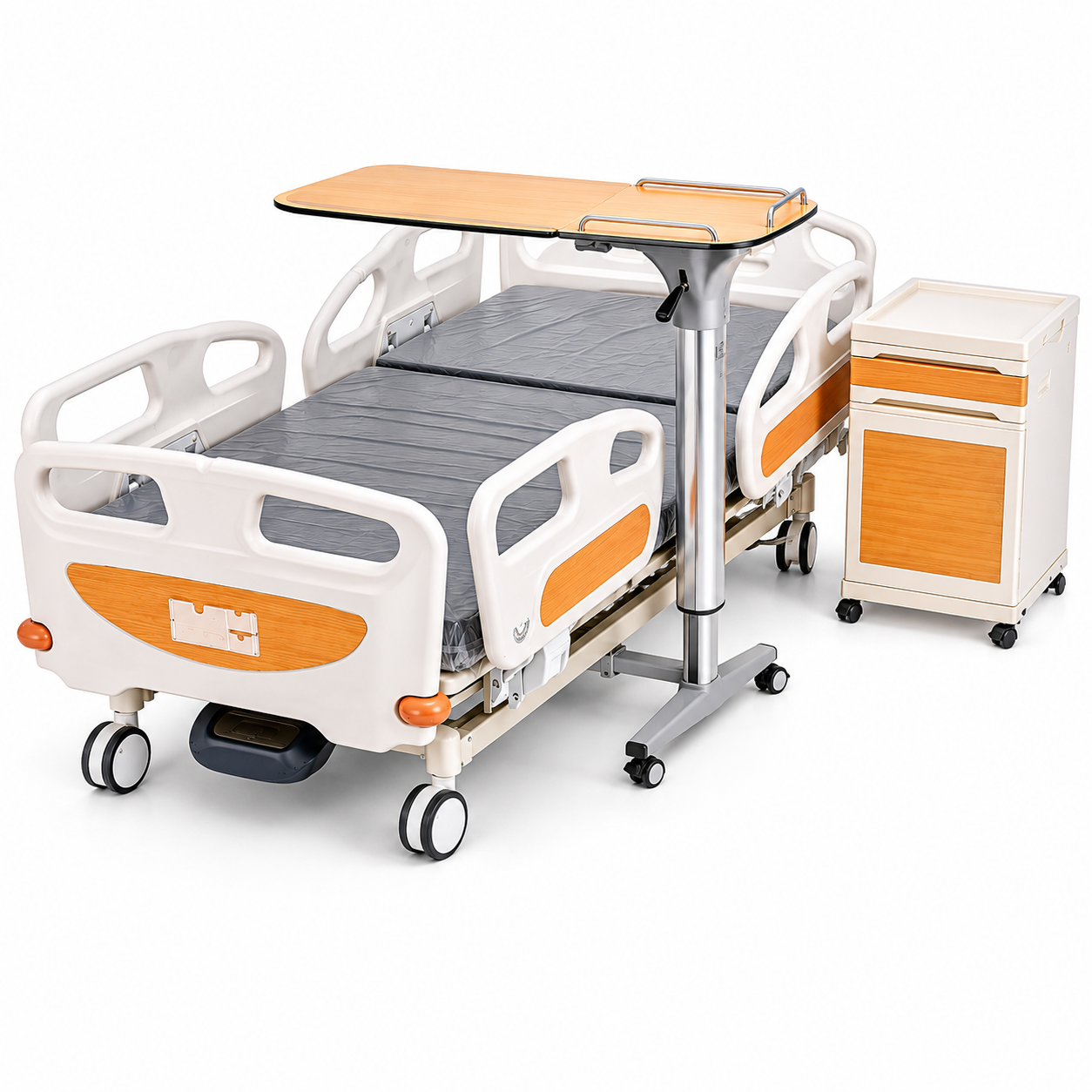
- Accessory positions for IV poles, drainage hooks or overbed tables
- Color, labeling, logo and packaging details
- Sample inspection criteria and approved reference photos
The value of this step is control. When the sample, quotation, order and production checklist all describe the same product, avoidable variation falls. The approved specification also becomes the basis for final inspection.
Manufacturing Capabilities Buyers Should Examine
Engineering and design control
Hospital bed manufacturers should be able to explain how a frame is designed, how moving sections interact and how optional components are integrated. Buyers do not need access to confidential drawings, but they should expect clear dimensions, function descriptions and revision control.
Ask how the factory manages product changes. If a supplier substitutes a castor, motor, rail or plastic component, what approval process is followed? A mature answer should include identification of the change, compatibility review, updated records and buyer confirmation when the change affects the approved order.
Frame fabrication and surface preparation
The frame carries repeated loads and movements. Consistent cutting, bending, welding and fixture control are therefore important. Buyers can inspect weld continuity, joint alignment, sharp-edge treatment and the fit between moving sections. Surface preparation before powder coating also matters because attractive paint cannot compensate for poor cleaning or inconsistent pretreatment.
Request close-up images from different production stages, not only finished beauty shots. Raw frames, welding fixtures, coating preparation and assembly stations reveal more about process discipline than a showroom alone.
Assembly and component traceability
During assembly, workers combine the frame with deck sections, rails, castors, cranks or electrical components. Clear work instructions help ensure that fasteners, cable routes and accessory mounts remain consistent. Component labels or batch records can make later service easier, particularly for electric beds supplied through distributors.
Functional and final inspection
A finished bed should be checked as a complete system. Depending on the model, inspection may cover all adjustments, rail locks, castor movement, brakes, steering, frame stability, controller operation, cable clearance and visible finish. Packaging inspection should confirm that loose parts, instructions and accessories match the packing list.
Buyers should agree on measurable acceptance points before production. “Good quality” is subjective; a signed checklist, photos and function test are much more useful.
Matching Bed Types to Healthcare Environments
There is no single configuration that fits every ward. Professional hospital bed manufacturers should help buyers distinguish between essential functions and unnecessary complexity.
Manual hospital beds
Manual models can be appropriate where budgets are tightly controlled, electrical infrastructure is limited or positioning needs are straightforward. Buyers should assess crank accessibility, smooth movement, maintenance requirements and the ease of storing the handles safely.
Electric adjustable hospital beds
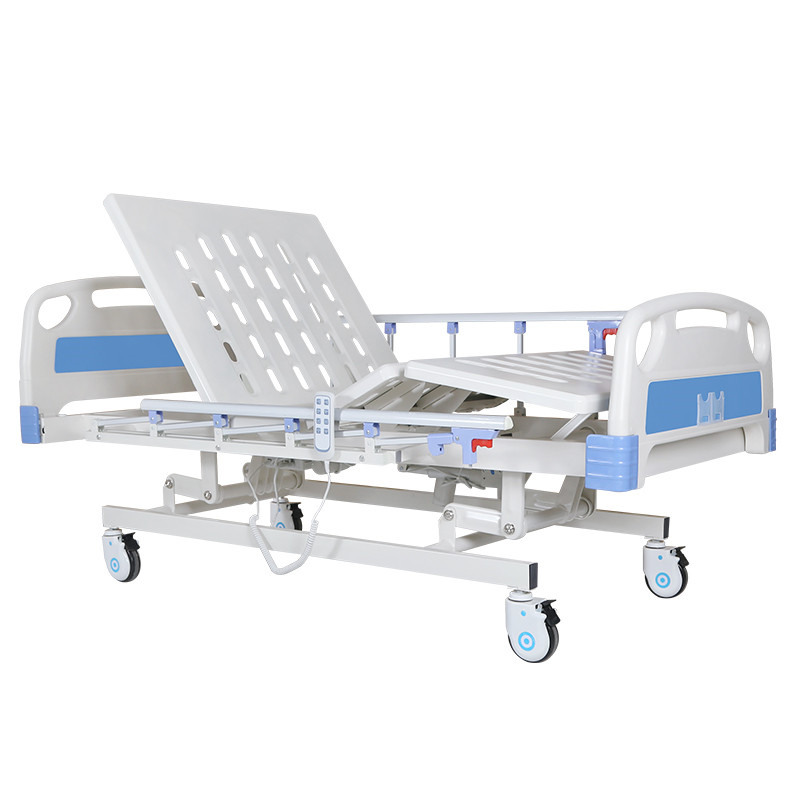
Electric beds can improve positioning convenience and caregiver workflow, especially when height adjustment is needed. The evaluation should include actuator performance, control layout, cable management, emergency procedures and access to replacement parts. Buyers should also confirm the correct voltage and plug for the destination market.
ICU and higher-acuity configurations
Higher-acuity care may require more positioning options, faster access, integrated controls or additional accessories. The required configuration should come from the facility’s clinical and technical teams. A factory should not label a model for a demanding environment simply because it has more motors; intended use, risk management and applicable market requirements must be reviewed.
Long-term and rehabilitation care
For longer stays, comfort, low-height positioning, mobility access and residential appearance may become more important. The bed should be evaluated together with the room, mattress, transfer method and daily care routine.
Buyers can review the available hospital bed solutions and nursing bed options as starting points, then confirm the final configuration for the project.
Quality Management Is a Working Process
Certificates can be useful evidence, but buyers should also look at how quality is practiced. A functioning quality system connects incoming materials, production checks, final inspection, nonconformance handling and corrective action. Records should identify what was inspected, by whom, against which standard and with what result.
Useful supplier-review questions include:
- How are critical purchased components approved and re-evaluated?
- Which checks occur during fabrication, coating and assembly?
- How are inspection tools maintained or calibrated?
- How are defects isolated and corrected?
- How is the approved sample linked to the production order?
- What information is retained for traceability?
- How are field complaints analyzed and fed back into production?
A transparent manufacturer should be willing to show representative records with sensitive commercial information removed.
OEM and ODM Without Losing Control
OEM and ODM services can include private labels, colors, dimensions, panel styling, accessory combinations, packaging and documentation. Customization is valuable when it solves a real market need, but it should be controlled.
Every custom feature should appear in the drawing, bill of materials, sample record or packaging artwork as appropriate. Buyers should confirm whether the change affects minimum order quantity, lead time, replacement parts or regulatory obligations. Logo placement alone is simple; a structural or electrical change deserves more review.
The best OEM hospital bed manufacturer is not the one that agrees to every request immediately. It is the one that explains feasibility, identifies trade-offs and documents the final decision.
Export Packaging and After-Sales Readiness
Global supply continues after the bed leaves the assembly line. Packaging must protect painted surfaces, plastic panels, rails, controls and loose accessories during handling. It should also make receiving and assembly understandable.
Before shipment, buyers can confirm:
- Carton dimensions, gross weight and loading plan
- Protection at corners, rails, castors and control components
- Parts list and package numbering
- Assembly and operating instructions
- Spare-parts list with model references
- Photo or video records of the packed configuration
- Warranty process and first-response contact
For distributors, shared components across models can simplify spare-parts inventory. Clear labels and service diagrams reduce the risk of sending the wrong motor, handset or rail hardware to a customer.
A Practical Manufacturer Evaluation Checklist
Use the same criteria for every shortlisted supplier:
- Application fit: Does the proposed bed match the intended care environment?
- Specification clarity: Are functions, dimensions and options written down?
- Production evidence: Can the supplier show fabrication, coating, assembly and inspection?
- Change control: Are substitutions and revisions documented?
- Testing: Are sample and production checks defined in advance?
- Documentation: Are manuals, labels, drawings and packing lists available?
- Export support: Can the factory manage packing, loading and destination requirements?
- Serviceability: Are spare parts identifiable and realistically available?
- Communication: Are questions answered precisely and consistently?
- Commercial stability: Do price, lead time, payment and warranty terms support a long-term program?
Building a Long-Term Supply Partnership
The most successful healthcare projects treat hospital bed manufacturers as accountable production partners. The buyer provides a clear application and approval process; the factory provides engineering feedback, controlled manufacturing and honest records. Both parties agree on what will be delivered before volume production begins.
For Heyuan Medical Equipment, the practical next step is to share the care environment, functions, quantities, destination market and delivery schedule. The team can then recommend a suitable starting configuration and identify which details require confirmation. Explore the company’s medical bed manufacturing profile and use the site contact options to request a project-specific discussion.
Frequently Asked Questions
What information should I send to hospital bed manufacturers for a quotation?
Send the intended care setting, required functions, quantity, destination, preferred materials, mattress size, accessories, power requirements and target delivery date. Tender documents or room-layout constraints are also useful.
Should I approve a sample before a bulk order?
For a new model, new configuration or important project, sample approval is strongly recommended. Use a written checklist and keep dated photos or video as the reference for mass production.
Can one hospital bed model serve every department?
Usually not. General wards, higher-acuity areas, rehabilitation settings and long-term care facilities have different workflows. Standardizing a small family of compatible models may be more practical than forcing one configuration everywhere.
How do I compare quotations fairly?
Create a line-by-line comparison of function, dimensions, components, accessories, documentation, packaging, warranty and delivery terms. A lower price may reflect a different configuration rather than a true saving.
What is the most important sign of a reliable supplier?
Look for consistent evidence: clear specifications, traceable approvals, repeatable inspections and precise communication. A professional factory should be able to explain not only what it sells, but how it controls what it delivers.